

Maldives liveaboard · Diving guide · Updated 8 November 2026 · By Abdulla Maseeh
Maldives Liveaboard Diving: What a Dive Week Is Really Like
A Maldives dive liveaboard gives you about 16 dives in 7 nights, three a day from a dedicated dive dhoni, across three or four atolls that resort divers rarely reach. Diving is capped at 30 metres by law, most dives are drifts through channels where sharks and rays gather, and the boats we book include nitrox free. You need Open Water and around 30 logged dives for the central atolls, and Advanced Open Water with 50 or more for the south. Here is how a dive day runs, the rules, the kit, the marine life by month and which boat suits which diver.
The numbers that matter
The Maldives is one of the few places where a week on a boat beats a week at a resort for almost every diver. A resort dive centre works the reefs within reach of its island, two dives a day. A liveaboard moves overnight, so each morning starts at a different channel, thila or cleaning station, chosen for that day’s current. Over a week you dive North and South Malé, Vaavu and Ari on the classic route, or the remote southern atolls on a Deep South trip.
The diving itself is mostly drift diving. Atolls are rings of reef with gaps, the kandus or channels, where the ocean flows in and out with the tide. Big animals feed at the channel mouths, so the best dives happen in current. That shapes everything on this page: the experience levels, the kit list, why guides brief so carefully, and why the law keeps everyone above 30 metres. For resort-based diving, see our diving in the Maldives guide.
A dive day on a liveaboard
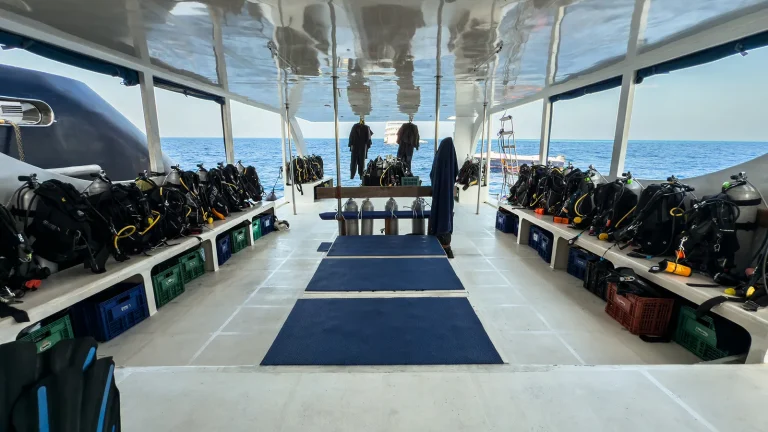
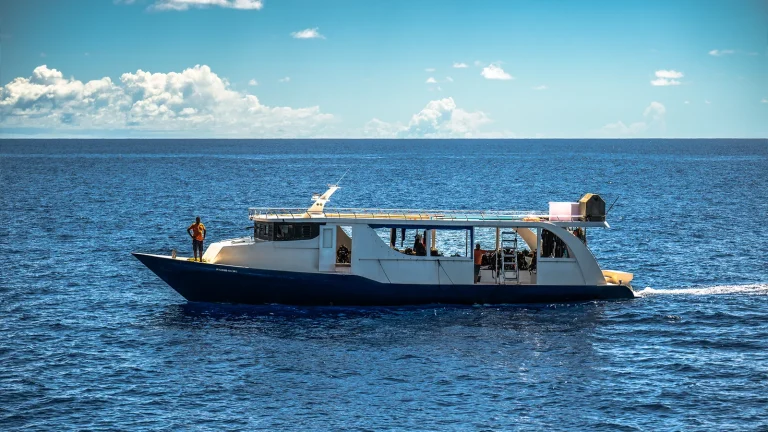
Every boat runs a similar rhythm. You sleep, eat and relax on the mothership; you dive from the dhoni, which carries the tanks, compressors and everyone’s kit, and comes alongside for each dive. First trip? Read what to expect on a Maldives liveaboard, with a packing list, tipping guide and seasickness tips.
| Time | What happens |
|---|---|
| 6:00 to 7:00 | Wake-up call, light breakfast, briefing for the first dive |
| 7:00 to 8:00 | Dive one, usually the best chance of sharks and big animals in the channels |
| 8:00 to 9:00 | Full breakfast on the mothership |
| 10:00 to 11:00 | Dive two, often a thila, reef or cleaning station |
| 12:00 to 13:00 | Lunch while the boat moves to the next site |
| 14:00 to 15:00 | Dive three |
| 15:00 to 19:00 | Free time: island or sandbank stop, kayaking, log books, sleep |
| 19:00 to 20:00 | Night dive on some days, at least one per trip with Dune |
| 20:00 onwards | Dinner, then the boat anchors or crosses to the next atoll |
Day one is arrival, a briefing and often a short check dive near Malé, where the guides look at your weighting, buoyancy and how you handle a surface marker buoy. The last diving day usually has two morning dives only, because you need 24 hours between your last dive and your flight home. That is why a 7-night trip gives about 16 dives, not 21.
Channels, thilas, giris and farus
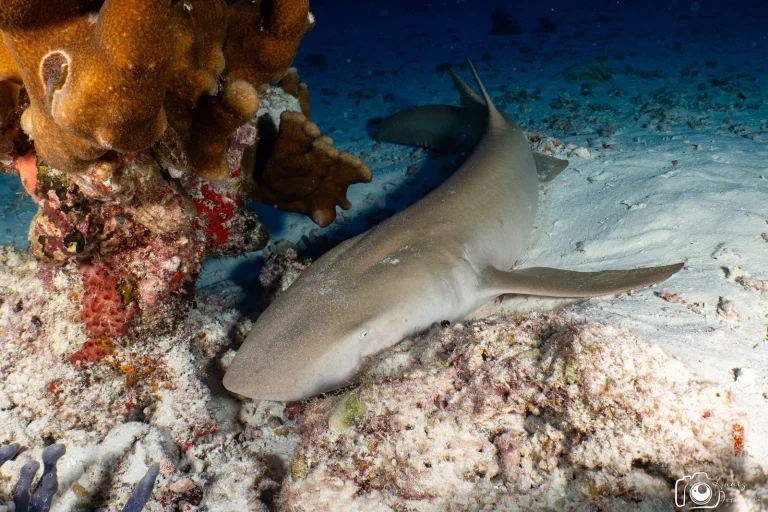
Most dives start with a negative entry: you go in with an empty BCD and descend straight away so the current does not sweep the group apart. Guides carry a surface marker buoy and every diver should carry one too. Night dives are calmer, usually on a sheltered reef or at Vaavu’s jetty, where nurse sharks and rays gather under the lights.
The rules of Maldives diving
The Maldives regulates recreational diving more strictly than most countries, and liveaboard guides apply the rules on every dive.
- 30 metres maximum depth for recreational divers, whatever your certification. Open Water divers are held shallower, around 18 to 20 metres.
- No decompression diving. Every dive stays within no-stop limits, with a safety stop at 3 to 5 metres.
- No solo diving and no technical, overhead or cave diving on a recreational trip.
- Dive computer and surface marker buoy are compulsory on most boats, and a medical statement is needed for older divers on some, over 45 with Dune.
- Hanifaru Bay is snorkel only. Scuba is prohibited in the protected bay in Baa Atoll; a ranger supervises snorkellers and a park fee applies.
- 24 hours between your last dive and your flight, including domestic flights from Gan or Kooddoo.
These limits exist for good reason. In May 2026 several divers died after entering a cave whose entrance lies at 50 to 60 metres, far beyond the legal limit, and a Maldivian military diver died during the recovery. Every operator we work with keeps strictly to the regulation.
How much experience you need
| Route | What we recommend | Example operator rule | Across the fleet |
|---|---|---|---|
| Central Atolls, 7 nights | Open Water, about 30 logged dives | Advanced Open Water with 30 dives (Dune) | From about 20 to 50 logged dives across the fleet |
| Manta and northern routes | Open Water, about 30 dives | Advanced Open Water with 30 dives (Dune) | Similar to central routes |
| Central and South, 10 nights | Advanced Open Water, 50 dives | Advanced Open Water with 50 dives (Dune) | 50 to 100 on some boats |
| Deep South, South Atolls, 10 Atolls | Advanced Open Water, 50+ dives, recent drift diving | Advanced Open Water with 50 dives (Dune) | Up to 100 dives on some boats |
| Snorkelling cruises | None | None; children from 8 | Snorkel guide on board |
Our advice is simple. If you have under 30 dives or have not dived for a year, choose a 7-night Central Atolls week and say so when you book; the guides will plan gentler channels for the first days. If you are heading south, arrive with Advanced Open Water and nitrox already done, at least 50 logged dives, and some recent current diving. The routes page lists the level for every route.
What you will see, and when
| Animal | Where | When | Routes |
|---|---|---|---|
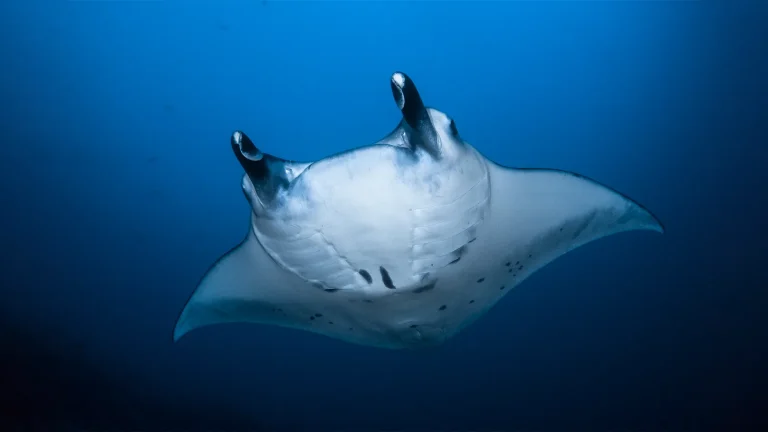
| Manta rays | Cleaning stations in North and South Ari, North Malé, Baa, Addu | All year at cleaning stations; Baa’s feeding season roughly July to November | Central, Manta Madness, Deep South |
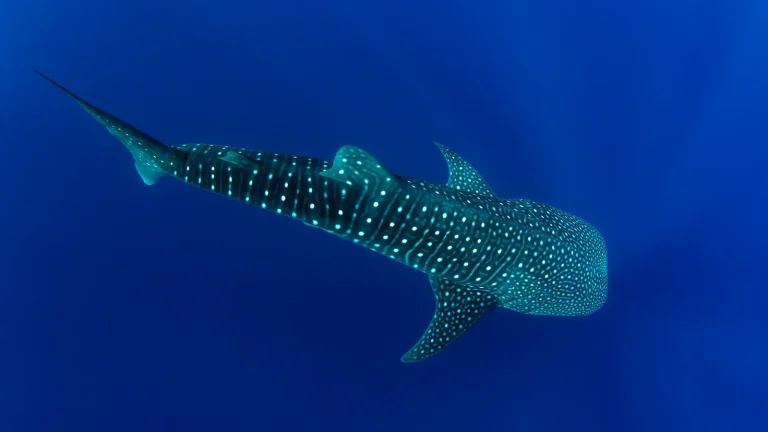
| Whale sharks | South Ari outer reef (Maamigili), Thaa and Huvadhoo at night | All year in South Ari; sightings vary week to week | Central, Deep South |
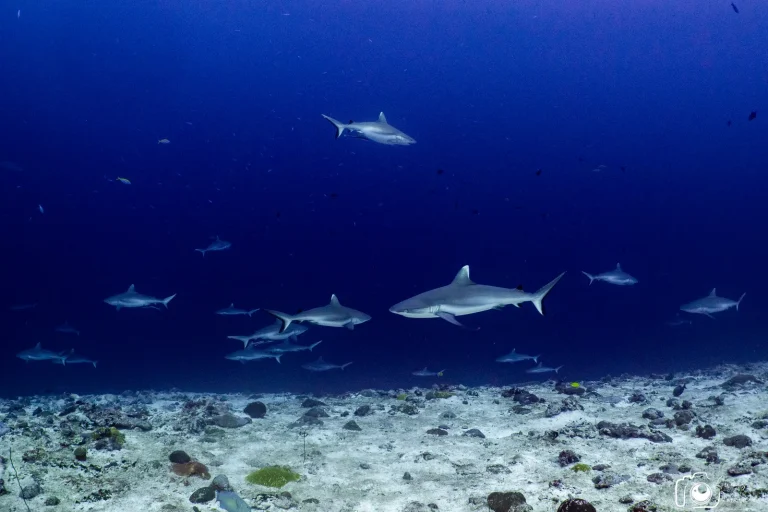
| Grey reef sharks, whitetips | Channel mouths on incoming current | All year; strongest action in the northeast monsoon | Every route |
| Hammerheads | Rasdhoo, Meemu, Fuvahmulah, usually early morning and deep | Best December to April | Central XL, Deep South |
| Tiger sharks | Fuvahmulah, Tiger Harbour and the plateaux | All year at Fuvahmulah | Deep South |
| Thresher sharks, oceanic mantas | Fuvahmulah and the southern channels | Seasonal; best on southern trips | Deep South |
| Nurse sharks | Alimatha and Vaavu jetty night dives | All year | Central |
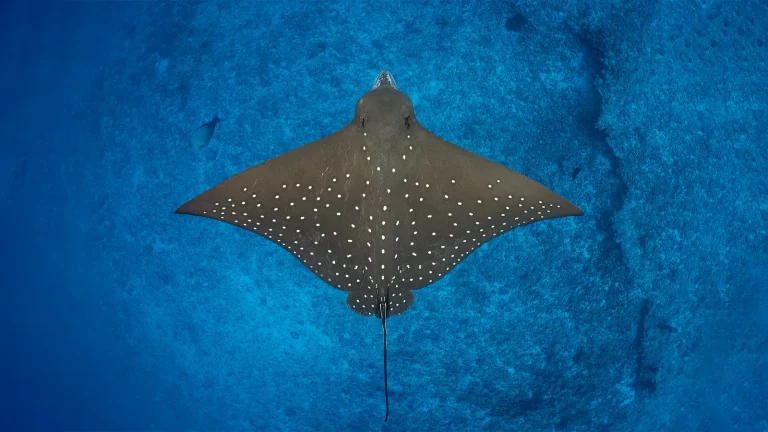
| Eagle rays, turtles, Napoleon wrasse | Throughout the atolls | All year | Every route |
The monsoons move the animals. From December to April the northeast monsoon brings clear, calm water and the best channel diving on the eastern side of the atolls; from about May to November the southwest monsoon brings plankton, Baa Atoll’s manta season and lower prices. Whale sharks and nurse sharks are year-round, and Fuvahmulah’s tiger sharks stay put all year. Our guides to manta rays and whale sharks go deeper on both.
Nitrox, tanks and kit
Supplied on every boat
12-litre aluminium tanks with DIN and yoke valves, weights and belts, and on the boats we book, free nitrox fills for certified divers. Nitrox matters here: with three dives a day for a week, it extends no-stop time and many divers feel less tired. Fifteen-litre tanks cost extra, US$7 a day with Dune. Rental kit is available on all boats, about US$10 a piece or US$20 a full set per day with Dune.
Bring your own
Your own dive computer (compulsory, and you know how to read it), mask and fins, a 3 mm full suit or shorty for 27 to 30°C water, a surface marker buoy with a 15-metre reel, a reef hook for the channels, and a torch for night dives. Camera divers will find rinse tanks and charging points on board. Pack in soft bags: cabins are compact.
Courses on board
Most boats teach on board, and the dive days make it easy to fit training around the trip. Dune’s 2026 prices: Discover Scuba US$100, Open Water US$400, Advanced Open Water US$300, Nitrox US$190, and Advanced plus Nitrox together US$420, with the theory done online before you travel. Advanced and Nitrox are the two worth having before a Deep South trip; book them in advance so an instructor is assigned.
Safety, chambers and insurance
Liveaboards carry emergency oxygen and first aid on both the mothership and the dhoni, and the larger boats carry an AED and satellite phone. Recompression treatment is available at ADK Hospital in Malé, at resort chambers on Bandos, Kuramathi, Kuredu and Kandima, and since 2025 at a state-run hyperbaric centre in Thaa Atoll. On southern routes the nearest chamber can still be several hours away.
Dive insurance is compulsory on every boat; check it covers recompression and medical evacuation, and that your policy allows diving to 30 metres. Short DAN cover can be bought on board if you arrive without it. Dive conservatively: stay well inside your computer’s limits, ascend slowly, do every safety stop, drink plenty of water, and tell the guides early if anything feels wrong.
Which boat suits which diver
| Boat | Dive boats | Guests / divers per guide | Nitrox | Best for |
|---|---|---|---|---|
| Princess Maani | 19 m dhoni + dinghy | 28 guests | Free | Every route including Deep South and 10 Atolls |
| Princess Haseena | Dhoni + dinghy | 26 guests | Free | Value on central, manta and southern routes |
| Dune Theia | Dhoni + speedboat | 20 guests, about 6 per guide | Free | Small groups, all-inclusive pricing |
| Dune Black Manta | 20 m dhoni + 8 m speedboat | 26 divers max, about 6 per guide | Free | Groups that want to split by level |
| Sachika (until May 2027) | Dhoni | See boat directory | Free | Budget central and Deep South trips |
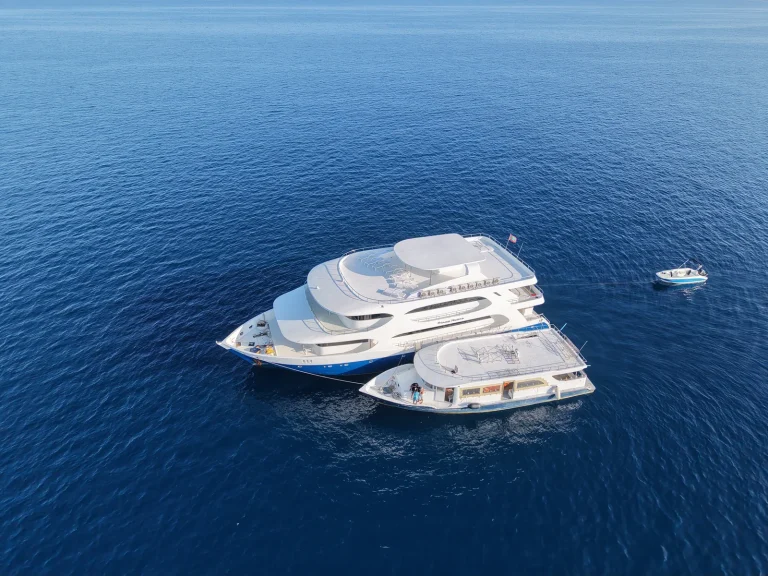
Two dive boats, as on Dune Black Manta and Dune Theia, let a group split so experienced divers take the hard channel while others dive a gentler site. Bigger boats like Princess Maani give more deck space and comfort between dives. For costs on each, see our liveaboard prices and calculator.
Liveaboard diving: questions we get asked
How many dives do you get on a Maldives liveaboard?
About 16 on a 7-night trip and 24 on a 10-night trip. There is usually no diving on the first evening, three dives a day on full days, a night dive on some evenings, and two morning dives on the last diving day so you have 24 hours before flying. Anyone promising much more in a week is counting differently.
What is the maximum depth for diving in the Maldives?
Thirty metres for recreational divers, by law. Decompression diving, solo diving and technical diving are prohibited under the Maldives Recreational Diving Regulation, and Open Water divers are held to about 18 to 20 metres. Liveaboard guides enforce this on every dive.
Do I need Advanced Open Water for a Maldives liveaboard?
For a central-atolls week, Open Water with around 30 logged dives is the usual minimum, though Dune asks for Advanced. For the Deep South, 10 Atolls and Central and South trips, Advanced Open Water with at least 50 logged dives is standard. You can take the Advanced course on board, ideally with the theory done online first.
Is nitrox free on Maldives liveaboards?
On every boat we book, yes: Princess Maani, Princess Haseena, Sachika, Dune Theia and Dune Black Manta all fill nitrox free for certified divers. Elsewhere in the fleet it can cost US$10 to US$15 a day. If you are not certified, the course costs about US$190 on board.
What equipment should I bring?
Mask, fins, a 3 mm wetsuit and your own dive computer as a minimum; the computer and a surface marker buoy with reel are compulsory on most boats. A reef hook helps in the channels, and a torch for night dives. Tanks and weights are always supplied; full rental kit costs about US$20 a day with Dune.
What is a channel or kandu dive?
A drift dive through one of the passes that connect an atoll lagoon to the open ocean. On incoming current, sharks, eagle rays and schooling fish gather at the channel mouth; you descend quickly with a negative entry, hook onto the reef to watch, then let go and drift into the atoll. It is the signature dive of the Maldives and the reason experience matters.
Can I dive at Hanifaru Bay?
No. Hanifaru Bay in Baa Atoll is a protected area where scuba diving is prohibited; the manta feeding aggregations there are snorkel only with a park ranger, and a fee applies. Liveaboards on manta routes snorkel Hanifaru and dive the cleaning stations nearby.
Is there a decompression chamber near the liveaboard routes?
There are several: ADK Hospital in Malé, resort-based chambers at Bandos, Kuramathi, Kuredu and Kandima, and a state-run centre that opened in Thaa Atoll in 2025. On southern routes they can still be hours away, which is why the depth law, conservative profiles and evacuation cover matter.
Can beginners or non-divers come on a dive liveaboard?
Non-divers are welcome on most boats and pay less; snorkel stops run near many dive sites. Complete beginners can do a Discover Scuba dive (about US$100 with Dune) or the full Open Water course on board, but a dedicated snorkelling cruise or a central-atolls week suits them better than any southern trip.
Do I need dive insurance?
Yes, every operator makes it compulsory. Make sure it covers recompression treatment and medical evacuation. If you arrive without it, short DAN cover can be bought on board, about US$30 for 7 days or US$40 for 10 days with Dune.
Why book your dive liveaboard with HolidayVibe
- Trusted brandHolidayVibe is a trusted brand in the Maldives travel industry, licensed by the Ministry of Tourism (MOT.O1.RS.TA.25.RD9933) and based in Malé.
- We know the boatsWe work directly with the operators, hold their cabin-by-cabin availability and have walked the decks. No call centre in another time zone.
- Full-cost quotesEvery quote lists the cruise, service fee, Green Tax, park fees, nitrox, gear and transfers, so the price you see is the price you pay.
- Often better value than booking sitesOperators give local agents their best rates. We pass that on and still answer on WhatsApp within the hour.
- Fishing, surf and dive on one deskNeed a fishing charter before the dive week, or a resort night after? One team books all of it.
Keep planning
- All Maldives liveaboardsFinder, boats and how booking works
- Liveaboard routesEvery route with its season and level
- Deep South guideThe advanced trip: Huvadhoo, Fuvahmulah, Addu
- Liveaboard pricesReal costs and a calculator
- Maldives dive sitesFamous sites atoll by atoll
- Fuvahmulah shark divingTiger Harbour and how to dive it safely
Written by Abdulla Maseeh, HolidayVibe Maldives, Malé. Dive schedule, requirements, kit and course prices from Dune Liveaboards’ 2026 documents and Top Class Cruising’s terms; diving law from the Maldives Recreational Diving Regulation; chamber locations from Maldivian press reports, checked 8 November 2026.