
Maldives liveaboard guides · First trip
What to expect on a Maldives liveaboard: a day on board, packing, tipping and seasickness
By Abdulla Maseeh, CEO, HolidayVibe Maldives, Malé · Published 12 November 2026
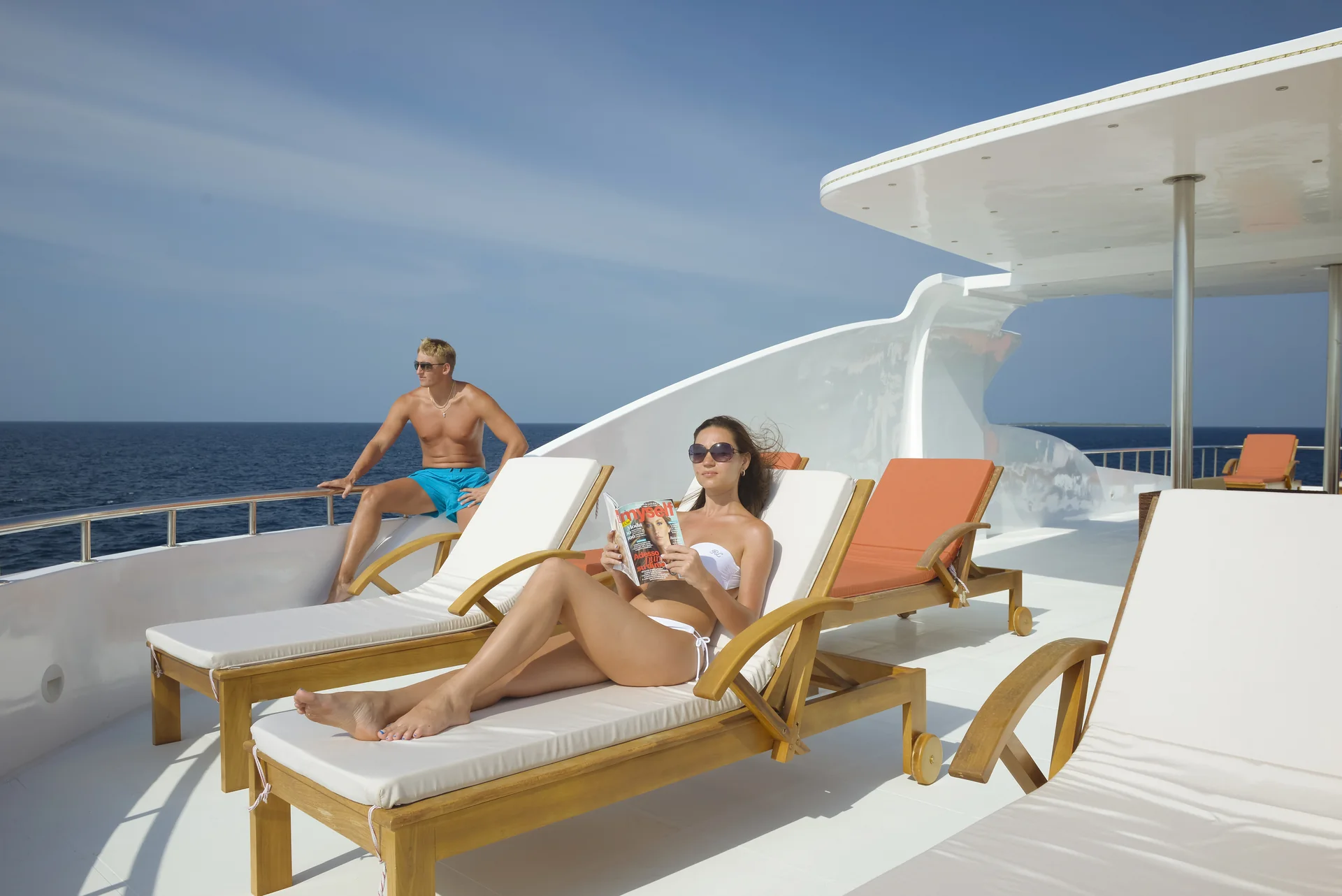
Here is what to expect on a Maldives liveaboard: three dives a day from a separate dive boat, four meals, a lot of time on the sun deck, and nights at anchor in a calm lagoon inside the atoll. Most trips run 7 nights, Saturday to Saturday from Malé, with about 16 dives. You pack light, live barefoot, settle a small bill in US dollars on the last night and, if you choose, leave the crew a tip of US$10 to US$15 a day.
- 3dives a day, plus some night dives
- 16dives on a typical 7-night trip
- 30 mlegal depth limit in the Maldives
- 24 hno diving before your flight home
What does a day on a Maldives liveaboard look like?
Days start early and follow the tides, so the cruise director moves times around, but the shape rarely changes: dive, eat, rest, repeat. This is a typical diving day on a central atolls route.
| Time | What happens |
|---|---|
| 6:00 | Wake-up call, tea, coffee and a light snack. Dive briefing in the lounge. |
| 7:00 | Dive one from the dhoni. Early dives in the channels give the best chance of sharks and other big animals. |
| 8:30 | Full breakfast back on the main boat. Nap, read, log the dive. |
| 10:00 | Dive two, often a thila (an underwater pinnacle), a reef or a manta cleaning station. |
| 12:30 | Lunch. The boat often moves to the next site while you eat. |
| 14:00 | Dive three, or a snorkel, beach stop or kayak on easier days. |
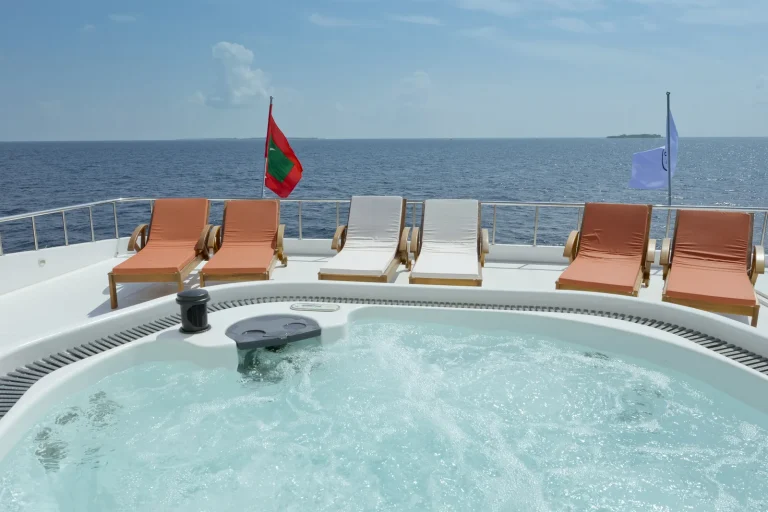
| 16:00 | Snacks, sun deck, camera table. The best light for photos of the boat. |
| 19:00 | Night dive on some evenings, usually on a sheltered reef. |
| 19:30 | Dinner, then early to bed. Most people are asleep by 10. |
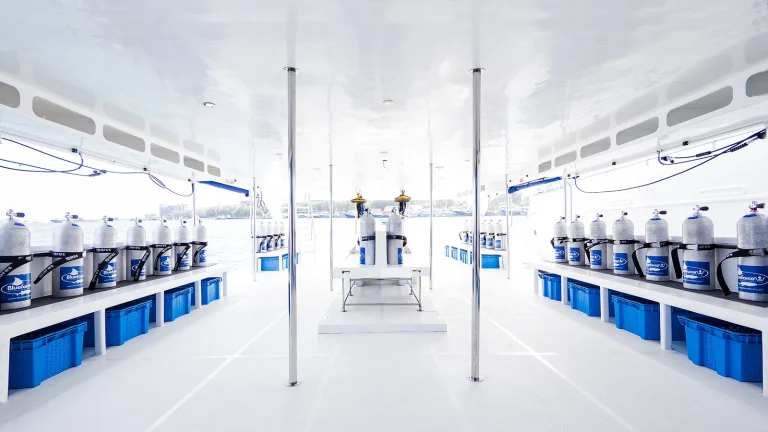
The main boat is for sleeping, eating and resting. The diving happens from a dive dhoni, a traditional Maldivian boat that follows the yacht with the tanks, compressors and everyone’s kit. You set your kit up once, at your own numbered station, and the crew refill tanks between dives. The yacht stays quiet and dry, which is one of the nicest things about diving here.
Before every dive the guide gives a briefing with a drawn map of the site: where the current should be running, where to hook on, and what you might see. Most Maldives dives are drifts through channels, called kandus, and many start with a negative entry, where you descend straight away so the group stays together. The diving itself is covered in detail on our Maldives liveaboard diving page.
How does a liveaboard week run?
- Day 1Arrival
The crew meet you at Velana airport in Malé and take you by boat to the yacht. Cabin, safety briefing, kit set-up on the dhoni. Usually no diving.
- Day 2Check dive
An easy first dive so the guides can see everyone’s buoyancy and weights. Then the normal three-dive rhythm starts.
- Days 3 to 6The main week
Channels, thilas and manta points, moving a few hours each day. Expect at least one night dive.
- Last full dayTwo dives only
Diving stops in the morning so you have 24 hours before your flight. Many boats plan a beach or sandbank barbecue that evening.
- Final morningHome
Breakfast, settle the bill if not done the night before, then the transfer to the airport.
Routes change with the season. The central atolls, with Ari, Vaavu and South Malé for sharks and mantas, run all year. From July to October some weeks go north to Baa Atoll for Hanifaru Bay, and from January to April a few long trips head to the Deep South. All dates and boats are on our departures calendar.
Cabins, food and life on board
Cabins are compact, air-conditioned and have their own bathroom on almost every boat. Space is for sleeping and showering; you spend the day on deck. Fresh water is made on board, so short showers are appreciated.
Shoes come off when you step aboard on most boats. You will live in swimwear, shorts and a T-shirt, with a hoodie for the air-conditioned lounge in the evening.
Food is served buffet style, three meals and snacks after dives, with plenty of fresh fish, curries and Maldivian dishes alongside pasta and salads. Tell us about allergies or diets when you book and the chef will plan for them.
Drinks: water, soft drinks, tea and coffee are usually free. Beer and wine are sold on board, because you cannot bring alcohol into the Maldives, even from duty free. Most boats keep the bar closed until the day’s diving is done.
Wi-Fi and power: Wi-Fi usually runs on mobile data and is slow, sometimes extra. Cabins have one or two sockets at 230 volts, so bring a universal adapter and a multi-port USB charger. Photographers usually get a camera table with its own power.
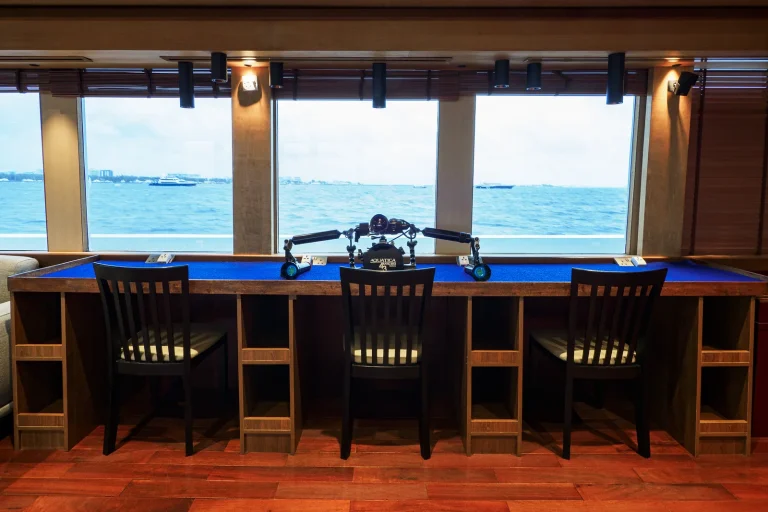
Other guests: most boats take 16 to 26 guests, often from many countries. Solo travellers are paired with someone of the same gender at no extra cost on most boats, unless they pay for a single cabin.
“Pack half of what you think you need. By the second day everyone is barefoot in shorts, and the only thing people wish they had brought is a warmer layer for the evening.”
Abdulla Maseeh, CEO, HolidayVibe Maldives
Maldives liveaboard packing list
Pack into a soft bag: cabins have little storage and hard cases don’t fold away. If your trip includes a domestic flight to the south, check its baggage allowance, which is often lower than your international one.
Dive kit
- Dive computer (required by Maldives law; you can rent one)
- Mask, fins and boots
- 3 mm full suit or shorty (water is about 27 to 30°C)
- Surface marker buoy with a reel
- Reef hook for the channels
- Torch for night dives
- Certification card, logbook and dive insurance details
Clothes
- Three swimsuits
- Shorts and T-shirts
- A light hoodie for the air-conditioned lounge and dhoni rides after dark
- Rash vest, hat and sunglasses with a strap
- One outfit covering shoulders and knees for a local island
- Flip-flops for beach stops (most boats are barefoot on board)
Health
- Seasickness tablets
- Reef-safe sunscreen
- Ear drops and plasters
- Your own medicines, with the prescription
Tech and money
- Universal plug adapter and a multi-port USB charger
- Dry bag for the dhoni
- US dollars in cash for the bill and tips
- A card as back-up
Leave at home
- Hard suitcases: soft bags fold away in a small cabin
- Alcohol: it is confiscated at Malé airport, even from duty free
- Too many clothes
Two rules shape the kit list. Maldives law requires every diver to use a dive computer and limits recreational diving to 30 metres, and boats expect you to carry a surface marker buoy. Gloves are not allowed.
How much to tip on a Maldives liveaboard
Tipping is optional but expected when the service is good. On the boats we book, the usual range is US$10 to US$15 per person per day, so about US$70 to US$105 for a 7-night trip. PADI’s general advice for liveaboards is 5 to 10 percent of the trip price, which works out higher; in the Maldives a daily amount per guest is the norm.
- How: put US dollars in an envelope and give it to the cruise director on the last evening. It is shared among the whole crew.
- Who it reaches: the dhoni crew, engineers and kitchen work as hard as the guides you see on every dive. A shared tip reaches them all.
- Service charge: some boats add a compulsory service charge of about US$150 to US$160 a week. That is part of the price, not a tip.
- Currency: bring US dollars, the currency used for everything on board.
Will I get seasick on a Maldives liveaboard?
Probably not much. Maldives liveaboards spend most of the week inside the atolls, where the reefs break the swell, and anchor at night in sheltered lagoons. The movement comes on the crossings between atolls, such as Malé to Ari, which take a few hours. Dhoni rides out to channel dives can be choppy too, but they are short.
The season matters. From December to April, the dry north-east monsoon, seas are usually calm. From May to November the south-west monsoon brings more wind, swell and rain, and crossings can be rough. Our best time for a Maldives liveaboard guide covers the months in detail.
- Take seasickness tablets before a crossing, not once you feel ill. Ask your doctor which one suits you and whether it affects diving.
- Ask for a cabin on the lower deck in the middle of the boat, where the movement is least.
- Stay outside on the main deck, look at the horizon and avoid reading or screens while the boat is moving.
- Eat something light and drink water. Tell the crew: they see it every week and know where to sit you.
“Most guests worry about seasickness far more than they need to. Nights are spent at anchor inside the atoll, and the open-water crossings are a few hours at most.”
Abdulla Maseeh, CEO, HolidayVibe Maldives
What you pay on board
Every boat prices differently: some include taxes and fees, others collect them on the last night. Expect to settle about US$250 to US$400 per person for a week’s extras, mostly in US dollars cash, with cards accepted on some boats. Our liveaboard prices guide shows what each boat includes.
| Charge | Typical amount | Notes |
|---|---|---|
| Green Tax | US$12 per person per night | Set by the Maldives Inland Revenue Authority. Included on some boats, collected on board on others: US$84 for a week. |
| Service charge | About US$150 to US$160 a week | Charged by some boats on top of the rate. It is not a tip. |
| Drinks | Beer from US$4, wine from US$5 a glass | Water, soft drinks, tea and coffee are free on most boats. |
| Rental kit | About US$120 to US$180 a week | For a full set. Nitrox is free on the boats we book. |
| Dive insurance | About US$30 for 7 days | Compulsory on every boat. Short cover can be bought on board if yours does not cover 30 m diving. |
| Wi-Fi | Free but slow, or about US$50 a week | Depends on the boat. |
| Crew tips | US$10 to US$15 per person per day | Optional, paid in cash on the last night. |
Snorkellers, non-divers and local islands
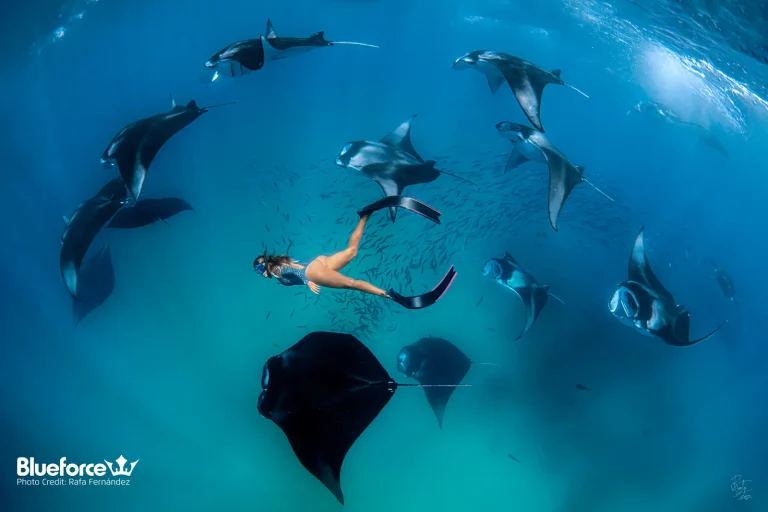
Non-divers are welcome on most boats. They snorkel from the dhoni over the same reefs while the divers are below, join the beach stops and kayak in the lagoons. In Hanifaru Bay, the manta feeding site in Baa Atoll, only snorkelling is allowed, so non-divers see exactly what divers see.
Many weeks include a stop at a local island. Maldivians are Muslim, so cover shoulders and knees when you go ashore, and leave drinks on the boat. A beach or sandbank barbecue on the last night is common, and a good way to say goodbye to the crew.
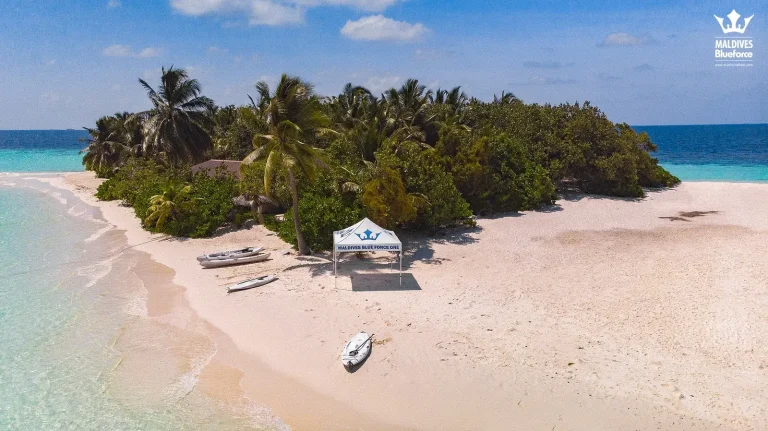
Still deciding whether a week at sea is right for you? Our liveaboard or resort comparison sets the two side by side, and you can split a trip between both.
Where to go next
- Maldives liveaboardsEvery boat, route and price in one place
- Liveaboard boats comparedCabins, guests, diving and price for each boat, from Blue Force One to Dune Theia and Princess Haseena
- Departures calendarDates and prices for the 2026/27 season
- Central atolls routeThe classic first-trip week: Ari, Vaavu and South Malé
Maldives liveaboard FAQs
How many dives a day on a Maldives liveaboard?
Usually three, from about 7 am to 3 pm, plus a night dive on some evenings. A 7-night trip has about 16 dives and a 10-night trip about 24. Diving stops on the last morning so you have 24 hours before flying.
Can I bring my own alcohol on a Maldives liveaboard?
No. Importing alcohol into the Maldives is banned, and bottles bought in duty free are confiscated at Malé airport. Liveaboards are licensed to sell drinks on board: beer from about US$4 and wine from about US$5 a glass. Most boats ask you not to drink until the day’s diving is over.
How much should I tip on a Maldives liveaboard?
Budget US$10 to US$15 per person per day, so about US$70 to US$105 for a week, paid in US dollars cash on the last evening. Tips are optional and shared among the whole crew, including the dhoni crew and the kitchen. A service charge on your bill is not a tip.
Will I get seasick on a Maldives liveaboard?
Most people don’t. The boat spends most of the week inside the atolls and anchors in sheltered lagoons at night. The rougher parts are the open-water crossings between atolls, which last a few hours. Take tablets before a crossing, not after, and choose a cabin low down and in the middle of the boat.
Is there Wi-Fi on a Maldives liveaboard?
Most boats have Wi-Fi, but it runs on mobile data and is slow; some charge about US$50 a week. A local SIM card bought at the airport works near most inhabited islands, and there is often no signal in remote atolls.
Can non-divers go on a Maldives liveaboard?
Yes. Non-divers snorkel from the dhoni while divers are below, often on the same reefs, and some boats give them a discount. Hanifaru Bay in Baa Atoll is snorkel only. For a whole week built around snorkelling, see our snorkelling liveaboard guide.
Sources: daily schedules, dive counts and on-board charges from operator rate sheets and itineraries for 2026/27 (Dune Liveaboards, Top Class Cruising and Blue Force Fleet), as published on our prices and diving pages; the 30 m depth limit from the Maldives Recreational Diving Regulation (Ministry of Tourism); the alcohol import ban from Maldives Customs and Velana International Airport; the Green Tax rate from the Maldives Inland Revenue Authority; the tipping guideline from PADI. We confirm each boat’s charges in writing before you book.


