

Home › Local Islands › Fulhadhoo › Snorkelling
Fulhadhoo gets talked about for its beach, and fairly so. The snorkelling story is more nuanced, and most guides gloss over it. You can get in the water from shore here, and on a good day at the right tide you will see turtles, rays and plenty of reef fish. But the island’s best coral is not a swim-out from the beach; it is a short, cheap boat ride away. This guide covers both honestly: where to get in from shore, what the tides and currents do, which boat spots are worth paying for, what trips cost, and when a Hanifaru Bay enquiry makes sense from Fulhadhoo.
Fulhadhoo snorkelling, the direct answer. Fulhadhoo is a local island in Baa Atoll (geographically the Goidhoo Atoll group), 101.21 km north-west of Malé, about 2 hours by shared speedboat. Shore snorkelling is possible, but the reef experience varies by entry point, tide, current and visibility. The western end of the bikini beach is one commonly reported access toward the north reef, while other first-hand accounts identify eastern and north-eastern reef areas. Lower tide can make shallow coral sections unsuitable for snorkelling. Stronger coral experiences such as Rose Garden (also called Coral Garden) usually require a guided boat trip. Seasonal manta and Hanifaru Bay excursions may be possible, but they depend on weather, permits, minimum passengers and recent wildlife conditions. Prices vary by boat, group size and season, so confirm for your exact dates rather than relying on an old public range. Trips are arranged through your guesthouse or a licensed agency such as HolidayVibe via WhatsApp. Sightings are never guaranteed.
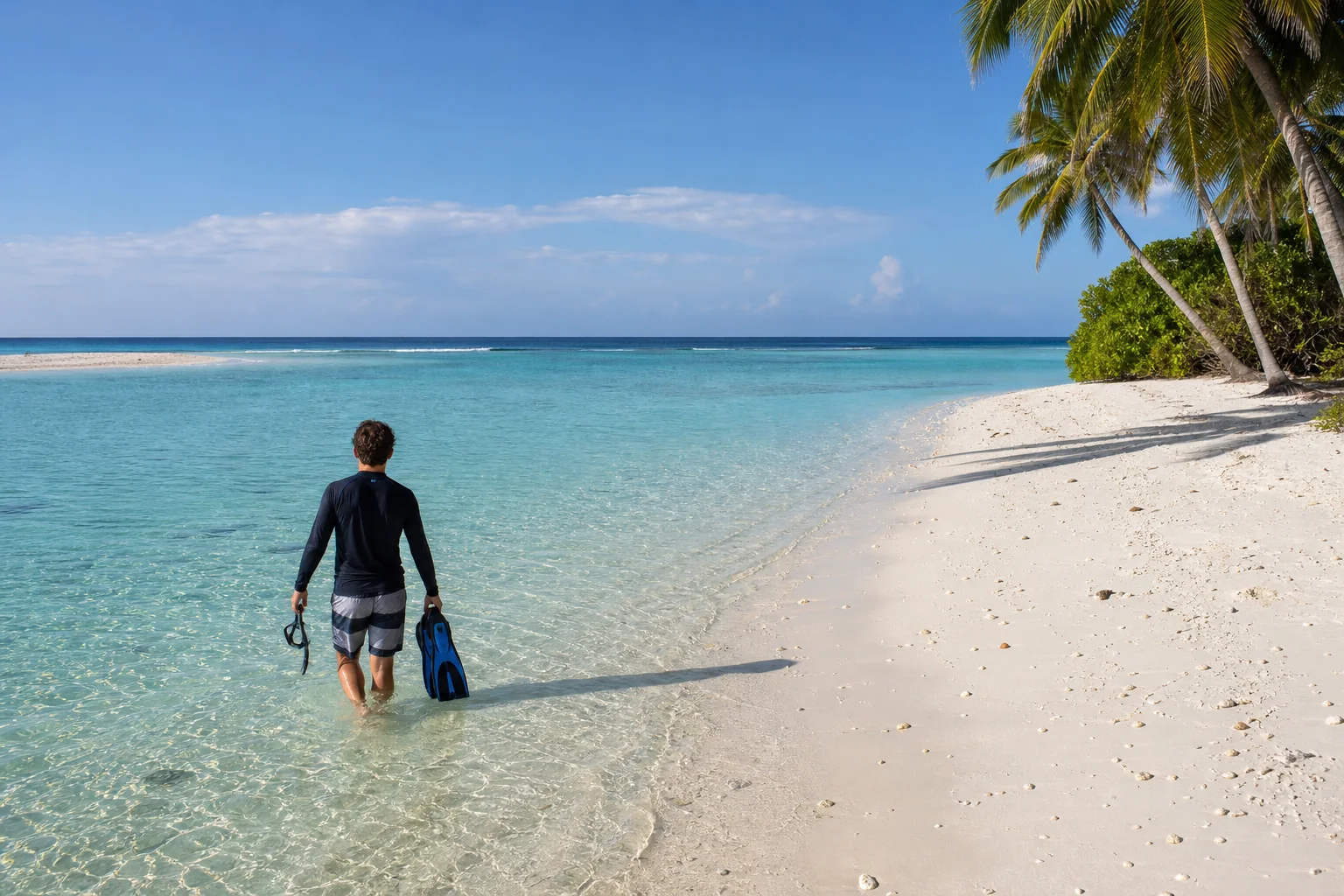
| Option | Access | Best for | Main limitation |
|---|---|---|---|
| Western end of the bikini beach | Shore, free | Most visitors, beginners at high tide | Not the island’s densest coral |
| North reef | Shore, free | Confident swimmers with fins | Current has been reported; conditions vary by day |
| East of the village | Shore, free | Coral-focused snorkellers | Modest dress rules apply outside the water |
| Guided house reef session | Shore or boat drop, paid | Beginners, families, first day | Confirm guide gets in the water |
| Coral Garden (Rose Garden) | Boat, paid | Confident snorkellers, photographers | Current can be present; assess on the day |
| Fish Point (near Innafushi) | Boat, paid | Marine-life focused | Ask for a no-feeding trip |
| Coral nursery visit | Guided, provider-dependent | Conservation-minded visitors | Confirm it is currently running |
| Turtle and multi-reef trips | Boat, paid | Mixed abilities | Sightings never guaranteed |
| Hanifaru Bay | Longer boat trip, seasonal | Manta-focused visitors | Regulated, permit required, seasonal only |
Yes, and this is where honesty matters, because accounts differ. Some travel sites rate Fulhadhoo’s house reef among the best in the Maldives. First-hand reports are more measured: near the beach the water is often slightly milky, the coral inside the lagoon is patchy, and the reward improves the further you get toward the reef edge. Both things can be true on the same day at different tides.
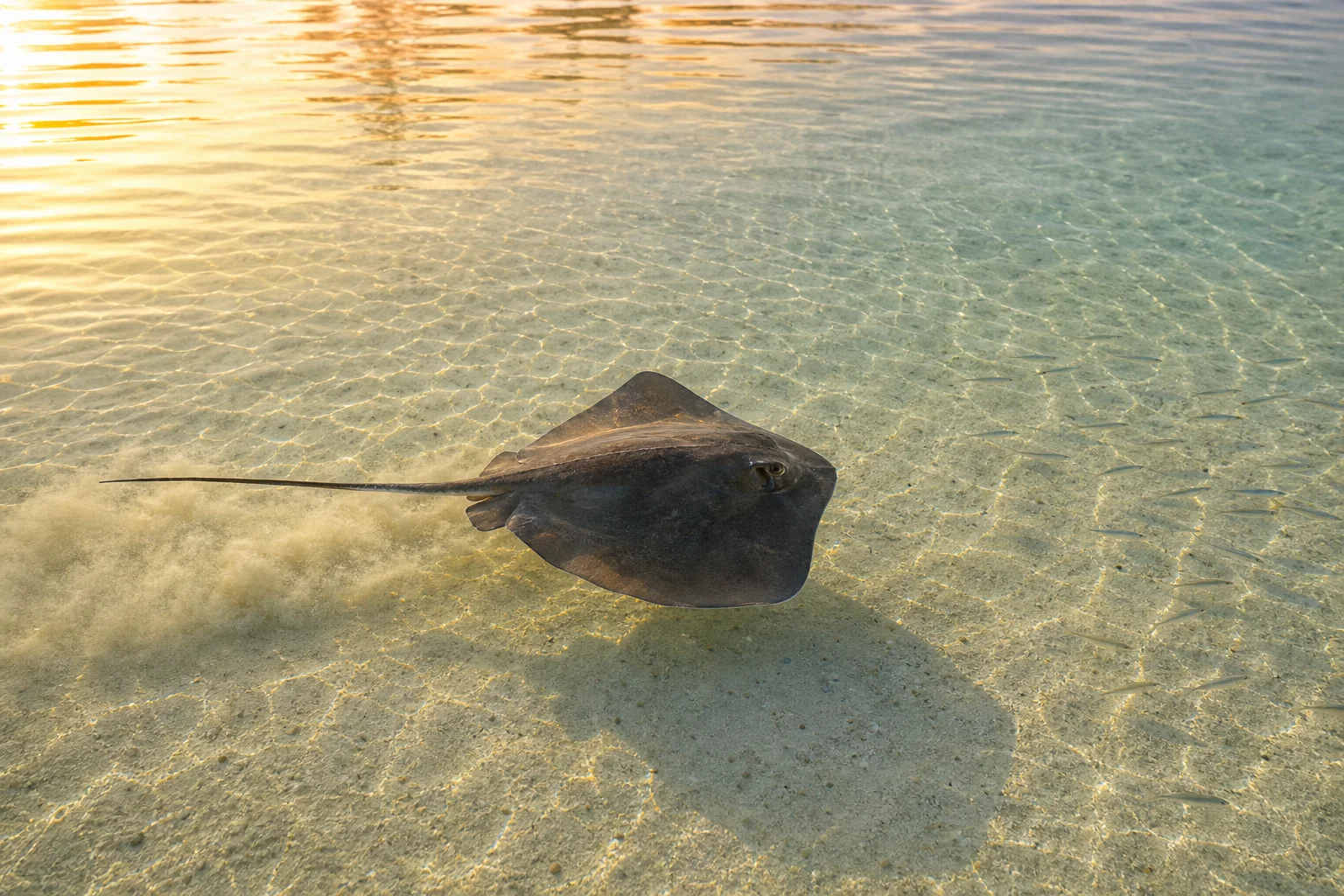
Here is the realistic picture. Fulhadhoo is a long, thin island, about 1.9 km end to end, ringed by a lagoon. Inside the lagoon you will find seagrass patches, sand, scattered coral heads, juvenile fish, and sometimes stingrays and small reef sharks in the shallows, occasionally visible from dry sand. The denser coral and bigger fish live on the outer reef slope, and reaching it from shore means a longer swim and, in places, current. If your expectation is aquarium coral three metres from your towel, a resort house reef island will suit you better. If you are happy to time the tide, fin out from the right entry point and treat shore snorkelling as the free warm-up to a couple of paid boat trips, Fulhadhoo delivers.
Western end of the bikini beach. The most commonly reported entry. From the western tip of Fulhadhoo’s bikini beach you can reach stretches of coral and rock along the island’s north side. A first-hand snorkelling guide also reports an artificial reef structure near the northern side with coral growth and reef fish; ask locally whether it remains an appropriate entry and whether conditions suit your ability.
The north reef. The reef zone off the island’s north-east extends a long way out, and one detailed first-hand account treats it as the island’s main shore-snorkelling area. Current has been reported around parts of the northern and north-western reef and may become stronger near reef edges; direction and strength can change with tide, wind and season. It suits confident swimmers with fins, not weak swimmers or unaccompanied children, and locals advise against pushing out toward the drop-off.
East of the village, south of the locals’ beach. Several visitors rate the small reef here as the prettiest coral close to shore, with fewer fish than the north side. Remember you are next to the village. In March 2026, Fulhadhoo Council introduced an MVR 750 enforcement measure concerning inappropriate tourist dress in shared public areas; reports differ on whether the penalty is applied to the visitor or to the responsible guesthouse. The practical rule is clear: keep standard swimwear for the designated bikini beach and the water, cover shoulders and knees on the walk over, and ask your guesthouse where the accepted entry points are before choosing this side.
Wear fins or water shoes at every entry point. Coral rubble and rock are sharp, and fins are also your safety margin against current. Never snorkel alone, tell your guesthouse where you are going, and know your exit point before you get in.
Shore snorkelling on Fulhadhoo is tide-dependent to a degree that surprises people. At lower tide, some shore areas, particularly shallow sections over coral and reef flat, can become too shallow for safe snorkelling. Ask about the day’s tide and avoid kicking or walking over coral.
| Tide | Swimming and snorkelling conditions |
|---|---|
| High tide | Often the easiest window for shallow shore access, subject to current and weather |
| Mid tide | Workable. Watch depth over coral heads; entries at the western beach end still fine |
| Low tide | Shallow coral and reef-flat sections may be unsafe to snorkel. Walk the beach, photograph the sandbank, and wait for more water |
| Time of day | Best for | Watch out for |
|---|---|---|
| Early morning | Calm surface, soft light | Cooler water, check tide first |
| Late morning | Warmest, brightest underwater colour | Sun exposure, midday glare |
| Afternoon | Convenient after excursions return | Wind chop on some days |
| Late afternoon | Possible rays and small sharks in the shallows | Fading light underwater, do not start a long swim |
Current warning. Do not enter an unfamiliar reef without checking the day’s conditions, entry point and exit point. Use fins, snorkel with a buddy and stay within your ability. If current is present or you are not a confident swimmer, join a guided session with boat support. Follow the guide’s briefing rather than relying on general online instructions.
Fulhadhoo’s best snorkelling is a five to twenty minute boat ride away, and trips are cheap by Maldives standards because the distances are short.
Coral Garden, called Rose Garden by many boats and in some visitor accounts, is a boat-accessed coral site close to Fulhadhoo, and it can also be reached from Fehendhoo and Goidhoo. It is the trip most guesthouses suggest first. Coral condition, visibility and current all vary: one first-hand visitor described strong current during their trip, so the guide should assess on the day whether conditions suit beginners or only confident snorkellers, and how the boat will support the group in the water.
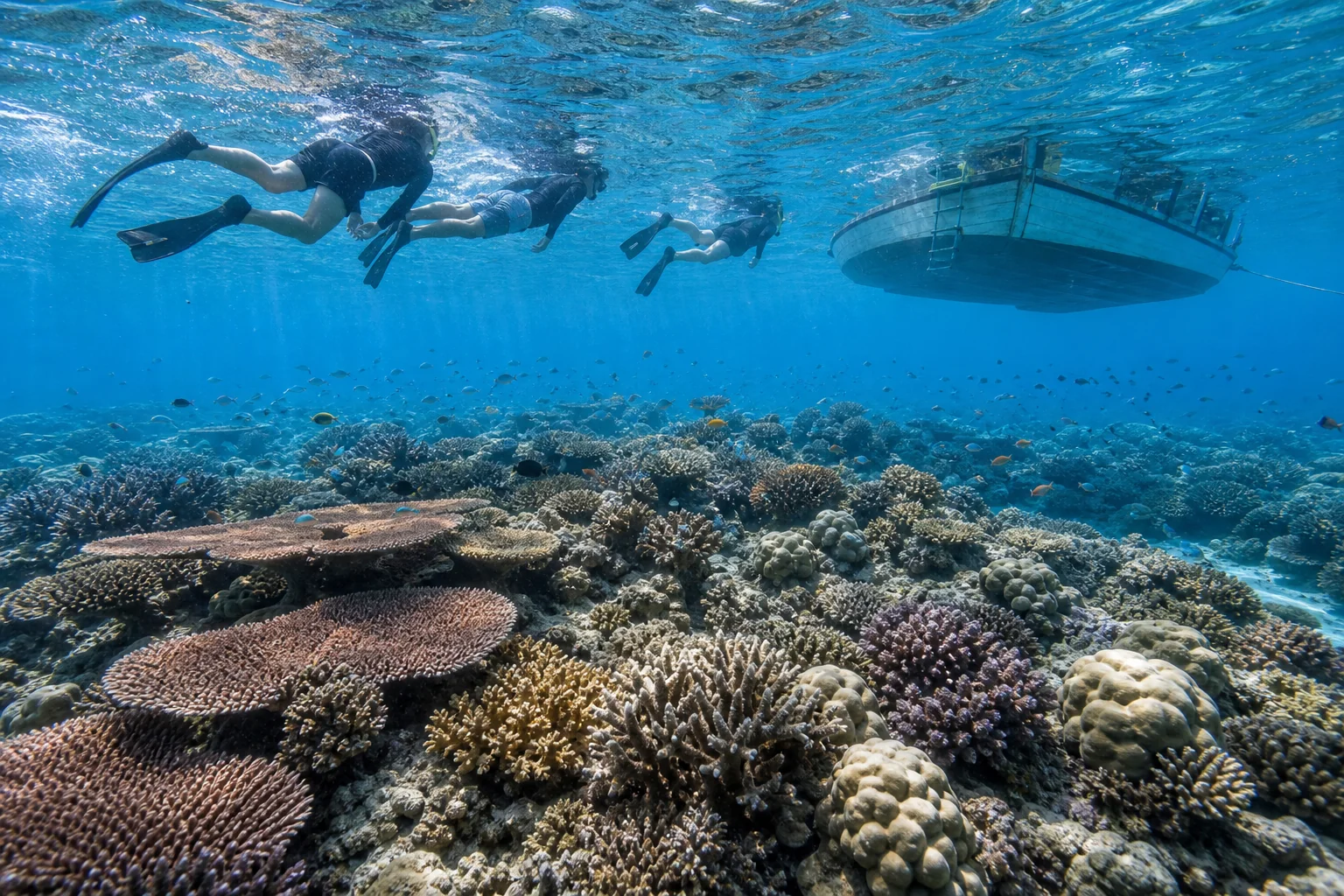
A guided reef trip near Innafushi, the uninhabited island west of Fulhadhoo, is sometimes promoted as Fish Point or Batfish Point. Schools of batfish may approach snorkellers, but the site name, route and wildlife vary by provider, so confirm the actual stop when booking. One thing to know: some guides have historically brought food to attract the batfish. Feeding changes fish behaviour and harms the reef. Ask for a wildlife-respectful trip that does not feed fish to manufacture an encounter; a good guide will respect that.
Recent visitor accounts describe a guided coral-nursery snorkel starting from the beach, linked to a small reef-restoration effort on the island. It is a provider-dependent activity rather than a permanent public attraction, so treat it as available on request: we confirm it is currently running, who maintains it and what participation involves before quoting it. If you do visit one, the rule is absolute: never touch, move or attach coral outside a properly managed programme.
Fehendhoo sits about five minutes away by boat, Goidhoo a little further across the atoll. Both have their own reef sections and lagoon snorkelling, and combining a neighbour-island visit with a snorkel stop and a sandbank makes a pleasant half-day. The Dhoru Kandu reef pass between the islands is primarily dive territory (see the Fulhadhoo diving guide), but its edges hold pelagic life; snorkelling near a channel is strictly a with-guide, conditions-permitting call.
Most half-day trips add a sandbank stop. The snorkelling immediately around a bare sandbank is usually sand and seagrass rather than coral, so treat it as the picnic-and-photos part of the day, not the reef part. Rays and the occasional turtle pass through the seagrass.
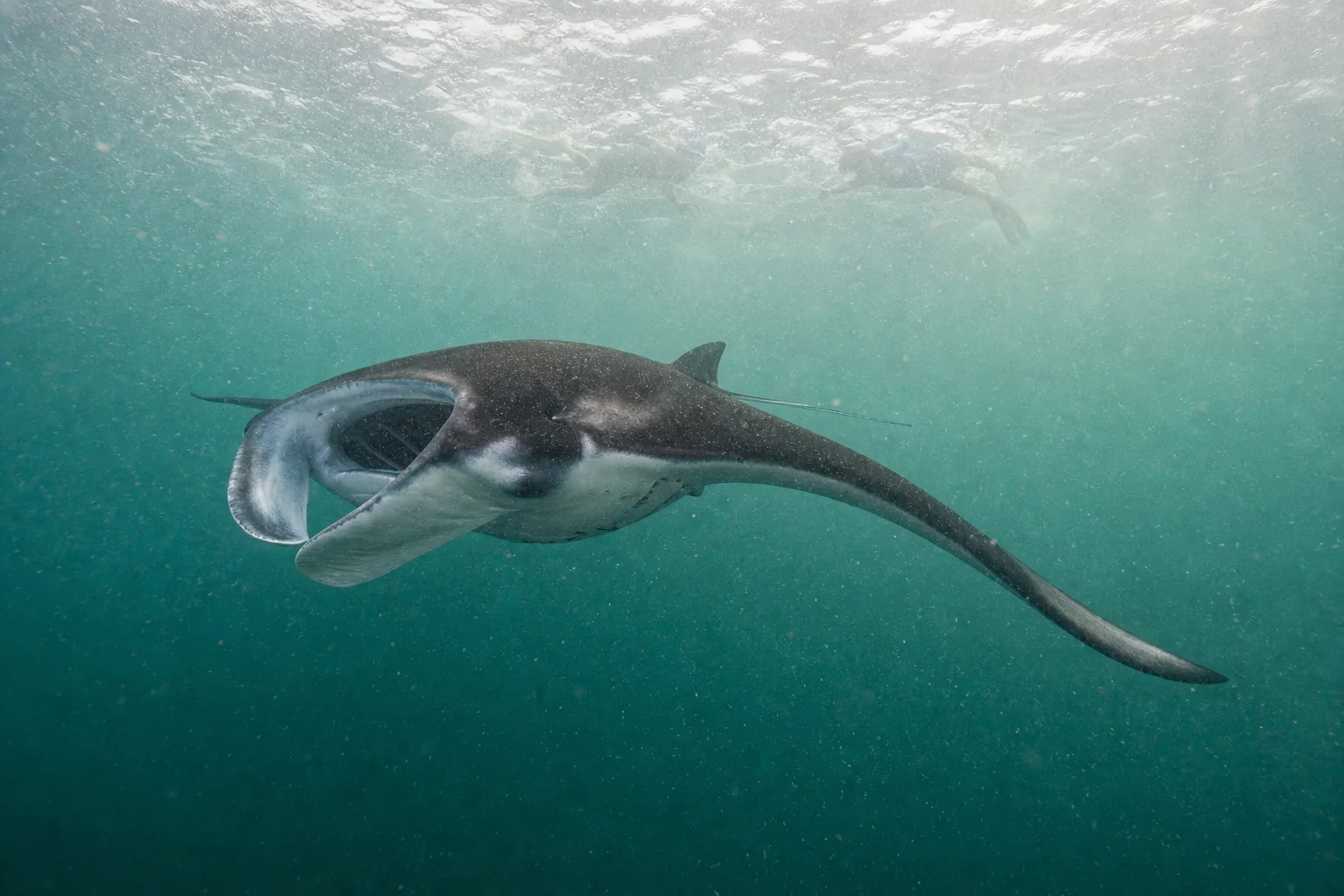
Hanifaru Bay is Baa Atoll’s famous seasonal manta and whale-shark feeding site, a protected core area of the atoll’s UNESCO Biosphere Reserve, linked to south-west monsoon plankton conditions. A trip may be possible from Fulhadhoo when the season, sea conditions, authorised operation, permit availability and minimum passenger requirements align. It is a longer protected-area excursion rather than a normal local reef trip. Because the rules are strict and widely misreported, here is the current published guidance:
| Rule | Current published guidance |
|---|---|
| Activity | Regulated snorkelling only. Scuba diving is banned inside the bay |
| Access | Visitor permit required. Confirm the current fee when booking, because access charges and operating arrangements can change |
| Maximum water time | About 45 minutes per session |
| Guides | 1 certified guide per 10 guests |
| Published maximum | Up to 80 snorkellers |
| Season | Mantas aggregate roughly May/June to November, strongest July to October |
| Wildlife | Sightings and aggregation size are never guaranteed |
From Fulhadhoo the trip is a longer boat ride across the atoll than the local spots, and it needs the season, the weather and permit availability to line up, so it is arranged on request rather than run daily. Fulhadhoo is not the closest Hanifaru base: travellers choosing an island mainly for quick Hanifaru access should also compare Dharavandhoo or Maalhos. Whale sharks also appear at Hanifaru in season, but treat any sighting as a bonus, never a promise. If mantas are the main reason for your Maldives trip, plan your dates for July to October and tell us before you book your island nights, because the season, not the guesthouse, should set your calendar.
| Marine life | Realistic expectation |
|---|---|
| Reef fish (parrotfish, surgeonfish, butterflyfish) | Common across suitable reef areas |
| Batfish | Associated with some Innafushi-area trips |
| Stingrays | Possible in sandy and seagrass areas. Observe quietly, never feed |
| Small reef sharks | Possible in lagoon or reef areas. Never feed or chase |
| Turtles (including hawksbill, Eretmochelys imbricata) | Possible on shore and boat reefs |
| Eagle rays | Occasional and unpredictable |
| Reef manta rays (Mobula alfredi) | Seasonal, boat-based possibility. Not seen from the beach |
| Whale sharks (Rhincodon typus) | Occasional Hanifaru visitor in season, never guaranteed |
| Dolphins | Possible during boat crossings |
No sighting on this table is guaranteed on any given day. That is how wild reefs work, and any page promising otherwise is overselling.
| December to April | May to November | |
|---|---|---|
| Sea state | Calmest, most reliable | More variable, occasional rough days |
| Visibility | Generally best | Reduced at times by plankton, which is what brings the mantas |
| Rain | Least likely | More frequent, usually in bursts |
| Mantas and Hanifaru | Off season | In season, peak July to October |
| Prices and crowds | High season demand | Quieter, rates typically lower; confirm directly |
There is no closed season. Sea temperatures are warm throughout the year, broadly around 26 to 30°C across the Maldives, though personal comfort still varies during long sessions. Choose December to April for the calmest shore snorkelling, or July to October if mantas are the priority and you will accept a rain shower or two.
We are a Ministry of Tourism licensed Maldives travel agency based in Malé. We arrange your guesthouse, your Malé to Fulhadhoo speedboat seats and your snorkel trips together, with real answers about tides, seasons and what is worth paying for.
Message us on WhatsAppThere is no public price list that covers every boat on Fulhadhoo, so treat every figure below as an indicative shared-trip range and confirm when booking. Private boats cost more; larger groups bring the per-person price down. TGST of 17% may or may not be included in a quoted price, so ask.
| Trip | Indicative price per person (shared) | Duration | Good for |
|---|---|---|---|
| House reef guided snorkel (with guide, from shore or nearby boat drop) | USD 25 to 40 | 1 to 2 hrs | Beginners, families, first day |
| Coral Garden and Fish Point boat trip | USD 35 to 55 | 2 to 3 hrs | Confident snorkellers |
| Turtle and reef trip (multiple stops) | Around USD 65 | Half day | Marine-life focused |
| Sandbank plus snorkel combo | USD 55 to 75 | Half day | Couples, families, photos |
| Hanifaru Bay excursion (in season) | Higher; quoted per trip, plus a visitor permit per person (confirm the current fee when booking) | Most of a day | Manta season visitors |
| Neighbour island (Fehendhoo or Goidhoo) plus snorkel | USD 45 to 75 | Half day | Slow-travel days |
Ask these eight things: the exact stops, the swimming ability expected, that a guide gets in the water with the group, that life jackets and child-sized masks are on board if you need them, that the trip does not feed fish or rays, whether the boat is shared with guests from other guesthouses, the minimum group size for the price quoted, and the weather cancellation terms. A boat that answers all eight clearly is a boat worth being on.
Some Fulhadhoo guesthouses lend or rent masks, snorkels, fins and life jackets. Availability, condition, sizes and charges vary, so confirm before arrival. Two honest caveats. First, loaner masks are the most-used gear on any island, so fit and condition vary; if you have a prescription mask or a mask you trust, bring it. Second, fins are the item most often missing in guest sizes, and fins matter here where current can be present. If you travel with only one piece of kit, make it your own fins or reef shoes.
Bring as well: a rash vest or leggings as your first line of sun protection (minimise unnecessary sunscreen wash-off before entering the water, and choose products that comply with current environmental guidance where practical), and a dry bag for boat trips. Do not rely on buying specialist equipment after arrival; bring prescription masks or hard-to-find sizes with you. Two small guesthouse questions that improve every snorkel day: ask for an early or packed breakfast when your boat leaves in the morning, and ask where to rinse and dry gear so your mask is not salt-crusted by day three.
| Snorkeller | Verdict |
|---|---|
| Beginner | Good, with conditions: use the western beach entry at high tide, or take a guided house reef trip first |
| Confident snorkeller | Very good: shore sessions free, then Coral Garden and Fish Point by boat |
| Children | Lagoon shallows can suit supervised paddling at the right tide. Child suitability for boat trips must be confirmed for the exact boat, route and weather; ask about correctly sized life jackets, shade, journey duration and whether a parent can remain onboard |
| Weak swimmer or non-swimmer | Possible with a life jacket, a guide and calm conditions; be candid about ability when booking |
| Marine-life-focused traveller | Strong in season: Hanifaru Bay mantas, turtles, batfish, rays; come July to October |
Baa Atoll is a UNESCO Biosphere Reserve for a reason: UNESCO records roughly 250 coral species and 1,200 reef and reef-associated fish species across the reserve, though not every species occurs at every Fulhadhoo site. The reefs here are also the island’s economy and its sea wall. Four rules cover it: do not touch or stand on coral (fins up in the shallows), do not feed anything, including the batfish at Fish Point and the rays near the jetty, keep two metres from turtles and let mantas come to you, and favour sun-protective clothing while minimising sunscreen wash-off into the water. Stingrays gathering near jetties are a natural sight to watch quietly from a distance; feeding them for photos changes their behaviour and is harmful. If a guide starts feeding wildlife on your trip, you are within your rights to say you would rather they did not.
Evening before: check the tide with your guesthouse and book the next afternoon’s boat trip.
Early morning: walk the bikini beach and get in at the western end for an hour on the north reef while the light is soft and the sea is calm.
Late morning: dry off, refuel, and let the sun climb.
Early afternoon: take the Coral Garden and Fish Point boat trip you booked the day before.
Late afternoon: walk the shallows at the lagoon’s edge and watch for rays and small sharks as the light goes gold. That is a full snorkel day on Fulhadhoo built around one affordable guided boat trip. More island ideas are in our things to do on Fulhadhoo guide.
| Mistake | Do this instead |
|---|---|
| Turning up at low tide expecting to snorkel the lagoon | Check tide times with your guesthouse; snorkel the high-tide window |
| Judging the whole island by one milky near-shore swim | Get to the reef edge or take the Coral Garden trip before you judge |
| Swimming toward the drop-off on the north side | Stay inside the reef line; the current strengthens past it |
| Snorkelling alone | Always take a buddy and tell your guesthouse your plan |
| Skipping fins | Bring or borrow fins; they are your safety margin in current |
| Expecting mantas in February | Manta season is May to November, peak July to October |
| Booking Hanifaru the day before flying out | Build slack into your dates; trips depend on weather and season |
| Wearing swimwear outside the designated beach | Cover shoulders and knees in shared public areas; an MVR 750 enforcement measure has applied since March 2026 |
| Assuming quoted prices are final | Confirm inclusions, group minimums and TGST before you pay |
| Standing on coral to fix a mask | Float, or move to sand first |
Tell us your month and your must-sees, and we will tell you honestly what Fulhadhoo can deliver then, arrange your guesthouse and speedboat seats, and line up the right snorkel trips, including Hanifaru Bay when the season is on. HolidayVibe is a Ministry of Tourism licensed travel agency in Malé.
Book on WhatsApp Read the full Fulhadhoo island guideYes, with the right expectations. The shore experience varies by entry point, tide and current, and the stronger coral, such as Rose Garden, usually needs a short guided boat trip. It rewards people who ask locally, time the tide and take one or two guided trips.
Yes. The western end of the bikini beach is one commonly reported entry toward coral along the north side, and other first-hand accounts favour eastern and north-eastern reef areas. At lower tide, shallow coral sections can become unsuitable, so ask your guesthouse about the day’s tide and entry.
Visitor accounts most often name Rose Garden (Coral Garden), a boat-accessed coral site close to Fulhadhoo, with guided trips near Innafushi, sometimes promoted as Fish Point, close behind for batfish. Conditions, coral state and current vary, so let the guide assess suitability on the day.
Indicatively USD 35 to 55 per person for a shared local boat trip, around USD 65 for turtle or manta focused trips, and USD 55 to 75 for sandbank-plus-snorkel combos. Prices vary by group size, boat and season; confirm inclusions and TGST for your exact dates.
Seasonally, yes. Reef mantas aggregate in Baa Atoll roughly May to November, peaking July to October, and Hanifaru Bay day trips run from Fulhadhoo in season. Mantas are not seen from the beach, and no trip can guarantee them.
Sometimes, when the season, sea conditions, authorised operation, permit availability and minimum passengers align. Hanifaru is regulated snorkelling only (no scuba), a visitor permit is required (confirm the current fee when booking), in-water time is limited to about 45 minutes per session, guides are certified at one per 10 guests, and the published maximum is up to 80 snorkellers.
Small reef sharks are possible in the lagoon and on the reefs around Fulhadhoo, and they generally avoid people. Never feed, chase or corner them, and give any animal space in the water.
The lagoon shallows can suit beginners and supervised children at the right tide, and a guided session is the sensible first step. Current-affected areas and boat sites are for confident swimmers. Confirm life jackets, child-sized masks and suitability for the exact boat, route and weather, and be honest about swimming ability.
Some lend or rent mask-and-snorkel sets; availability, condition, sizes and charges vary, so confirm before arrival. Bring your own mask if you rely on a good fit, and prioritise fins or reef shoes, which matter most where current is present and are least often available.
December to April generally brings the calmest seas and clearest water. May to November is manta season with more plankton and occasional rough days. Sea temperatures are warm all year, broadly around 26 to 30°C across the Maldives, so there is no closed season.
Current has been reported around parts of the northern and north-western reef and at boat sites such as Rose Garden, and it can become stronger near reef edges. Direction and strength change with tide, wind and season, so check conditions locally, wear fins, and use guided boats for outer sites.
Yes at the designated bikini beach and on excursion boats. Elsewhere, cover shoulders and knees. In March 2026 Fulhadhoo Council introduced an MVR 750 enforcement measure over inappropriate dress in shared public areas; reports differ on whether it is charged to the visitor or the guesthouse, so keep swimwear to the designated beach either way.
For ordinary reef trips, a day ahead on the island is usually enough. Hanifaru Bay trips and peak-season dates are worth arranging before you travel, since they depend on weather, permits and boat availability. HolidayVibe can line these up with your guesthouse and transfer.