

Home › Diving in Maldives › Dhigurah Diving
Dhigurah sits right beside the South Ari whale shark park, with thilas, outer reefs and reef sharks a short boat ride away. Here’s the honest guide to diving it, with local help to put the trip together.
Plan my Dhigurah diving trip on WhatsAppDhigurah is a long, narrow local island in South Ari Atoll, and one of the most practical bases for diving in the Maldives without paying resort prices. You’re on the doorstep of the South Ari Marine Protected Area, where whale sharks are seen year-round, and within easy reach of well-known thilas like Kudarah Thila and Broken Rock. There are several PADI dive centres on the island, courses from beginner to advanced, and guesthouse stays that keep the whole trip affordable.
In short: if you want whale shark territory, colourful pinnacle dives and a relaxed local-island stay in one place, Dhigurah is a smart pick. Just don’t expect alcohol on the island, and don’t book on whale sharks alone, they’re never guaranteed.
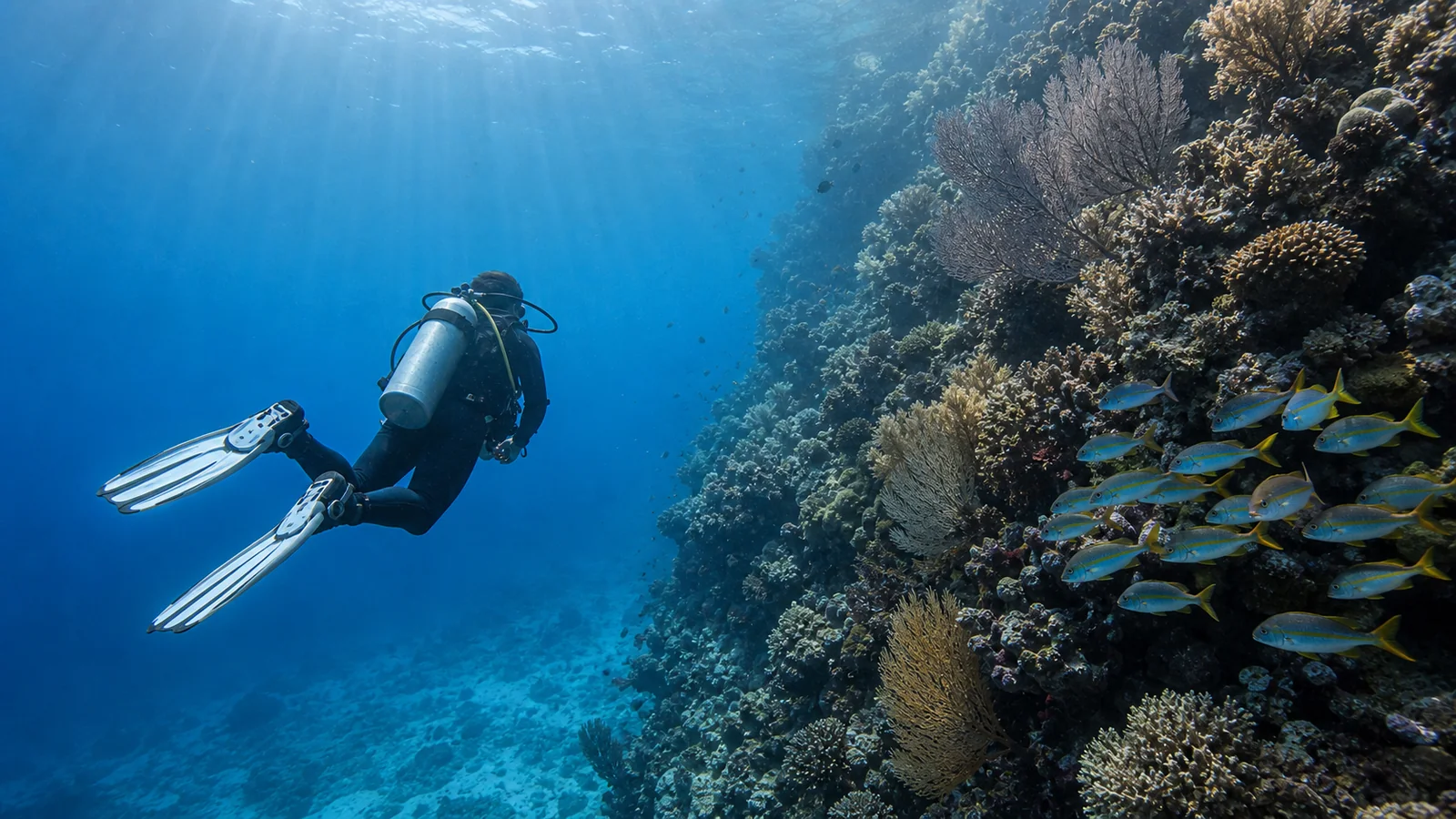
South Ari’s reefs and thilas sit a short boat ride from Dhigurah.
Most Maldives diving happens from private resort islands, where a week underwater can cost as much as the flights. Dhigurah flips that. It’s an inhabited local island, so you stay in a guesthouse, eat at island cafes, and dive with a local centre, usually for a fraction of resort prices. You get the same water.
The location is the real draw. Dhigurah sits close to the eastern side of the South Ari Marine Protected Area, the stretch of reef known for repeat whale shark sightings. The same atoll holds some of the country’s best-known pinnacle dives. So in one base you’ve got big pelagic chances, proper reef and thila diving, and a quiet island with one of the longest sandbanks in the Maldives at its southern tip.
It also pairs well. One of you can dive while the other snorkels the house reef or walks the beach. That makes Dhigurah an easy choice for couples and mixed groups, not just hardcore divers.
South Ari is busy with life. On a typical few days of diving around Dhigurah you’ve a good chance of:
A fair word on the wildlife: nothing here is guaranteed. Good operators read the weather, the current and recent sightings, then adjust the plan. Some days the whale sharks are everywhere; some days you see reef life and head home happy anyway. That’s diving with wild animals, and any centre that promises otherwise isn’t being straight with you.
Local centres list access to more than 30 sites across South Ari, from shallow reefs to deep channels and pinnacles. These are the ones worth knowing before you go:
| Dive site | Best for | Good to know |
|---|---|---|
| Kudarah Thila | Pinnacle diving, soft corals, fish life | A protected, well-known South Ari site built from coral blocks split by channels and overhangs. Currents can pick up fast, so it usually suits certified divers who can drop down and tuck in quickly |
| Broken Rock | Canyon, swim-through, overhangs | A split pinnacle in Dhigurah Kandu with a narrow canyon down the middle, walls lined with soft corals. Top reef around 12m, parts to 30m. Good buoyancy matters here so you don’t brush the coral |
| Dhigurah Thila | Reef sharks, overhangs, macro | Top reef can start around 8m and drop to 30m |
| Maamigili Beyru | Whale shark search area | Inside the SAMPA whale shark zone; more on our whale shark page |
| Rangali Madivaru (Manta Point) | Manta rays, cleaning station | Seasonal; depends on plankton and conditions |
For the full picture across the country, see our guide to Maldives dive sites. For Dhigurah, your centre will pick the day’s sites based on the current, your certification and what’s been showing up lately.

The thilas around Dhigurah draw reef sharks and big schools when the current runs.
Both, with one honest caveat.
If you’re new, Dhigurah works well. The lagoon and shallower reefs are calm enough for a Discover Scuba session or a full PADI Open Water course, and the local centres run training year-round. It’s a gentle place to take your first breaths underwater.
If you’re certified, the thilas are where it gets interesting. Sites like Kudarah Thila and Broken Rock can carry real current, and that’s exactly what brings in the sharks and the big schools. An Advanced Open Water card opens up the deeper pinnacles, and Nitrox is worth it if you’re diving several days in a row.
The caveat: if whale sharks are your main reason for coming, know that they’re usually a snorkelling encounter near the surface, not a scuba one. So a non-diver or a brand-new diver can still get the whale shark experience. Just don’t pick your dive course around it.
Dhigurah has several established dive centres, including Island Divers, Fari Dive Center, Go Divers and other local operators. They run daily boat dives, rental gear and courses from beginner up. We won’t rank them, that depends on what you need, and we check the best current fit before quoting.
Here’s what actually matters when you choose:
This is where a local agency earns its keep. We know the centres, we check current availability before we quote, and we line up the dive plan, guesthouse and speedboat so the timing actually works.
One practical thing worth knowing: most daily dives run from a traditional Maldivian dhoni or a covered dive speedboat. Either way you get shaded deck space, room for your gear, and a proper ladder for getting in and out, which matters more than you’d think on a full day of two or three dives.
Diving from a local island is one of the cheaper ways to get underwater in the Maldives, but prices move with the operator, your inclusions and the season. Use these as planning ranges, not fixed quotes:
| What | Planning range (per person) |
|---|---|
| Single fun dive | Around USD 50–60, before checking inclusions and boat fees |
| Discover Scuba | Around USD 145–160 |
| PADI Open Water course | Around USD 650–850+, depending on operator, materials and inclusions |
| 5 nights + 6 dives package | Roughly USD 970 upward, depending on stay and inclusions |
| 7 nights + 10 dives package | Roughly USD 1,360 upward |
Watch the boat fees. Some centres quote the dive price but charge a separate, mandatory boat fee on-site. Always ask what’s included before you commit. Prices also shift with accommodation, board basis, equipment, transfers, taxes and season, so we confirm current rates with the operator before quoting you anything.
For the full breakdown, inclusions and a tailored quote, see our Dhigurah diving packages page, or compare nationally with our guide to Maldives diving costs.
This is what most people come for. Dhigurah is one of the best local-island bases for South Ari whale shark trips, sitting at the eastern edge of the protected area where these gentle giants feed year-round.
A few things worth knowing up front. Whale sharks here are usually found by boat, with the crew spotting them from the surface before you slip in. Because the animals tend to cruise shallow, snorkelling is often the better way to meet them than scuba. Sightings are reliable across the year, but they’re never a certainty, and they shift sides of the atoll with the monsoon. Ethics matter too: keep your distance, never touch or chase, and follow the guide.
We keep the full detail, season by season, on the dedicated Dhigurah whale shark experiences page. For the wider picture across the atoll, see whale shark experiences in the Maldives.

Whale sharks are usually met by snorkellers near the surface, not on scuba.
Diving runs all year, so there’s no closed season. The trade-offs change with the monsoon, though.
From December to April or May, the northeast monsoon usually brings calmer seas and clearer water, with visibility often in the 20 to 40 metre range. It’s the easiest time to dive and the most comfortable for new divers. During these months whale sharks tend to favour the western side of South Ari.
From June to November, the southwest monsoon pushes more plankton into the water. Visibility can drop a little, but the extra food lights up marine activity, and whale shark encounters tend to move toward the Dhigurah, eastern side of the atoll. Mantas are more likely in this richer-water window too.
So there’s no wrong time. Calmer and clearer, or busier underwater with a chance of more action. Tell us which you’d prefer and we’ll point you at the right months.
| Stay length | Best for |
|---|---|
| 3 nights | A short add-on, two to four dives, a quick whale shark attempt |
| 5 nights | A relaxed starter dive holiday with a proper whale shark try and rest days |
| 7 nights | The sweet spot for keen recreational divers, time to dive the range of sites |
| 10 nights+ | More variety, a weather buffer, and room to pair Dhigurah with another island |
One scheduling tip most people miss: leave a gap between your last dive and your flight home. You shouldn’t fly for at least 18 to 24 hours after diving, so plan a no-dive day before you leave.
These are the Maldives’ two best-known local-island dive bases, and they suit different divers. Here’s the quick way to decide:
If sharks of the toothy kind are the goal, read our guide to Fuvahmulah diving. You can also combine the two on one trip, and we’re happy to map that out.

Dhigurah’s southern sandbank is one of the longest in the Maldives.
Most divers reach Dhigurah by public speedboat from Malé. The crossing runs roughly 2 to 2.5 hours depending on the operator and the sea, usually with a couple of departures a day, and it’s weather-dependent, so the schedule can shift in rough conditions. One-way fares sit around USD 66 to 70 per person.
A domestic flight plus a short transfer is possible in some arrangements if you’d rather not spend two hours on the water. And if your international flight lands late, you may need a night in Malé or Hulhumalé before the morning boat, that’s normal, and we’ll factor it in so you don’t get caught out.
We cover the full transfer details, typical times and planning advice in our Malé to Dhigurah ferry and speedboat guide. Share your flight times with us and we’ll help match the transfer timing around your dives.
We’re a Maldives-based travel agency, licensed by the Ministry of Tourism, and we live here. That means we can do the joined-up parts that booking sites can’t: line up your guesthouse, dive centre, speedboat and add-ons as one plan, check what operators actually have free before we quote, and stop you booking a dive the morning after a late-night arrival.
We don’t make wildlife promises we can’t keep, and we don’t tie you to one centre. We match the dive plan to your certification, your budget and what you want to see, then you book with confidence. Most of our planning happens on WhatsApp, so it’s quick.
Send us your dates, certification level and whether whale sharks are a priority. We’ll come back with a plan.
Yes. Dhigurah is one of the most popular local-island dive bases in the Maldives. It sits in South Ari Atoll beside the protected whale shark area, with thilas, outer reefs and reef sharks close by, several PADI dive centres on the island, and affordable guesthouse stays.
Yes. The lagoon and shallower reefs are calm enough for Discover Scuba sessions and full PADI Open Water courses, which the local centres run year-round. Some of the deeper thilas carry current and suit certified divers better, so your centre will match sites to your level.
You can, but whale sharks in South Ari are usually met by snorkelling near the surface rather than on scuba, because they tend to cruise shallow. Sightings are possible year-round in the protected area, though never guaranteed. Many divers combine reef dives with a separate boat-based whale shark snorkel.
Well-known sites include Kudarah Thila, Broken Rock, Dhigurah Thila, Maamigili Beyru in the whale shark zone, and Rangali Madivaru (Manta Point). Local centres list access to more than 30 sites across South Ari, and pick the day’s dives based on current and conditions.
As a planning guide, a single fun dive is around USD 50 to 60, Discover Scuba around USD 145 to 160, and a PADI Open Water course around USD 650 to 850 or more depending on operator and inclusions. Multi-day packages start from roughly USD 970 for five nights and six dives. Some centres charge boat fees separately, so check inclusions. We confirm current rates before quoting.
Diving runs all year. December to April or May usually brings the calmest seas and best visibility, while June to November brings more plankton, slightly lower visibility and busier marine activity. Whale sharks are possible year-round and shift sides of the atoll with the monsoon.
Three nights works as a short add-on, five nights makes a relaxed starter dive holiday, and seven nights is the sweet spot for keen divers. Allow a no-dive day before flying home, since you shouldn’t fly for at least 18 to 24 hours after diving.
Neither is better, they suit different trips. Choose Dhigurah for whale shark territory, South Ari reefs and an affordable, relaxed local-island stay good for mixed groups. Choose Fuvahmulah for resident tiger sharks and stronger pelagic diving aimed at experienced divers.
Most divers take a public speedboat from Malé, roughly 2 to 2.5 hours and around USD 66 to 70 one way, usually with a couple of departures a day, weather permitting. A domestic flight plus transfer is possible in some cases. Late international arrivals may need an overnight in Malé before the morning boat.
No. Dhigurah is an inhabited local island, so alcohol isn’t sold or served on the island. If you’d like a drink, guesthouses can usually arrange a day trip to a nearby resort, around 10 minutes away by boat.