

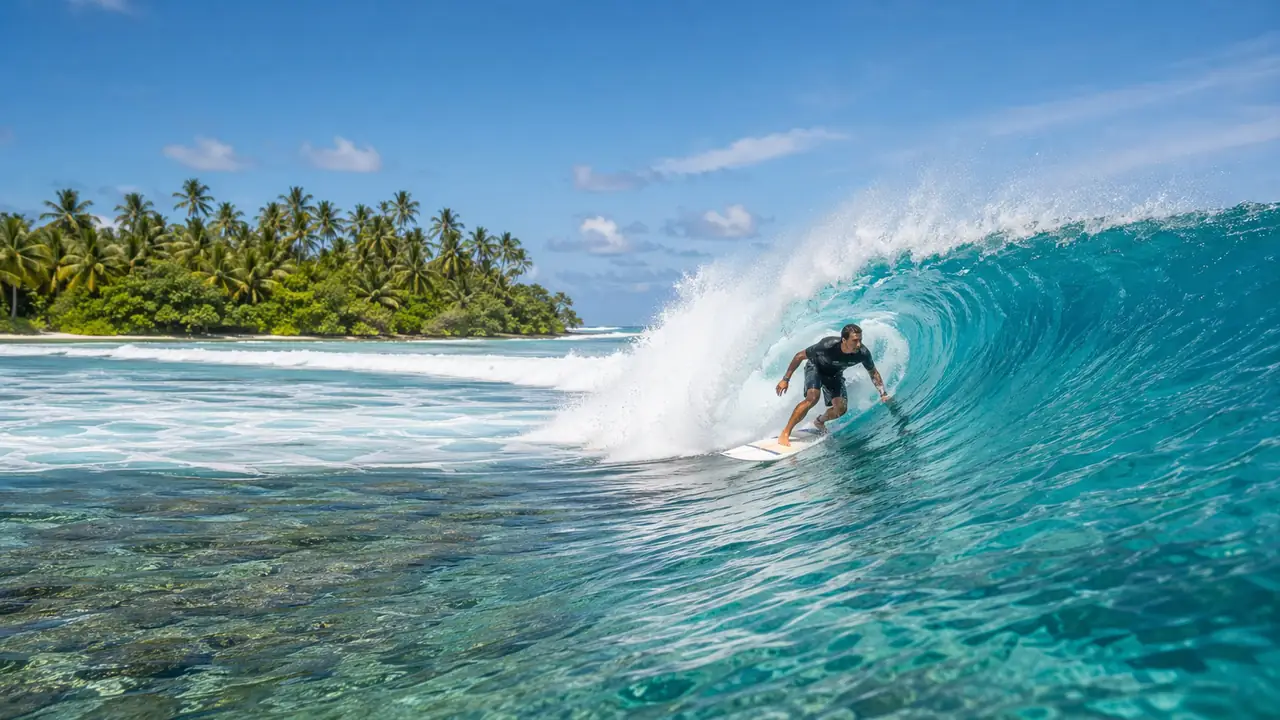
The short answer: the best time to surf in the Maldives is March to October, with peak swell from June to August. But “best” depends on your level, your budget, and what kind of trip you’re planning.
A confident intermediate chasing big waves wants a different month than a family looking for mellow conditions. And someone trying to keep costs down should know that the cheapest months are often the ones with the most consistent surf.
This guide breaks it down month by month, region by region — so you can pick the window that matches your surf level, travel style, and wallet.
If you only read one section, make it this one. Here are the four main windows, what they feel like, and who they suit best.
Swell: Moderate and clean. Fun-sized waves (3–5ft), occasional bigger days. SE swell starts building.
Wind: Light and variable — many glassy mornings. The monsoon transition creates calm conditions.
Weather: Beautiful. Warm, less rain, stunning visibility.
Crowds: Moderate — more popular than May–Aug but still manageable.
Prices: Higher than wet season, but not peak resort rates.
Best for: Families, mixed-level groups, first-timers, honeymoons, anyone who wants great surf plus great weather.
Swell: Most consistent and powerful. Regular 5–8ft+ days from the southwest. Long-period groundswells light up every zone.
Wind: Steady WNW trades blow offshore at most spots. Occasional stormy spells (usually short-lived).
Weather: “Wet season” — more rain, overcast days. But it’s still warm and the rain usually passes quickly.
Crowds: Most surfers, but bigger swells spread people across more breaks.
Prices: Often cheaper — resorts drop rates for “wet season.” Budget travellers: this is your window.
Best for: Confident intermediates, advanced surfers, charter trips, budget surfers who want the most waves for the least money.
Swell: Still active — consistent 3–6ft. Gradually easing from peak power. Often clean and well-formed.
Wind: Monsoon transition again — lighter winds, more glassy days returning.
Weather: Improving. Less rain than June–Aug, more sun, still warm.
Crowds: Crowd relief — many surfers have gone home. Quieter lineups.
Prices: Shoulder season — often the best deals. 20–30% lower than dry season.
Best for: Smart-value trips, intermediates, families who want surf + budget balance, charter trips chasing quieter atolls.
Swell: Smaller and less consistent. The NE monsoon brings infrequent swells that are often wind-affected. Lay days are common.
Wind: E to NE — onshore at most popular spots. You’ll need to hunt for sheltered breaks.
Weather: Beautiful — dry, sunny, perfect tropical holiday weather. Peak tourist season.
Crowds: Very few surfers. But also very few waves.
Prices: Peak resort prices (dry season = holiday season). Not great value for a surf trip.
Best for: Holiday-first travel with a board “just in case.” Beginners wanting calm lagoon coaching. Southern Atolls can still have surf.
April and October are the transition months — and experienced surfers often consider them the best of both worlds. The swell is solid (not overwhelming), winds are light (lots of glass), crowds are thin, and prices are reasonable. If you have flexible dates, aim for these two months.
This shows when each region works best. Green = good surf. Orange = shoulder/variable. Red = peak power. Grey = off-season.
Key: Peak = most powerful, consistent swell. Great = reliable, fun waves. Good/Fair = surfable but variable. Off = small, inconsistent, onshore winds.
Notice how the Southern Atolls have a different pattern — they get onshore winds during peak Malé Atoll season (June–August), but fire during the shoulder months (March–May, September–November). That’s why charter boats move between zones.

| Month | Swell | Wind | Weather | Crowds | Prices | Best for |
|---|---|---|---|---|---|---|
| January | Small, rare | NE (onshore most spots) | Dry, sunny, hot | Very few surfers | Peak tourist | Holiday first, board “just in case” |
| February | Small, mixed | Variable, shifting | Dry, some transition | Very few | Peak | Early scouts, Southern Atolls |
| March | SE swell starts | Light, variable, glassy days | Beautiful transition | Building | Moderate | First-timers, families, intermediates |
| April | Consistent 3–5ft | Light, many glassy mornings | Warm, some rain starting | Moderate | Moderate | Sweet spot — great waves + great weather |
| May | Building 4–6ft | SW trades starting | More rain, still warm | Moderate | Dropping | Intermediates, charter start, budget |
| June | Consistent 5–8ft | WNW offshore trades | Wet season, periodic rain | Busy surf season | Low (wet) | Advanced, charters, budget trips |
| July | Peak 5–8ft+ | WNW offshore, steady | Wettest month, warm | Peak surf crowds | Lowest | Committed surfers, max wave count |
| August | Strong 5–8ft | WNW, occasional storms | Wet, some big storms | Busy | Low | Advanced, experienced charter groups |
| September | Easing 3–6ft | Calming, transition starting | Improving, less rain | Thinning | Low–moderate | Best value + good surf combo |
| October | Variable 3–5ft | Light, glassy days returning | Much better, warm | Quiet | Moderate | Intermediates, families, honeymoons |
| November | Fading, smaller | Shifting NE, some onshore | Dry season starting | Very few surfers | Rising | Late-season gambles, Southern Atolls |
| December | Small, rare | NE established, onshore | Dry, sunny, peak holiday | None (surf) | Peak tourist | Holiday travel, not surf focused |

This is the part most guides miss. Each atoll zone has a slightly different season because swell direction, wind exposure, and reef orientation vary. The further south you go, the longer the season — but with different wind patterns.
Season: March – October
Peak: June – August
Sweet spot: April, September
What drives it: SE groundswells from the Indian Ocean. The atolls sit in a slight swell shadow from the Central Atolls, which means they need more direct SE energy to fire. But when it does, the concentration of quality breaks is unmatched.
Wind: WNW trades in peak season blow offshore at most spots. Shoulder months bring lighter, more variable winds = glassy conditions.
Season: March – October
Peak: May – August
Sweet spot: May, September – October
What drives it: Wider swell window than Malé — picks up more swell directions. Consistent medium-sized reef breaks with less crowd. This region tends to get surf slightly earlier in the season and hold it slightly longer.
Wind: Similar WNW trades, but more spots face different directions — so you can almost always find an offshore break somewhere.
Season: March – May, September – November
Peak: March – May
Sweet spot: April, October
What drives it: Full exposure to swells from the south — biggest waves in the Maldives. But June–August winds blow onshore at many southern spots, making it a shorter but more intense window.
Wind: Different trade pattern than Malé. The southern hemisphere winter winds that make Malé Atolls perfect actually blow onshore down here. The best windows are the transition months.
Because each region peaks at slightly different times and responds to different wind patterns, charter boats can extend your surfable window by moving between zones. When North Malé is blown out, Central Atolls might be firing. When Southern Atolls have onshore winds in July, Malé Atolls have perfect offshores. A good charter captain reads these patterns daily. See the charter guide for route planning.

The Maldives has two monsoon seasons that drive the entire surf calendar. Understanding them is the key to timing your trip right.
When: May – October
What it does: Brings consistent SW and SE swells from the southern Indian Ocean. WNW winds blow offshore at most Malé Atoll breaks. This is the surf season.
Weather: More rain, more cloud. But the rain is usually short and sharp — an hour of downpour, then sun. The sea stays warm (28–30°C).
For surfers: This is your season. Consistent swell, offshore winds, warm water. The “wet season” label scares tourists away, which means cheaper accommodation and fewer crowds. Win-win.
When: November – April
What it does: Brings dry weather, calm seas, and NE winds that blow onshore at most popular surf breaks. Swells are rare and usually smaller. This is the holiday season, not the surf season.
Weather: Beautiful. Dry, sunny, perfect visibility, stunning sunsets. Peak tourist season.
For surfers: The tail end (March–April) picks up as the monsoon transitions — this is when the SE swell starts and winds go variable/calm. Don’t write off the entire NE monsoon; the last month is gold.
The transition months (March–April, October–November) are when the monsoons switch. Winds go light and variable, creating glassy conditions. Swell is present but not overwhelming. These transitions are what experienced surfers target — the best conditions often happen in the gaps between monsoons.

Different travellers should aim for different windows. Here’s the honest recommendation for each type.
| You are… | Best months | Why |
|---|---|---|
| First-time Maldives surfer | March – April | Clean conditions, manageable size, beautiful weather. The easiest introduction to Maldives reef surfing. |
| Intermediate building confidence | April – May, September – October | Consistent fun-sized waves without the peak-season power. Glassy mornings for practice. Less crowd pressure. |
| Advanced / experienced | June – August | Most consistent and powerful swells. Maximum wave count. This is when the Maldives earns its reputation. |
| Budget surfer | May – August | “Wet season” pricing = cheaper guesthouses and resorts. But the surf is at its peak. Best value in Maldives surfing. |
| Family with kids | March – April, September – November | Calmer conditions, forgiving waves, better weather than peak. Resort prices more reasonable than dry season. |
| Honeymoon couple | March – April, September – October | Good surf + beautiful weather + romantic atmosphere. Shoulder pricing. See the surf honeymoon guide. |
| Charter / liveaboard | April – October | Widest swell window for multi-atoll trips. April and October are sweet spots for conditions + value. |
| Southern Atolls explorer | March – May, September – November | Different wind pattern from Malé. Best surf when Malé Atolls are either building up or winding down. |
April is the single best all-round month for most surfers. Clean, consistent 3–5ft+ waves. Light winds and glassy mornings. Beautiful weather with only the occasional shower. Moderate crowds. Reasonable prices. It works for intermediates, families, honeymooners, and charter trips. If your dates are flexible and you’re not chasing double-overhead barrels, book April.
Tell us your surf level, travel dates (or flexible range), and what matters most — waves, weather, value, or crowd avoidance. We’ll recommend the best window and match it to the right base.
Tell us your surf level, preferred window, and trip style. We’ll confirm the best timing and match you to the right base — resort, island, or charter.


