

Goidhoo · Baa Atoll
Goidhoo sits in its own little atoll inside the UNESCO Baa Atoll Biosphere Reserve, and its dive sites see far fewer bubbles than the famous spots. That’s the whole appeal.
Goidhoo sits in Horsburgh Atoll, a small ring inside Baa Atoll with around 15 dive sites spread between sheltered inside-lagoon reefs and open-ocean channels. Because hardly any divers come here, the corals and fish life are in good shape. The signature dive is Goidhoo Corner, a channel drift where you can meet Napoleon wrasse, nurse sharks, turtles, schooling trevally and passing dolphins. Inside the atoll you’ll find gentle thilas, coral gardens and a cleaning station where turtles and rays come through.
One thing to be clear about: the famous mantas and whale sharks of Baa Atoll gather at Hanifaru Bay, and Hanifaru is a snorkelling-only marine protected area where scuba is banned. So Goidhoo diving means reef and channel sites; the big-animal show is a separate seasonal snorkelling trip. Diving here suits everyone from a first-timer trying a Discover Scuba session to certified divers wanting quiet drift dives, all arranged through your guesthouse.
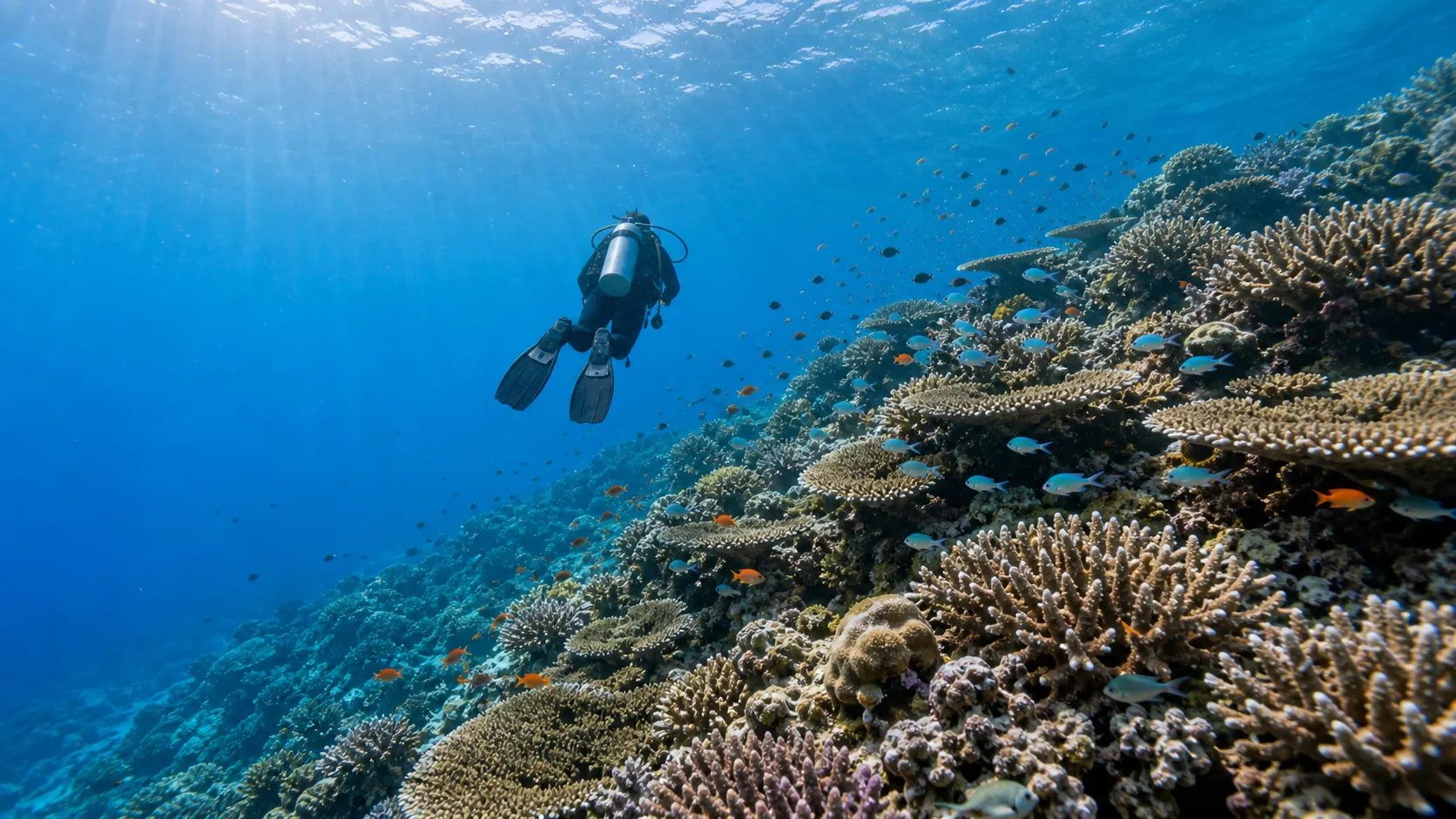
Most Baa Atoll diving is run out of the resorts and the popular bases near Hanifaru, which means the best-known sites can get busy in season. Goidhoo is the opposite. It’s tucked in the south of the atoll, away from the resort cluster, and it isn’t on the usual day-trip map, so its sites stay quiet and the reefs show it. Less traffic means healthier coral, bolder fish and the simple pleasure of having a channel more or less to yourself. If you’ve dived the Maldives before and want somewhere that feels unhurried rather than queued, this is it.
The trade is honesty time again: Goidhoo doesn’t have a big professional dive resort on the doorstep. Diving is arranged locally through guesthouses, with smaller operations and limited daily slots, so you plan ahead rather than turning up and booking on a whim. For most divers that’s a fair swap for empty sites.
These are geographic sites around Goidhoo and its neighbours in Horsburgh Atoll. Conditions, depths and what you’ll see vary with the day, the season and the current, so treat this as a guide rather than a promise.
| Site | Type | Level | Commonly seen |
|---|---|---|---|
| Goidhoo Corner | Channel drift | Intermediate (current dependent) | Napoleon wrasse, nurse sharks, turtles, big-eye trevally, passing dolphins |
| Goidhoo Bay | Shallow reef / cleaning station | Beginner friendly | Turtles, rays, reef fish, hard coral |
| Inside thilas (lagoon) | Sheltered thila / coral garden | Beginner to intermediate | Reef fish, macro life, reef sharks, stingrays |
| Rose Garden (near Fulhadhoo) | Shallow coral (great snorkel too) | Beginner friendly | Rose-shaped hard coral, reef fish |
| Fehendhoo drift | Easy drift | Beginner to intermediate | Hawksbill turtles, dolphins, Napoleon wrasse, eagle rays |
| Outer channel entrances | Ocean channel | Advanced (stronger current) | Grey reef sharks, eagle rays, snapper, trevally, occasional larger pelagics |
The headline dive. It’s a channel-entrance drift where atoll water meets the open ocean, the kind of spot that pulls in bigger life. Expect Napoleon wrasse cruising the reef, nurse sharks resting under overhangs, green and hawksbill turtles, and schools of big-eye trevally, with dolphins passing through often enough to keep you watching the blue. Because there’s current, it’s better suited to divers with a bit of experience, and your guide will time it with the tide.

For gentler diving, the sheltered sites inside the atoll are ideal. Goidhoo Bay works as a cleaning station, so turtles and rays come through to be tended by smaller fish, and the shallow depth makes it relaxed and good for newer divers. The inside thilas are coral mounds rising from the lagoon floor, rich in reef fish and macro life, with reef sharks and stingrays around the edges. These are the sites for a Discover Scuba try-dive or an easy first day back in the water.
The protected lagoon sites come alive after dark, when nocturnal creatures emerge and the coral feeds. Night dives here are calm and shallow, which makes them approachable, and the macro life around Horsburgh, nudibranchs, ghost pipefish, mantis shrimp, moray eels, octopus, rewards anyone who likes the small stuff. Ask your guesthouse whether a night dive is running during your stay.

Horsburgh Atoll’s waters are healthy and varied. On a typical few days of diving you can reasonably hope for green and hawksbill turtles, reef sharks (grey reef and white-tip), nurse sharks, eagle rays and stingrays, Napoleon wrasse, schooling snapper and trevally, and spinner and bottlenose dolphins on the boat rides. The coral gardens hold the usual reef cast, parrotfish, angelfish, surgeonfish, batfish, plus strong macro life for those who slow down and look. None of this is guaranteed, the ocean does what it wants, but the low diver traffic tilts the odds in your favour.
Goidhoo also has something rare above the waterline: one of the few mangrove forests in the Maldives, which feeds the surrounding reefs and is part of why the marine life here is so robust. It’s a good reminder that you’re diving inside a protected biosphere, not just a pretty reef.
Here’s the bit people most often get wrong, so let’s be precise. Baa Atoll is world-famous for manta rays and whale sharks, but the place they gather, Hanifaru Bay, is a strictly protected marine area where only snorkelling is allowed. You cannot scuba dive at Hanifaru. The mantas feed near the surface anyway, so snorkelling is both the rule and the best way to see them. From Goidhoo this is a seasonal boat trip, strongest from roughly May to November when the plankton blooms, and it’s separate from your scuba diving.
Goidhoo sits across the channel in the south of Baa Atoll, so the trip to Hanifaru Bay is further from here than from islands like Dharavandhoo right beside it. A Hanifaru snorkelling trip is doable in season but depends on weather, permits and the tide, so if mantas are your main goal, ask us whether to base on Goidhoo or split your stay. For more on the trip, see our Goidhoo things to do guide.
You don’t need to be certified to get in the water at Goidhoo. Local diving usually offers a Discover Scuba session, a guided shallow first dive with an instructor, which is perfect for trying it before you commit. If you want to go further, full Open Water and Advanced courses, plus multi-dive packages (commonly sold in fives and tens) for certified divers, can be arranged. The sheltered, shallow inside sites are gentle places to learn, with warm water and good visibility most of the year.
If you’re nervous about your first dive, the calm lagoon sites here are a kinder introduction than a busy resort channel. Tell your guesthouse your experience level when you book so they match you to the right site and group.

You can dive Goidhoo year-round, and water temperatures stay warm throughout, typically around 27 to 30 degrees Celsius, so a 3mm wetsuit or even a rash guard is plenty for most divers. The dry northeast monsoon from December to April usually brings the calmest seas and the clearest visibility, which is the easiest window for reef and channel diving. The wet season from May to November can have more wind and plankton, which slightly cuts visibility, but that same plankton is exactly what brings the mantas and whale sharks to Hanifaru, so it’s the season to combine reef diving with a seasonal snorkelling trip. Currents at the channel sites vary with the tide, and your guide plans dives around them.
Dive prices depend on the operator, your certification, how many dives you book and how far the site is. As a rough idea, expect to pay per dive with discounts on multi-dive packages, plus gear hire if you don’t bring your own, and course fees if you’re training. All of it is indicative and worth confirming when you book. On top of accommodation, Maldives stays carry TGST at 17% and a Green Tax of USD 6 per person per night at small guesthouses, so factor those into your overall budget. Bring your certification card and logbook, and tell the operator about any recent dives or medical issues before you start.
Because diving here is arranged through your stay rather than a walk-in dive shop, it usually comes as a package built around how many nights you have and what you want to see. The common shapes are a straightforward guesthouse-plus-diving stay (your reef and channel dives bundled with the room and meals), a multi-dive package for certified divers sold in blocks such as five or ten dives at a better per-dive rate, or a learn-to-dive package built around an Open Water course. If mantas are on your list, a package can pair quiet Goidhoo reef diving with a seasonal Hanifaru snorkelling trip, or split your nights so you spend part of the trip nearer the bay. We put these together for you so the dives, the transfer and the room land as one booking rather than separate scrambles. Tell us your certification level and how many dives you want, and we’ll price a realistic plan.
This matters more on Goidhoo than on a near-Malé island, because your journey out involves either a domestic flight or a long boat to catch an international one. Standard guidance is to leave at least 18 to 24 hours between your final dive and any flight, the exact gap depends on your dive profile, your computer and your agency’s rules. So don’t dive on your departure day. Plan your last dive for the day before you start travelling home, and build the no-fly window into your itinerary from the start. Your guesthouse can help you schedule dives so they don’t clash with your flights.
Goidhoo’s diving is small-scale and local, which is part of the charm, but it means doing your own due diligence. Check the operator is licensed and insured, that there’s oxygen and a first-aid kit on the boat, and that the briefing covers the site, the current and your entry and exit before you get in. Channel and corner dives carry current, so be honest about your experience and never join a dive that’s beyond your training or that feels unclear. Carry your own dive insurance.
If you’re choosing a Baa Atoll dive base, these two come up most, and they suit different divers. Dharavandhoo has the atoll’s domestic airport and sits right beside Hanifaru Bay, with more regular dive logistics, so it’s the easier pick if mantas and frequent, structured diving are your priority. Goidhoo is the quieter, more local choice: fewer divers, untouched reefs and channels, and a nature-led island stay, at the cost of fewer operators and more planning. Plenty of divers don’t choose at all and combine the two.
| Base | Best for | The trade-off |
|---|---|---|
| Goidhoo | Quiet local island stay, untouched Horsburgh Atoll reefs and channels, nature plus diving | Fewer dive operators, limited slots, more planning ahead |
| Dharavandhoo | Hanifaru Bay access, the domestic airport, more regular dive logistics | Busier and more developed, less off-grid |
| Goidhoo + Dharavandhoo | Quiet reef diving first, then easy manta-season access | Two stays and a transfer to coordinate |
Our steer: pick Goidhoo if you want diving woven into a quiet, nature-first stay, pick Dharavandhoo if Hanifaru and dive frequency are the whole point, and combine them if you’ve got the nights. We can build any of the three.
HolidayVibe Maldives is a Ministry of Tourism licensed agency based in Malé. Tell us your certification level and dates, and we’ll match you to the right Goidhoo guesthouse with diving, line up your channel and reef dives or a beginner session, and add a seasonal Hanifaru snorkelling trip if the timing works. One plan, sorted before you arrive.
WhatsApp us about diving See Goidhoo guesthousesYes, especially if you like quiet sites. Goidhoo sits in Horsburgh Atoll with around 15 dive sites, from sheltered lagoon thilas to ocean channels like Goidhoo Corner. Because few divers come here, the coral and fish life are in good shape. Diving is arranged locally through guesthouses.
Goidhoo Corner is the signature dive, a channel drift where Napoleon wrasse, nurse sharks, turtles, schooling trevally and passing dolphins are commonly seen. It has current, so it suits divers with some experience. Gentler options include Goidhoo Bay and the inside thilas.
No. Hanifaru Bay is a protected marine area where only snorkelling is allowed and scuba diving is banned. The mantas feed near the surface, so snorkelling is both the rule and the best way to see them. It’s a seasonal trip, separate from your reef diving.
Mantas and whale sharks gather at Hanifaru Bay, which is snorkelling only, mainly from May to November. On scuba around Goidhoo you may see eagle rays, reef sharks, turtles and Napoleon wrasse, but the big manta aggregation is a separate seasonal snorkelling trip and is never guaranteed.
Yes. The sheltered, shallow inside sites are gentle places to learn, and local diving usually offers a Discover Scuba try-dive plus Open Water and Advanced courses. The calm lagoon sites are a kinder introduction than a busy resort channel. Tell your guesthouse your level when booking.
There’s no large resort dive centre. Diving is arranged through guesthouses and smaller local operations, with limited daily slots, so plan ahead rather than turning up to book. This is part of why the sites stay so quiet.
Year-round, with warm water throughout. December to April brings the calmest seas and clearest visibility for reef and channel diving. May to November has more plankton (slightly lower visibility) but brings the mantas and whale sharks to Hanifaru, so it’s the season to combine diving with snorkelling.
It varies by operator, certification, number of dives and site distance. Expect a per-dive rate with discounts on multi-dive packages, plus gear hire and any course fees. All prices are indicative; confirm when booking. Remember stays also carry 17% TGST and the USD 6 per person per night Green Tax.
No. You can try a guided Discover Scuba session with an instructor without certification, or take a full Open Water course on the island. Certified divers can book single dives or multi-dive packages. Bring your certification card and logbook if you have them.
Leave at least 18 to 24 hours between your last dive and any flight, domestic or international, with the exact gap depending on your dive profile and computer. Because leaving Goidhoo often involves a flight or a long boat to your flight, plan your final dive for the day before you travel home, not your departure day.