
Getting to the Maldives is easier than most people expect. Yes, it's a remote island nation scattered across the Indian Ocean. But flights connect through major hubs worldwide, the airport is well-organised, and once you land, your resort handles everything from there.
That said, "getting to the Maldives" is not just about booking a flight. It's about understanding how the whole journey works — the airport, the transfers, the timing, and a few details that can make or break your first day.
This guide covers everything. Flights, airlines, layovers, transfers, timing, costs, and mistakes to avoid. If you read this once, you'll arrive prepared and relaxed — which is exactly how a Maldives trip should begin.
Where Do You Fly Into?
Almost every international flight lands at Velana International Airport (MLE) in Malé. It sits on its own island, Hulhulé, right next to the capital city. This is the main gateway to the Maldives and where your journey really starts.
The airport is small but modern. Immigration is usually quick, baggage arrives reasonably fast, and you'll find your resort's transfer counter waiting just outside arrivals. It's a smooth process.
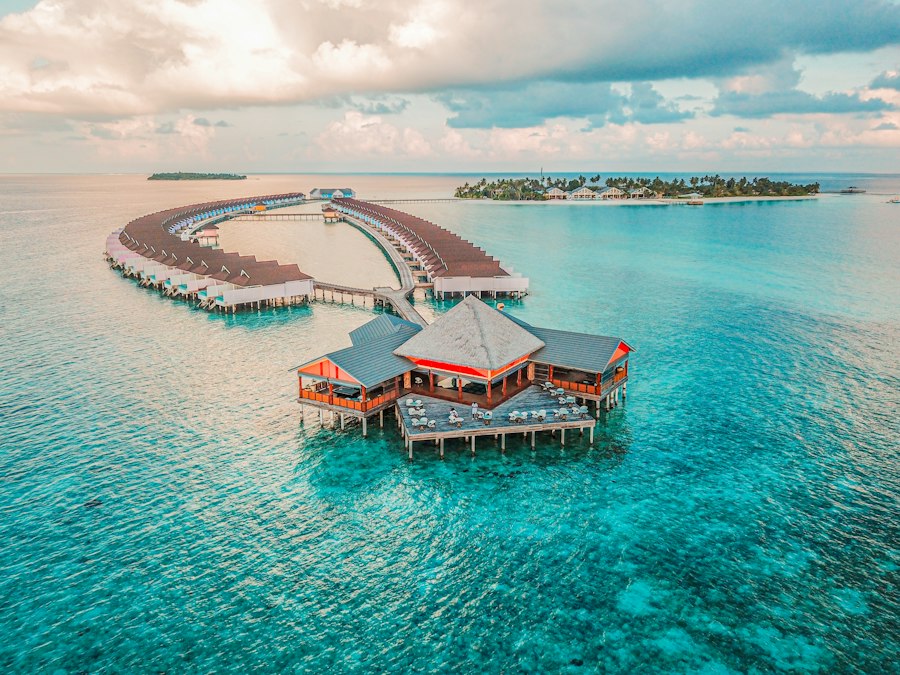
A few international flights also land at Gan International Airport in the far south. This is useful if you're staying in Addu Atoll or the southern atolls. But for 95% of travelers, Malé is where the journey begins.
One thing to know: Malé airport and Malé city are separate islands. You don't need to visit the city unless you want to. Most travelers go straight from the airport to their resort transfer.
Which Airlines Fly to the Maldives?
The Maldives doesn't have a huge number of direct routes, but it connects well through hubs in the Middle East, Asia, and the Indian subcontinent. Most travelers will have at least one stop.
Here's what you'll typically find by region.
From Europe
Most European flights connect through Dubai, Doha, or Abu Dhabi. Emirates, Qatar Airways, and Etihad are the main carriers — all offer excellent service, modern aircraft, and comfortable layover airports.
British Airways operates a seasonal direct flight from London Gatwick, usually from October to March. It's convenient if you want to skip the layover, but availability is limited and prices can be higher.
Condor, Edelweiss, and a few charter airlines also fly seasonally from Germany and Switzerland.
From the Middle East
Dubai is the busiest hub for Maldives flights. Emirates operates multiple daily departures to Malé. Qatar Airways connects through Doha, and Etihad through Abu Dhabi. All three are reliable choices with good frequency.
If you live in the Gulf region, you're in luck — the Maldives is just a 4-hour flight away.
From Asia
Singapore Airlines flies direct from Singapore. Cathay Pacific connects through Hong Kong. SriLankan Airlines is another popular option, with Colombo as the hub.
From China, several carriers operate direct or one-stop flights, especially during peak season.
From India
India has the most direct flight options to the Maldives. IndiGo, Air India, SpiceJet, and GoAir operate from multiple cities including Mumbai, Delhi, Bangalore, Chennai, Kochi, and Trivandrum.
Flight times are short — often under 3 hours — and prices are usually reasonable. If you're flying from India, you have the easiest access.
From the US and Canada
There are no direct flights from North America. Most travelers connect through Dubai, Doha, or Singapore. Some routes go through Europe (London or Frankfurt) depending on the airline.
Total travel time is usually 18 to 24 hours including layovers. It's a long journey, but the destination makes it worthwhile.
From Australia and New Zealand
Flights typically connect through Singapore, Colombo, or the Middle East. Singapore is often the quickest route. Total travel time from Sydney or Melbourne is around 14 to 17 hours.
Direct Flights vs Connecting Flights: What's the Difference?
This matters more than you might think — not just for comfort, but for your resort transfer timing.
Direct flights
Fewer available routes, but simpler journey. Easier to plan resort transfers. Often more expensive. Best for: travelers who value convenience over cost.
One-stop flights (most common)
Wide range of options and airlines. Usually better prices. Can break up a long journey with a layover. Layover cities like Dubai, Doha, and Singapore are pleasant stopovers. Best for: most travelers, especially those flying from Europe, US, or Australia.
Two-stop flights
Cheapest fares, but longest travel time. Can be exhausting, especially with kids. Timing becomes tricky for same-day resort transfers. Best for: budget-conscious travelers with flexible schedules.
If you're booking a connecting flight, aim for a layover of at least 2 hours (3+ hours for international connections). Short layovers can cause stress, especially if your first flight is delayed.
How Long Is the Flight?
Flight duration varies depending on where you're starting. Here's a quick reference:
| From | Flight Duration | Typical Route |
|---|---|---|
| London | 10–12 hours | With one stop |
| Paris | 11–13 hours | With one stop |
| Frankfurt | 10–12 hours | With one stop |
| Dubai | 4 hours | Direct |
| Doha | 4.5 hours | Direct |
| Singapore | 4.5 hours | Direct |
| Mumbai | 2.5 hours | Direct |
| Delhi | 4.5 hours | Direct |
| Colombo | 1.5 hours | Direct |
| New York | 18–24 hours | Usually two stops |
| Los Angeles | 20–26 hours | Usually two stops |
| Sydney | 14–17 hours | With one stop |
If you're traveling from far away, consider breaking the journey. A night in Dubai, Singapore, or Colombo can make the trip more comfortable — and these cities are worth exploring on their own.
Layover Cities: Making the Most of Your Connection
If you're connecting through a major hub, you have two options: a short transit or a longer stopover. Both have their place.

Dubai
The most common layover for Maldives flights. Dubai airport is massive but well-organised. If you have a long layover (8+ hours), you can visit the city — the Burj Khalifa, Dubai Mall, and the old souks are all accessible.
Many travelers add a night or two in Dubai before continuing to the Maldives. It breaks the journey and adds a city experience to a beach holiday.
Doha
Qatar's hub airport is modern and comfortable. The city itself is compact and interesting — the Museum of Islamic Art and Souq Waqif are highlights.
Stopover packages are sometimes available through Qatar Airways.
Singapore
If you're coming from Australia or Asia, Singapore is a natural stopover. It's clean, efficient, and packed with things to do. Changi Airport is regularly voted the world's best.
A 1–2 night stopover in Singapore adds a city contrast before island relaxation.
Colombo
Sri Lanka's capital is the closest international hub to the Maldives. Flight time is just 1.5 hours. If you want to combine two destinations, a few days in Sri Lanka followed by the Maldives works beautifully.
Abu Dhabi
Similar to Dubai, but quieter. Good option if you prefer a calmer layover experience.
Realistic Flight Costs: What to Expect
Prices vary a lot based on season, airline, and how early you book. Instead of quoting one number, here's how to think about it.
What affects flight prices the most
Seasonality (peak vs low season), how far in advance you book, direct vs connecting flights, airline and cabin class, and departure city.
Budget tier (economy, one or two stops)
This is where you'll find the lowest fares, especially if you're flexible with dates and willing to take longer routes.
From Europe: €400–€700 return. From India: ₹15,000–₹30,000 return. From US: $900–$1,400 return. From Australia: AUD $800–$1,200 return.
Best for: budget travelers, those booking in low season, flexible dates.
Mid-range tier (economy, good airlines, one stop)
This is the sweet spot for most travelers. You get reliable airlines, reasonable layovers, and comfortable service.
From Europe: €600–€1,000 return. From India: ₹25,000–₹45,000 return. From US: $1,200–$1,800 return. From Australia: AUD $1,000–$1,600 return.
Best for: most travelers who want comfort without overspending.
Premium tier (business class or premium economy)
If comfort matters and budget is flexible, premium cabins make long-haul flights much easier.
From Europe: €2,500–€5,000+ return. From US: $4,000–$8,000+ return.
Best for: honeymooners, special occasions, travelers who want to arrive refreshed.
Best Time to Book Flights to the Maldives
Timing your booking can save you hundreds.
Peak season (December to April)
This is high season. Weather is dry, sunny, and perfect for beach holidays. Demand is highest, especially around Christmas, New Year, and Easter.
Flights sell out faster. Prices are at their highest. Book 3–6 months ahead for best availability. Flexibility on dates helps a lot.
Shoulder season (May and November)
Fewer crowds, lower prices, and weather is still pleasant most days. This is often the sweet spot for value.
Good deals on flights and resorts. Book 2–3 months ahead. Great for budget-conscious travelers.
Low season (June to October)
This is monsoon season. Expect some rain, occasional grey days, but also the cheapest flights and resort deals.
Best prices of the year. Some resorts offer big discounts. Good for surfers (best swells) and divers (manta season in some areas). Ideal if you're flexible and don't mind occasional rain.
Booking tips that actually help: Set price alerts on Google Flights or Skyscanner. Fly midweek (Tuesday, Wednesday) for lower fares. Compare airports if you have options (e.g., London Gatwick vs Heathrow). Consider positioning flights to a cheaper hub. Book refundable or flexible fares if your plans might change.
What Happens After You Land in Malé?
Once your flight touches down, the Maldives arrival process is straightforward.
Immigration: Usually takes 15–30 minutes depending on flight size. Have your passport, hotel booking confirmation, and return ticket ready.
Baggage: Collect your bags as normal. The hall is small, so it's easy to find your luggage.
Exit: Walk through customs (rarely any checks for tourists) and step outside into arrivals.
Resort counter: Your resort will have a representative at a transfer desk. Look for your resort name. They'll guide you to the next step — whether that's a speedboat jetty, seaplane terminal, or domestic flight check-in.
If you've pre-arranged transfers (which you should), everything is taken care of. You just follow the guide.
🛂 Visa Checker by Nationality
Check visa requirements for your country before you travel
How Do You Get From the Airport to Your Resort?
This is where the Maldives is different from anywhere else. Resorts sit on private islands scattered across 26 atolls. There are no roads connecting them. No bridges. No ferries (for most resorts).
You travel by water or air.
There are three main transfer types, and which one you need depends entirely on where your resort is located.
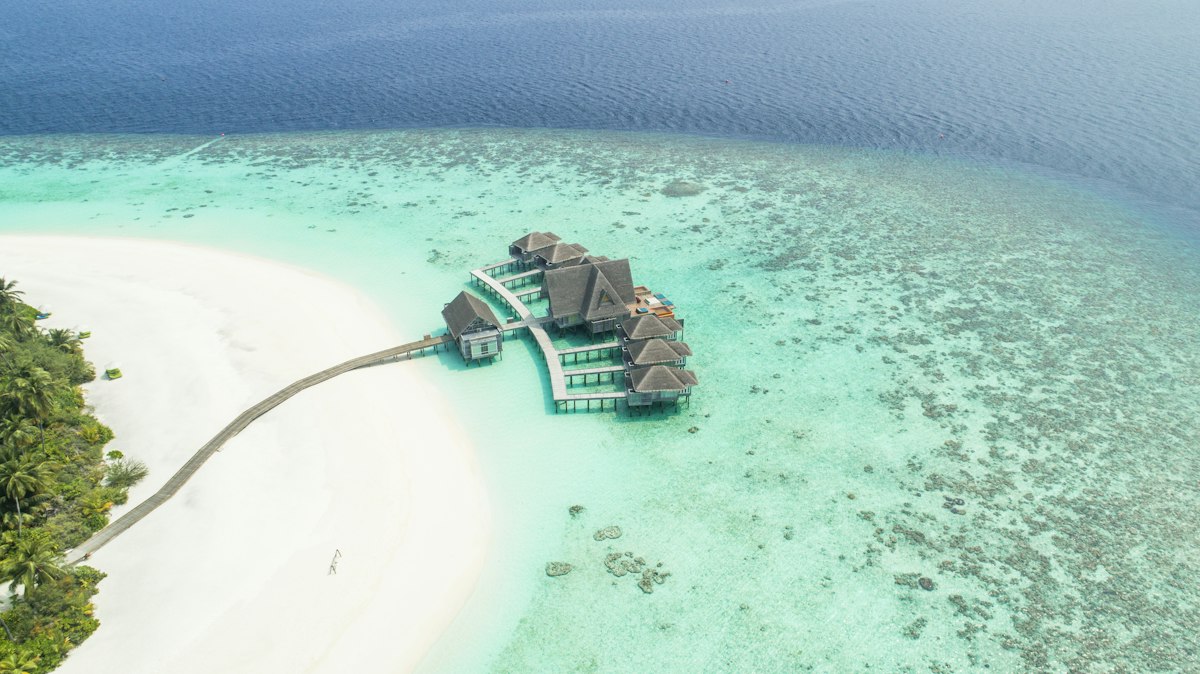
Speedboat
Best for resorts in North Malé Atoll and South Malé Atoll — close to the airport.
Seaplane
Best for resorts in distant atolls — Baa, Ari, Noonu, Raa, Lhaviyani, and beyond.
Domestic Flight + Boat
Best for resorts in far southern or northern atolls — Laamu, Thaa, Addu, Haa Alifu.
1. Speedboat transfers
Best for: Resorts in North Malé Atoll and South Malé Atoll — close to the airport.
Journey time: 20 minutes to 2 hours. Operates: Day and night, including late arrivals. Cost: Typically $150–$350 per person round trip.
This is the simplest option. If your flight lands late at night, a speedboat resort lets you transfer immediately. No waiting, no overnight stays.
Speedboat resorts are often more budget-friendly overall because you save on transfer costs.
Who it suits: Late arrivals and red-eye flights. Families with young children. Travelers who want the easiest logistics. Budget-conscious visitors.
2. Seaplane transfers
Best for: Resorts in distant atolls — Baa, Ari, Noonu, Raa, Lhaviyani, and beyond.
Journey time: 20 minutes to 1 hour flight time. Operates: Daylight hours only (approximately 6:00 AM to 4:00 PM landing). Cost: Typically $400–$700 per person round trip.
Seaplanes are iconic. You fly low over turquoise lagoons and see the atolls from above. It's one of the most memorable parts of a Maldives trip.
But there's a catch: seaplanes only operate during daylight. If your international flight lands after 3:00–3:30 PM, you'll stay overnight near the airport and fly out the next morning.
This isn't a problem — resorts arrange the overnight stay — but it means you lose part of your first day.
Book a morning international arrival if your resort uses seaplanes. Landing before 2:00 PM usually means same-day transfer.
Who it suits: Travelers visiting remote, pristine atolls. Those who want the scenic flight experience. Honeymooners and special occasion travelers.
3. Domestic flight + speedboat
Best for: Resorts in far southern or northern atolls — Laamu, Thaa, Addu, Haa Alifu.
Journey time: 30 minutes to 1 hour flight + 15–60 minutes speedboat. Operates: Domestic flights run into the evening (later than seaplanes). Cost: Similar to seaplane, sometimes slightly less.
Some resorts combine a domestic flight to a regional airport with a speedboat ride to the island. This works well for atolls that are too far for seaplanes but have a nearby domestic airport.
It's also useful for late arrivals — domestic flights operate later than seaplanes, so you might still transfer the same day.
Who it suits: Southern atoll travelers. Those arriving in late afternoon. Travelers who prefer avoiding seaplane schedules.
Which Transfer Type Is Right for You?
You don't choose your transfer — your resort determines it based on location. But you can choose your resort based on transfer preferences.
Quick decision guide:
Want the easiest arrival? Choose a speedboat resort in North or South Malé Atoll.
Arriving late or on a red-eye? Speedboat resorts let you transfer at night.
Traveling with infants or young kids? Speedboats are often simpler.
Want the scenic seaplane experience? Choose a resort in Baa, Ari, or a distant atoll.
Visiting the far south? Expect domestic flight + speedboat combination.
On a tight budget? Speedboat resorts save $200–$500+ per person on transfers.
🚤 Transfer Cost Calculator
Calculate transfer costs for any Maldives resort
Do You Need to Stay Overnight in Malé?
Sometimes, yes — but it's not as inconvenient as it sounds.
When you'll need an overnight stay:
Your flight lands after 3:30 PM AND your resort uses seaplane transfers. Your seaplane is scheduled for the next morning due to timing.
What happens:
Your resort arranges accommodation near the airport. Usually a hotel in Hulhumalé or a nearby island. Dinner and breakfast are typically included. You transfer to the seaplane terminal the next morning.
Honestly, it's not a bad thing. You'll be tired from the flight anyway, and a good night's sleep means you arrive at your resort fresh and ready to enjoy it.
How to avoid an overnight stay:
Book a resort with speedboat transfers. Book a resort with domestic flight transfers (later schedules). Choose an international flight landing before 2:00 PM. Fly through nearby hubs (Colombo, India) for shorter connection times.
Arriving at Your Resort
Once your transfer is complete — whether it's a 20-minute speedboat or a scenic seaplane flight — you'll step onto your island.
Most resorts greet you with: A cold towel and welcome drink. A quick orientation of the island. An escort to your villa.
From here, the Maldives takes over. No traffic, no noise, just ocean, sand, and sky.

Common Mistakes to Avoid When Planning Your Journey
These are the things that trip people up. Avoid them and your arrival will be smooth.
Every resort uses a specific transfer type. If you book without checking, you might face unexpected costs or logistics issues. Always confirm whether it's speedboat, seaplane, or domestic flight — and what that costs.
Mistake 2: Booking a late flight without considering transfers
If your resort uses seaplanes and your flight lands at 6 PM, you'll need an overnight stay. That's fine if you know it in advance. It's frustrating if you expected to reach your resort that night.
Mistake 3: Assuming transfers are included in the resort price
Many resorts quote room rates excluding transfers. A "cheap" resort can become expensive once you add seaplane costs. Always ask: "Is the transfer included?"
Mistake 4: Booking tight layovers
A 1-hour layover might look fine on paper, but if your first flight is delayed, you'll miss your connection. For international connections, aim for 2–3 hours minimum.
Mistake 5: Not packing essentials in carry-on luggage
Luggage delays happen. Pack swimwear, sunscreen, medications, and one change of clothes in your hand luggage. If your bags are delayed, you can still enjoy the beach.
Mistake 6: Forgetting about visa and documentation
Most nationalities get a free 30-day visa on arrival. But you need: A valid passport (6+ months validity). Proof of accommodation (hotel booking). Return or onward ticket.
Without these, you may face issues at immigration.
Mistake 7: Not considering travel insurance
Medical facilities in the Maldives are limited. Serious issues require evacuation to Malé or abroad. Travel insurance with medical evacuation coverage is strongly recommended.
Who Each Route Is Best For
Different travelers have different priorities. Here's how to match your situation to the right approach.
Honeymooners and couples
Priority: Romance, experience, minimal hassle. Best approach: Book seaplane resort for the scenic arrival, aim for morning flights, consider a Dubai or Singapore stopover to add variety.
Families with young children
Priority: Easy logistics, minimal waiting. Best approach: Choose speedboat resorts, book daytime flights, avoid tight connections, pack snacks and entertainment for kids.
Budget travelers
Priority: Lowest total cost. Best approach: Speedboat resorts save on transfers, fly in shoulder season, book early, consider nearby hubs (Colombo, India) for cheaper flights.
Luxury travelers
Priority: Comfort and seamless experience. Best approach: Business class flights, airport lounge access, premium resorts with VIP transfers, arrive rested and refreshed.
Divers and adventure travelers
Priority: Reaching the best dive sites. Best approach: Many top dive resorts are in distant atolls requiring seaplanes — factor this into budget, book dive packages in advance.
Step-by-Step Checklist: Planning Your Journey
Use this to make sure nothing is missed.
✅ Your Journey Planning Checklist
Frequently Asked Questions
Quick Reference: Flight Guides by Region
For detailed routes, airlines, and tips specific to your departure city, see our dedicated guides:
Popular Resorts to Consider
Once you've figured out your flights and transfers, here are some popular resorts organized by transfer type:
Speedboat Resorts (Easy Transfers)
Seaplane Resorts (Scenic Arrivals)
Ready to Plan Your Trip?
Getting to the Maldives is the straightforward part. Choosing the right resort — that's where it gets interesting. Browse our resort guides or get in touch with our team.