

Whale sharks, manta rays, hammerheads, and reefs that don't quit. Plan your perfect Maldives dive trip — from choosing the right atoll to knowing what to pack and how much to spend.
 Maseeh
Maseeh
Maseeh
Honestly? It's one of the best dive destinations on the planet. The water is warm year-round, visibility regularly hits 30–40 metres, and the range of marine life — from whale sharks to hammerheads to 1,100+ fish species — is extraordinary. If you're planning your first big dive trip or your tenth, the Maldives delivers.
Diving in the Maldives isn't just about pretty reefs. The country's 26 coral atolls sit at the crossroads of the Indian Ocean, where monsoon currents funnel nutrients from the open sea into a chain of lagoons, channels, and pinnacles. The result is one of the most biodiverse marine environments on earth — and dive conditions unlike anywhere else.
Most dives here are drift dives. Instead of fighting current, you go with it — carried past schools of trevally, barracuda, and Napoleon wrasse while grey reef sharks circle overhead. At cleaning stations, manta rays hover motionless while tiny wrasse do their work. In South Ari Atoll, whale sharks can be seen year-round, while Baa Atoll is best known for seasonal manta activity. What you see depends heavily on atoll, season, and dive style.
This guide covers the full picture — best atolls, best seasons, marine life by region, beginners vs advanced routing, costs, rules, and how to plan a trip that actually matches what you want to see. The team at HolidayVibe Maldives has put it together from first-hand experience of these waters and these atolls.
Sources used in this guide: Maldives Recreational Diving Regulation 2003 · Maldives Protected Areas Portal (tourism.gov.mv) ↗ · DAN Divers Alert Network ↗

The Maldives has its own language for reef structures. Knowing these terms helps you understand what every dive site means before you get in the water.
An underwater pinnacle that doesn't reach the surface — reef tops typically 3–8m deep. Dense with soft coral and marine life. Maaya Thila and Fish Head are among the finest dive sites in the world.
A channel between the open ocean and the atoll lagoon. Tidal currents funnel nutrients through, attracting sharks, rays, Napoleon wrasse, and large schools of fish. The home of drift diving.
An outer reef wall or reef flat. Can include dramatic vertical walls dropping 30m+. Most house reefs are farus — great for turtles, reef fish, and independent night diving.
A shallow coral formation with its top within 2–5m of the surface. Excellent for snorkelling and beginner divers. Good visibility, calm conditions, and plenty of reef life.
The living reef surrounding a resort island. Quality varies hugely — the best (Vilamendhoo, Kandolhu, Baros) offer shark, turtle, and ray encounters from shore at any hour of the day.
A dive where you move with the current rather than against it. The dominant style in the Maldives. Your boat follows a buoy on the surface while you glide through fish-filled channels below.
Choose your atoll based on what you want to see — this is the most important planning decision you'll make. Here are the six atolls that suit most divers best.

The most accessible atoll — speedboat from the airport, no seaplane needed. Home to world-famous Manta Point (Dec–May) and the Victory Wreck, a 109m cargo ship at 35m.
Explore dive resorts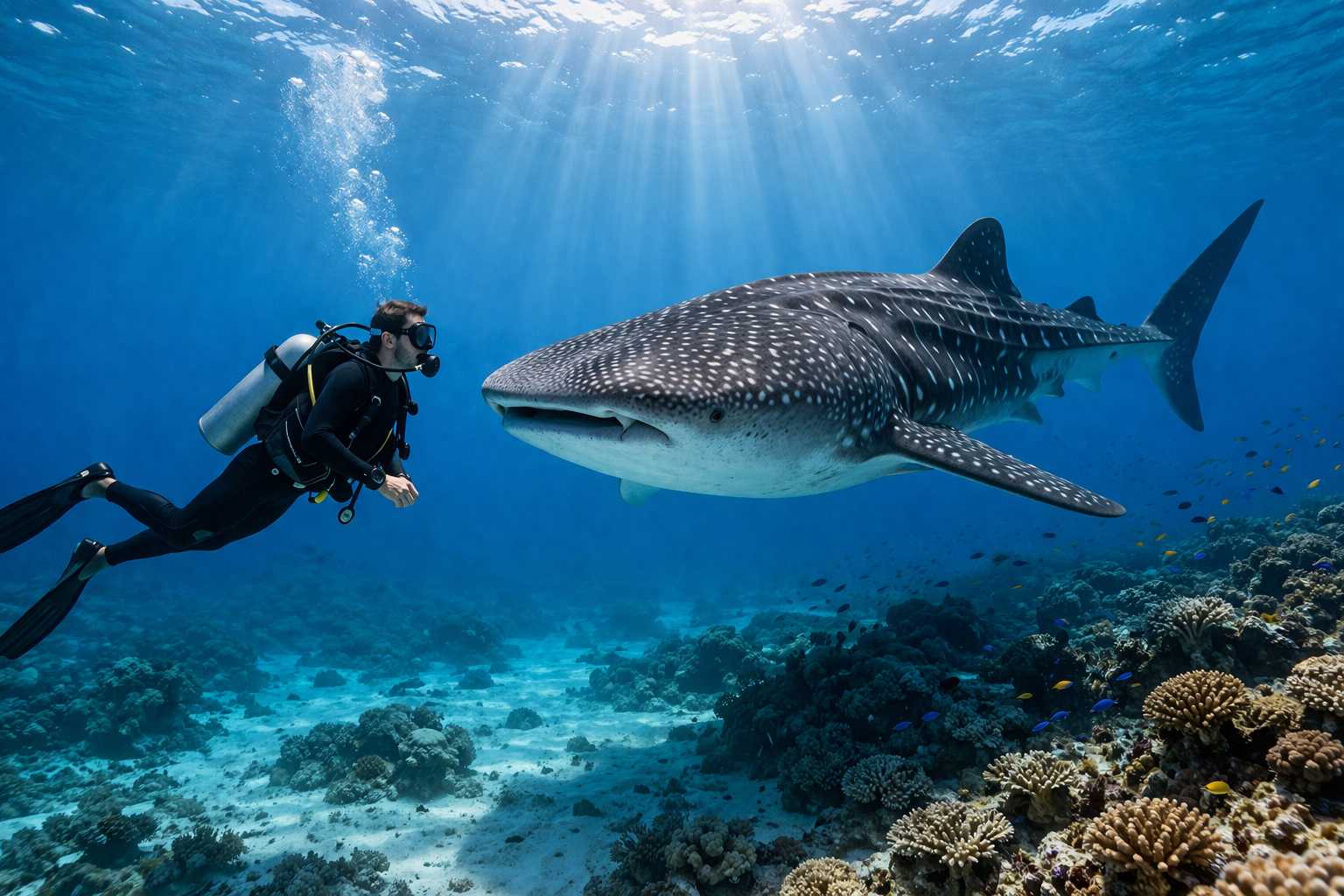
The go-to atoll for first-time Maldives divers. Near year-round whale shark sightings, calm conditions, and world-class thilas like Fish Head make this a reliable all-rounder.
Whale shark guide
UNESCO Biosphere Reserve and home to Hanifaru Bay — where manta aggregations of 100–200+ rays gather between June and November. Snorkelling only at Hanifaru; scuba at other sites.
Manta ray guide
Fotteyo Kandu and Miyaru Kandu ('Shark Channel') are among the most dramatic channel dives in Asia. Strong currents, exceptional shark density, and far fewer crowds than Ari or Male.
Find a resort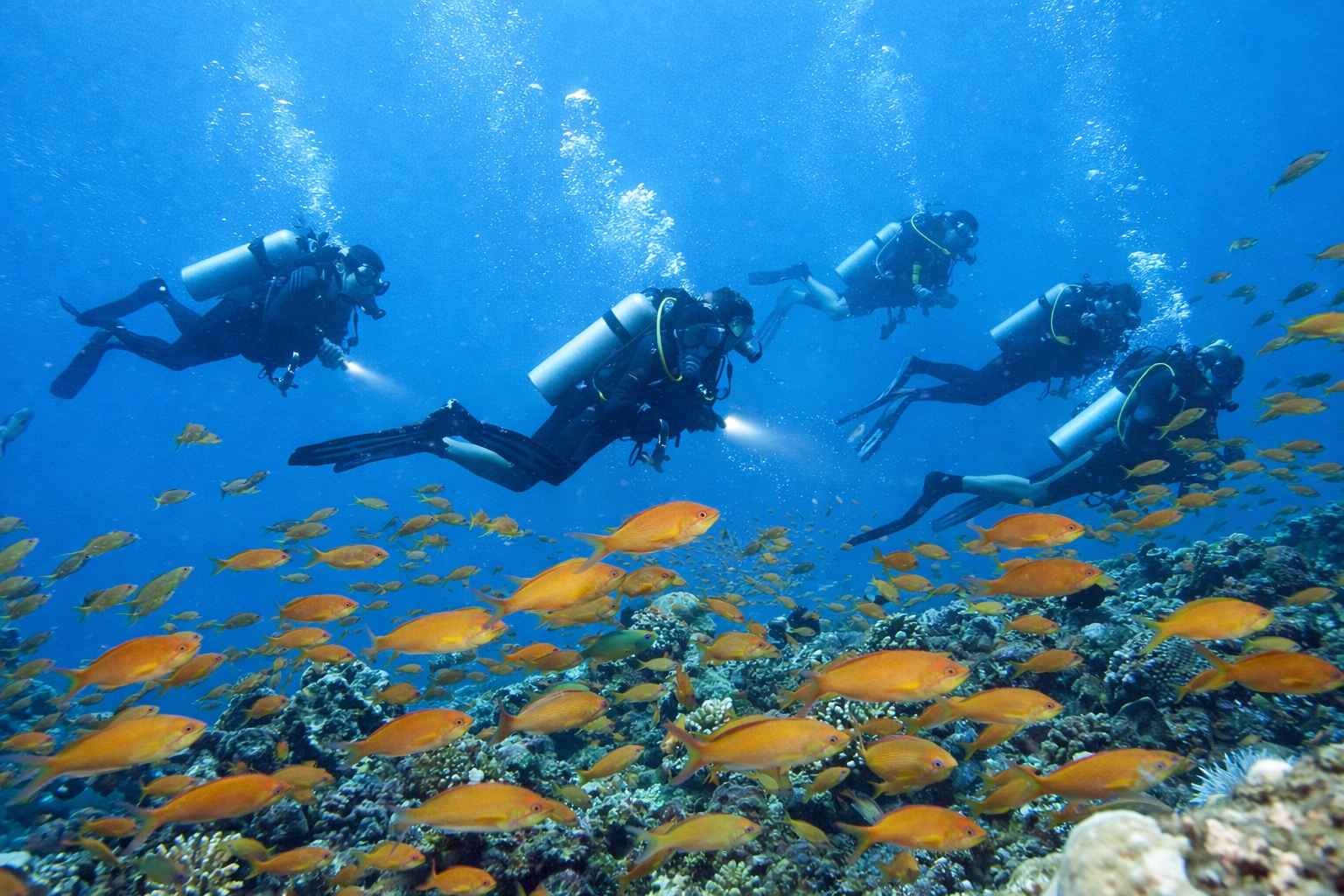
Maaya Thila — rated one of the best dive sites on the planet — sits here. Night dives reveal white-tip reef sharks hunting the reef. Current-driven kandu dives attract pelagic species.
Best dive resorts
One of the world's few sites for near-guaranteed tiger shark encounters. Tiger Zoo dive site and a rare thresher shark cleaning station make this a pilgrimage for advanced shark divers.
Marine life guideThe Maldives has two monsoon seasons — and both are good for diving if you know which side of each atoll to be on. The key is matching your target species to the right month.
| Month | Season | Visibility | Best For | Notes |
|---|---|---|---|---|
| January | Dry / NE monsoon | 30–40m | All-round diving, photography | Peak season, busy resorts |
| February | Dry / NE monsoon | 30–40m | Wide-angle photography, reefs | Best overall visibility |
| March | Dry / NE monsoon | 25–40m | Hammerheads at Rasdhoo | Hammerhead season peaks |
| April | Dry / NE monsoon | 20–35m | Reefs and transition diving | Season shoulder, good value |
| May | Transition | 15–25m | Value travel, flexibility | Changeable currents |
| June | Wet / SW monsoon | 15–30m | Mantas begin at Baa Atoll | Rates drop significantly |
| July–August | Wet / SW monsoon | 15–25m | Peak manta aggregations | Hanifaru Bay at its best |
| September | Wet / SW monsoon | 15–25m | Mantas + best value month | Quietest, cheapest time |
| October | Wet / SW monsoon | 20–30m | Whale sharks peak (South Ari) | Transition to dry season |
| November | Transition | 25–35m | Whale sharks + improving vis | Excellent value window |
| December | Dry / NE monsoon | 30–40m | All-round, peak season | High season prices return |
Peak Good Fair — conditions still diveable
The Maldives sits where two hemispheres of ocean current meet — which is why the marine life here is exceptional even by tropical standards. Here's what to plan for, and where to find it.

The Maldives' most iconic encounter. South Ari Atoll has a resident population feeding near the surface year-round. Both snorkel and scuba encounters are available.
Full whale shark guide →
Hanifaru Bay in Baa Atoll hosts feeding aggregations of 100–200+ rays during plankton blooms. Note: snorkelling only at Hanifaru. Scuba diving with mantas available at Manta Point (North Malé).
Full manta guide →
Grey reef, blacktip, and whitetip reef sharks are present on virtually every atoll year-round. Vaavu's channels offer the highest density. Most house reefs have resident blacktips.

Hawksbill and green turtles rest and feed on reefs throughout the Maldives. Many house reefs have resident turtles you can find on every dive. Often spotted at cleaning stations.

Napoleon (humphead) wrasse are found at most thila sites — large, curious, and very photogenic. Eagle rays cruise channels and walls throughout the atolls in small groups or solo.

Hammerheads gather at dawn at Rasdhoo's Hammerhead Point (Jan–Apr, 30m). Tiger sharks at Fuvahmulah are one of the world's most reliable encounters — but conditions are advanced-only.
For the complete underwater wildlife guide, visit our Maldives marine life guide — including dolphins, nudibranchs, frogfish, and seasonal macro life.
Not all Maldives dives are the same. The variety is one of the reasons divers keep coming back — here's what each style looks like.
The signature Maldives experience. You enter a channel, the current carries you along, and the fish, sharks, and rays come to you. Your boat follows your surface marker buoy. Exhilarating and efficient.
Intermediate–AdvancedCircling an underwater pinnacle, often with mild to moderate current. The richest dive sites in the country. Maaya Thila, Fish Head, and Kudarah Thila are world-class. Best with good buoyancy control.
All Levels (site dependent)Protected lagoon reefs with mild or no current. The best option for beginners, snorkellers transitioning to scuba, and anyone wanting a relaxed, exploratory dive with reef fish, turtles, and coral.
All LevelsLimited but excellent options. The Victory Wreck (North Malé, 35m, advanced) and British Loyalty (Addu, 33m) are highlights. The Lady Christine is more accessible for intermediate divers.
Intermediate–AdvancedOne of the Maldives' hidden highlights. White-tip sharks hunt the house reef after dark, octopus and nudibranchs emerge, and the reef transforms completely. Best done on a quality house reef you already know.
Open Water+The Maldives is a wide-angle destination — clear water, big subjects, dramatic backdrops. Whale sharks, manta rays, and reef shark shots are world-class. A fisheye or 10–20mm rectilinear lens is ideal.
All LevelsThe Maldives works for all experience levels — but the right planning differs significantly depending on where you are in your diving.
Dive regulations are set by the Maldives Recreational Diving Regulation 2003 and enforced at all licensed dive centres. For safety standards and no-fly guidelines, refer to DAN — Divers Alert Network ↗.
Your trip format shapes your entire experience. Here's the honest breakdown of all three.
Stay on a private island, dive from the resort's own centre. Fixed base with full facilities — spa, non-diving excursions, restaurant. Suits couples, families, and mixed groups.
Live and dive from a boat for 7–10 nights, covering multiple atolls. Up to 4–5 dives per day including night dives. Lower cost per dive, more variety, more marine life encounters.
Stay in a guesthouse on an inhabited local island. Significantly cheaper, more authentic, and great for budget divers. Dive with a standalone local dive centre — not connected to your accommodation.
Diving is priced separately from your room almost everywhere. Here's a realistic breakdown for 2026 — budget the diving costs on top of your accommodation.
| Dive Type / Service | Budget / Guesthouse | Mid-Range Resort | Luxury Resort |
|---|---|---|---|
| Single fun dive | $40–$70 | $70–$100 | $100–$140 |
| 10-dive package | $300–$500 | $550–$750 | $750–$1,100 |
| House reef dive | $25–$40 | $35–$60 | $50–$80 |
| Night dive | $50–$80 | $80–$110 | $100–$140 |
| PADI Open Water Course | $350–$500 | $500–$650 | $600–$750 |
| PADI Advanced Open Water | $250–$400 | $350–$500 | $400–$600 |
| Whale shark boat trip (South Ari) | $60–$90 | $90–$130 | $110–$160 |
| Nitrox fill (per tank) | $8–$15 | $12–$20 | $15–$25 |
| Full equipment rental | $15–$30 | $25–$45 | $35–$60 |
The Maldives Recreational Diving Regulation 2003 is strictly enforced. These aren't suggestions — they apply to every diver at every licensed dive centre.
No decompression diving is permitted under Maldives recreational diving rules. All dives must remain within no-stop limits and below 30 metres. Dive tables and computers are strongly recommended.
Bring your certification card and logbook. Dive centres may also require a medical self-declaration or recent medical certificate. An orientation dive may be required if you haven't dived in the last 3 months.
The Maldives is a drift-diving destination — good briefings and clear surface signalling matter. Night dives require additional signalling equipment including torch and marker gear. Always dive with a buddy.
The regulation prohibits diving within 12 hours of flying. DAN recommends at least 12 hours after a single no-decompression dive, and at least 18 hours after multiple dives or multi-day diving.
The primary recompression facility is ADK Hospital in Malé. Dive accident insurance with medical evacuation cover is strongly advised — standard travel insurance rarely covers hyperbaric treatment.
Avoid touching coral or marine animals. Shark feeding is not permitted in Maldivian waters. Some marine protected areas require permits or special access rules — your dive centre handles this, but ask before booking.
We've put everything in this guide into a PDF you can save, print, and take with you — dive site matrix, cost tables, packing checklist, sample itineraries, and the full month-by-month season calendar.
Download Free PDF GuideEach guide below goes deeper on its topic — dive resorts, marine life, liveaboards, and specific experiences worth planning your trip around.
Real questions from people planning a Maldives dive trip.


Send us your dates, certification level, approximate number of logged dives, budget, and marine-life wishlist — and we'll help you choose the right atoll, resort, or liveaboard. Our team is based in the Maldives and knows these waters first-hand.
Free advice · No booking fees · Based in the Maldives