

Home › Maldives Excursions › Maldives Dolphin Cruise
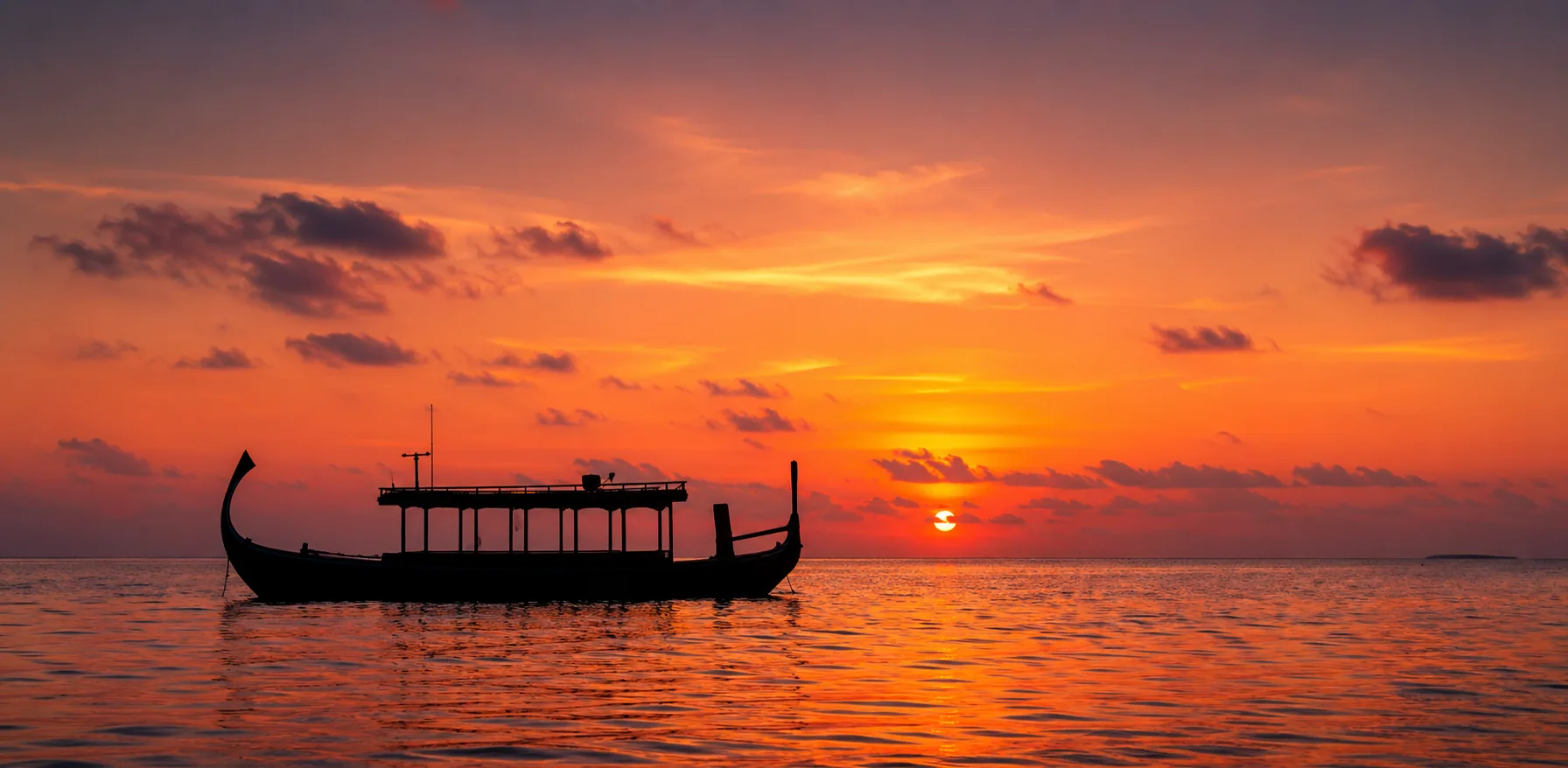
A Maldives dolphin cruise is usually the easiest sunset boat trip to understand: short evening timing, open-water searching, and a scenic return in golden light. The best ones are chosen by route practicality and atmosphere, not by the biggest sighting promise.
A Maldives dolphin cruise usually means a late-afternoon or sunset boat trip that heads into open water to look for dolphins and returns in evening light. Shared local-island cruises usually sit around $25-$45 per person, private boats often start around $250-$500 total, and resort-run dolphin cruises usually land around $60-$140 per person.
The best dolphin cruise is not the one with the most dramatic promise. It is the one that leaves from a practical island base, reaches the search area without wasting the whole evening in transit, and still feels enjoyable even if the dolphins stay farther out.
A dolphin cruise in the Maldives is usually a short evening marine outing rather than a full wildlife expedition. The boat heads to an operator’s regular search area, spends time scanning open water, and then returns as the light softens toward sunset. On the right route, that can be one of the easiest and most enjoyable excursions in the islands.
The difference between a good and weak dolphin cruise is mostly about route realism. If the operator can reach its regular search zone quickly, the whole trip feels smooth. If too much of the evening goes into transit, the outing starts to feel more like a generic boat ride with dolphin potential.
In short
The best Maldives dolphin cruise is the one that can reach open water fast, search in the right light, and still feel worth doing even if the dolphins stay at a distance.

Dolphin cruises work best from islands that can reach realistic search water without burning most of the evening in transit. That is why route practicality matters more here than dramatic marketing copy.
| Base or zone | Why it works | Best use case | What to watch |
|---|---|---|---|
| Maafushi | Good shared-trip competition and practical sunset routes | Budget-friendly shared cruises and easy private upgrades | Some routes can feel busier in peak periods |
| North Malé and South Malé resort zones | Shorter evening departures and smoother logistics | Couples, families, and convenience-focused travelers | Check whether the premium includes tax and service |
| Nearby local islands with regular evening routes | Strong value when operators run this route often | Travelers who want a simple one-evening boat trip | Avoid islands that only treat dolphin cruises as an occasional extra |
| Remote marine atolls | Can still work if the route is local and short | Travelers already staying there | Not every remote atoll is ideal for a simple sunset dolphin cruise |
The Maldives does not have one single famous dolphin point in the same way it has famous reefs or sandbanks. What matters more are the channels and sunset search corridors where resident spinner-dolphin pods move between deeper water and the atolls. The names below are the most useful ones to know when planning.
| Area | Why it matters | Best base | What to know |
|---|---|---|---|
| Felidhu / Vaavu channels | One of the most talked-about spinner-dolphin zones on budget routes | Fulidhoo and nearby Vaavu islands | Good for travelers who want a strong chance of seeing larger spinner pods without paying resort pricing |
| South Malé sunset routes | Short practical evening runs from Maafushi and nearby resorts | Maafushi and South Malé resorts | Strong value when you want a simple sunset cruise without a long transit |
| North Malé atoll-rim channels | Useful for resort and Malé-area departures | North Malé resorts, Malé, Hulhumalé | Best when you want easy logistics and a practical short evening route |
| Dhaalu Atoll sunset runs | Known among some resorts for regular spinner sightings | Dhaalu resorts and nearby bases | More relevant when you are already staying in Dhaalu rather than choosing the atoll only for dolphins |
Spinner dolphins, or Stenella longirostris, are by far the most commonly encountered dolphins on Maldives sunset cruises. They are famous for the spinning leaps that give them their name, and they often bow-ride boats when the interaction stays calm and natural. Typical pods are often in the dozens, and on a very good route you may see groups that feel much bigger than that.
Bottlenose dolphins do appear in Maldivian waters, but they are not the main species most scheduled sunset cruises are built around. If a page never tells you that spinner dolphins are the usual target, it is probably being too vague.
Most dolphin-cruise choices are really format choices. The same sunset search can feel completely different depending on whether you share the boat, book private, or leave directly from a resort jetty.
Best when you want a simple sunset outing at the lowest per-person cost. Shared cruises are strongest from islands like Maafushi where operators run the route often and can keep the pricing competitive.
The trade-off is a more social deck and less control over timing or where you stand for photos.
Best for honeymooners, photographers, families, and travelers who care about a quieter mood. A private boat usually gives the cleanest sunset angle and the easiest deck experience.
The value comes from comfort, space, and flexibility rather than just going farther offshore.
Best when you want an easy jetty-side departure with no extra planning. Resort-run dolphin cruises often feel polished and calm, but the premium makes the most sense when convenience is part of the reason you are buying.
Always ask whether the final price already includes 17% TGST and any service charge.

Use the ranges below as planning benchmarks. Exact pricing still changes with boat quality, distance to the search zone, and whether the outing is a simple shared sunset ride or a more private premium experience.
| Trip style | Planning range | What you usually get | What changes the value |
|---|---|---|---|
| Shared local-island cruise | $25-$45 pp | Simple evening outing with dolphin search and sunset return | Best value when the route is short and the boat is not overcrowded |
| Private local-island cruise | $250-$500 total | Quieter deck, flexible timing, cleaner photo space | Best for couples, families, or travelers who dislike crowded boats |
| Resort dolphin cruise | $60-$140 pp | Easy jetty-side departure and smoother service | Worth it when convenience matters more than lowest price |
| Private premium sunset cruise | $350-$850+ total | Privacy, timing control, and a more polished romantic format | Mostly about mood, comfort, and presentation |
Price note: Some resort dolphin-cruise quotes are shown before 17% Tourism Goods and Services Tax (TGST) and any service charge. Since 1 July 2025, TGST is 17%, so compare the final payable price rather than only the headline sunset-cruise rate.
Key takeaway on value
The strongest-value dolphin cruises usually come from islands that can reach their regular search water quickly. The resort premium is easier to justify when you want convenience, romance, or a cleaner deck experience.
One reason dolphin cruises convert well is that the day shape is easy to understand. A normal evening cruise usually follows a predictable rhythm rather than feeling like an all-day marine expedition.
| Typical timing | What usually happens |
|---|---|
| 4:30-5:00 p.m. | Boarding, safety briefing, and departure in late-afternoon light |
| 5:00-5:30 p.m. | Boat reaches the regular search corridor or atoll-rim channel |
| 5:30-6:15 p.m. | Main dolphin-search and watching window, often with sunset building in the background |
| 6:15-6:45 p.m. | Scenic return with photo time, slower cruising, and easier evening light |
| 6:45-7:00 p.m. | Return to jetty or harbor, depending on island base and season |
Best for most travelers who want a short evening outing, a good sunset, and a realistic chance of dolphin sightings without paying private-boat pricing.
Best for couples, anniversaries, and travelers who want a quieter boat with cleaner photography angles. This format is more about atmosphere than about promising more dolphins.
Best for families with children or travelers prone to seasickness. A shorter route with a calmer boat often beats an aggressive offshore search.
Best when you want one varied day and the route is practical from your island base. This works especially well from Maafushi and some other local-island hubs.

Most dolphin cruises are sold as sunset products for a reason. The light is better, the heat is lower, and the whole outing feels more relaxed than a midday marine search.
Late afternoon is the normal window. Exact start time shifts with season, sunset time, and the operator’s regular route.
Calmer months from December to April usually give the easiest ride, but dolphin cruises can still work outside that period if the route is short and the sea is manageable.
If you get seasick, ask how far offshore the route usually runs and whether the boat is a gentle sunset cruiser or a faster search boat. Some guests care more about ride comfort than the longest possible search window.
Dolphin cruises are one of the easiest Maldives excursions for travelers who do not want deep-water activity. They work well for families, couples, older travelers, and anyone who simply wants a beautiful evening on the water.
A good dolphin cruise should respect the animals. Boats should avoid chasing pods, cutting across their path, crowding them with several vessels, or encouraging guests to feed or touch dolphins. The best experience is usually when the boat keeps a safe distance and lets the dolphins approach naturally if they choose.
A good dolphin cruise should still feel worthwhile as a sunset outing even when the dolphins stay farther away.
If the boat needs too long to reach open water, the evening can feel rushed from the start.
A calmer, shorter route is often better value than a longer search if you are sensitive on boats.
If you upgrade to private, the route, timing, and onboard feel should clearly improve.
Maldives dolphin cruises are boat-based wildlife-viewing trips, not in-water encounters. Responsible operators do not ask guests to jump in after wild dolphins.
If you need 60+ minutes each way just to reach the search zone, the cruise can feel more like a transfer than a sunset wildlife outing.
Open boats, spray, and low sunset light are a poor mix for unprotected gear. A simple waterproof pouch or strap matters more than people expect.
Shared local-island dolphin cruises usually sit around $25-$45 per person. Private local-island boats often start around $250-$500 total, while resort-run dolphin cruises commonly land around $60-$140 per person.
No. Sightings are common on many routes, especially where operators run these trips regularly, but they are never guaranteed. The best dolphin cruises still feel worthwhile as sunset boat trips even if the dolphins stay farther out.
Most start in the late afternoon and return around sunset. That timing gives the best atmosphere and often the most practical search window for operators who run this route often.
Usually yes if you want an easy scenic boat trip with a strong chance of dolphin sightings and a good sunset atmosphere. They are especially good for non-swimmers, couples, and travelers who want a lighter excursion day.
Maafushi, many North Malé and South Malé resorts, and other islands that can reach open water quickly are usually the strongest bases. The key is a short run to a realistic dolphin-search zone rather than a long scenic detour.
Choose shared if value matters most and you are happy with a social boat. Choose private if you want a quieter deck, more flexible timing, and better space for photos or a romantic atmosphere.
Yes. Dolphin cruises are one of the easiest Maldives excursions for families, grandparents, and non-swimmers because there is no in-water activity required. The main question is only boat comfort and sea state.
Spinner dolphins (Stenella longirostris) are by far the species you will see most often on Maldives dolphin cruises. They travel in resident pods across many atolls and are famous for their spinning leaps and bow-riding behavior. Bottlenose dolphins appear occasionally, but spinner dolphins are the normal cruise target.
Usually yes. Resort versions are often smoother on logistics and service, while local-island cruises usually win on value. The choice depends on whether you care more about convenience or price.
They often are for honeymooners, photographers, and families who want a calmer pace. The extra value comes from space, flexibility, and mood rather than just getting farther offshore.
Yes. Strong wind, rough chop, or rain can make the ride less comfortable or shorten the search. Good operators will tell you honestly when the evening is more scenic cruise than serious dolphin outing.
No. Standard Maldives dolphin cruises are boat-based wildlife-viewing trips, not swim-with-dolphins experiences. Good operators keep the experience respectful and do not encourage guests to jump in, chase, touch, or feed wild dolphins.
If dolphins are only one part of the day you want, a practical package can work well. If sunset atmosphere is the main reason you are booking, a dedicated dolphin cruise usually feels cleaner and less rushed.
Dolphin cruises are often compared with sunset packages, snorkeling days, Maafushi departures, and the wider excursion price guide.