

Gulhi has one of the most loved local-island beaches in the Maldives, and a few things worth knowing before you go. Here is the real picture: swimming, snorkelling, the swing, crowds, and the best time to visit.
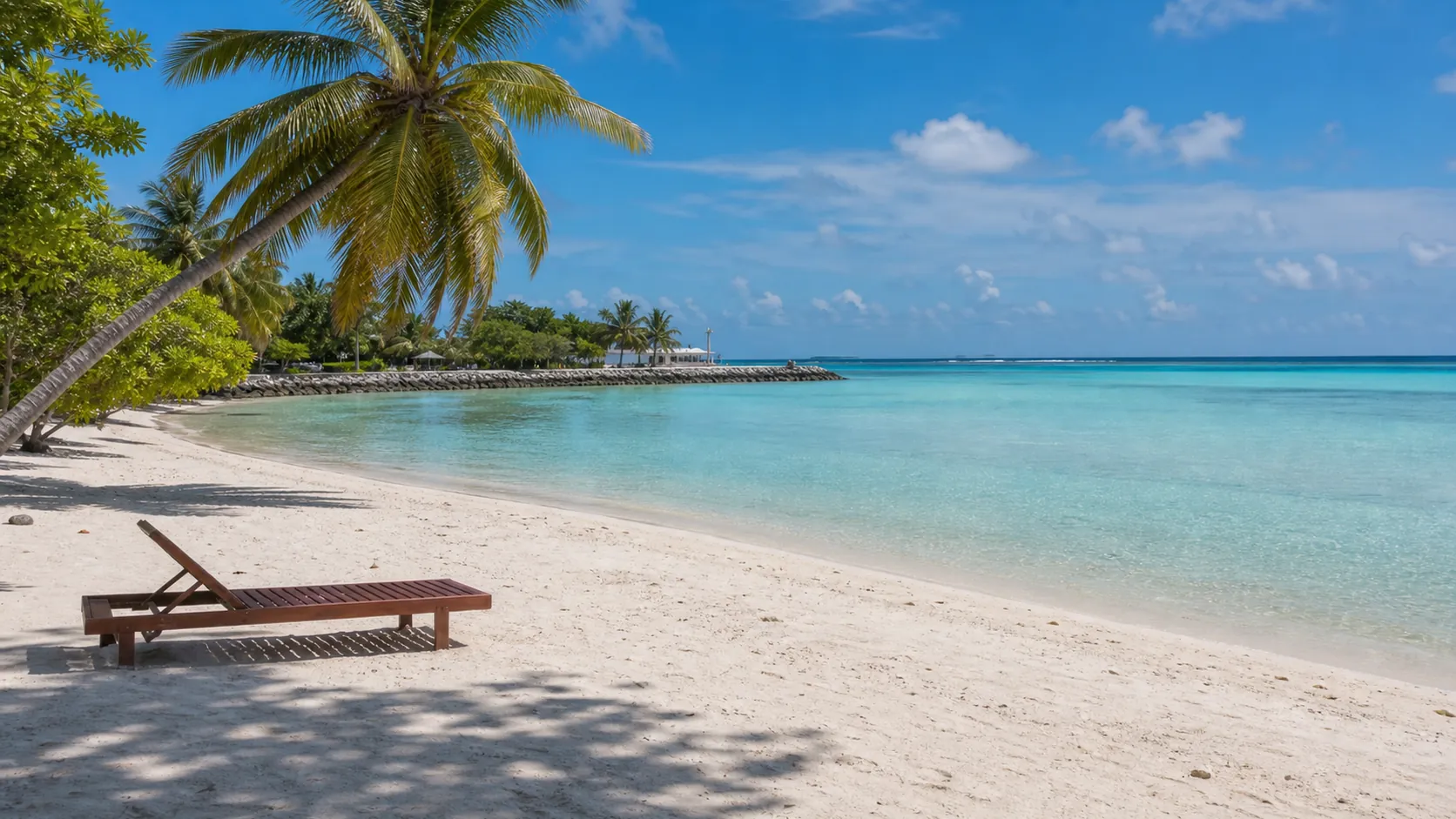
Gulhi Bikini Beach is the designated tourist beach at the north-eastern end of Gulhi island, where swimwear is allowed, with soft white sand and shallow, clear water. It is widely rated as one of the best local-island beaches in South Malé Atoll, with free or low-cost sun loungers, reef snorkelling within swimming distance, and the well-known “I Love Gulhi” swing. It is quietest early in the morning before day-trip boats arrive from Maafushi, and modest dress is expected once you step off the beach into the village.
Last updated: June 2026. Island conditions and facilities can change, so check current details before you travel.
Gulhi Bikini Beach sits at the north-eastern end of the island, a short walk from the harbour through the village lanes. Because Gulhi is tiny, barely a few hundred metres across, you can reach the beach on foot from almost any guesthouse in a few minutes. This is the designated tourist beach, the one stretch where swimwear is allowed.
Gulhi actually has more than one beach. The main tourist beach is the busy, photogenic one with the swing. There is also a quieter stretch of sand at the other end of the island, less developed and less visited, which is worth a wander if you want space away from the day-trip crowd. Most visitors only ever see the main beach, so the quieter end is a small local secret.
Yes, on the designated bikini beach. A bikini beach is a tourist beach on an inhabited local island where swimwear is allowed, the Maldives’ way of letting visitors enjoy the water while respecting that the rest of the island is a Muslim community. Gulhi is an inhabited local island, not a private resort, so once you leave the beach you are expected to cover up, shoulders and knees, in the village and along the lanes. There are signs around town reminding visitors that swimwear belongs on the beach only, so bring a cover-up, t-shirt, or sarong for the short walk to and from your guesthouse.
None of this gets in the way of a relaxed beach day. It is simply the etiquette of visiting a real Maldivian island rather than a private resort, and locals appreciate visitors who respect it.
At its best, Gulhi Bikini Beach is genuinely lovely: soft white sand, water that stays shallow and clear a long way out, and a gentle, swimmable lagoon. Many travellers rate it among the prettiest beaches they have seen on a local island, and it compares well with far pricier resort beaches. The shallow, calm water makes it easy for swimming and good for families.
Sun loungers and shade are usually available near the beach. Whether they are free or carry a small charge varies, some are free to use, some come with a guesthouse stay, and some vendors may ask a small fee, so it is worth checking what you are paying for before you settle in.
Reviews of Gulhi’s beach swing between glowing and disappointed, and the difference is usually about timing and recent works. Some visitors find it clean and quiet; others have arrived to crowds, loud music from day-trip groups, or ongoing land-reclamation work on the island that left parts dusty. Conditions change, so it is worth checking recent reviews close to your trip. The simplest fix for the crowd-and-noise issue is timing, see below.
The water is usually shallow and calm, which makes it comfortable for swimming and good for children, one of the reasons the beach suits families and first-time local-island visitors. Still, check conditions before you go in. The Maldives can have currents even in calm-looking water, and visibility drops after rain or strong winds. Stay inside the main beach area, keep clear of boat channels, supervise children closely, and do not swim far out alone or after dark.
On dark nights at certain times of year, the shoreline can occasionally light up with bioluminescent plankton, a faint blue glow in the water as it moves. It is never guaranteed; it depends on plankton activity, the season, and how dark the night is, so it is best seen away from a full moon and bright lights. If it appears during your stay, treat it as a lovely piece of luck rather than something to plan around.
The single biggest thing that shapes your experience is when you go. Gulhi gets day-trippers arriving by boat from Maafushi, often in groups, usually through the middle of the day. They bring noise and crowds to an otherwise calm beach, and they are the source of most “it was loud and busy” complaints.
The fix is simple: go early. In the morning before the day-trip boats arrive, the beach is quiet, the light is soft, and you often have long stretches of sand to yourself. Late afternoon, once the day groups have left, is the second-best window. Weekdays are generally calmer than weekends. If you are staying overnight on Gulhi rather than day-tripping, you get these quiet hours as a real advantage over the visitors who only come for a few midday hours.
You can snorkel straight from the beach. Swim out toward the reef edge, roughly a couple of hundred metres in places, and you will find reef fish and coral; travellers regularly report seeing a good range of species, and some paddle a little further by canoe toward a small nearby island where reef sharks patrol the shallows. Bring your own mask and fins if you can, it saves on rental and means you can go whenever you like.

Be honest with your expectations, though. The house-reef snorkelling is pleasant rather than spectacular, and some visitors find the coral closest to shore patchy. The better marine life is on reefs a short boat ride away, which a snorkelling excursion will reach. If snorkelling is a main reason for your trip, plan on at least one boat trip rather than relying only on the shore.
The beach’s best-known feature is the “I Love Gulhi” twin swing standing in the shallow water, built by local volunteers and now one of the most photographed spots in South Malé Atoll. It is the classic Gulhi photo, and early morning is the best time to get it without a queue or other people in the shot. As with any beach structure exposed to the sea, its condition can vary over time, so do not be surprised if it looks a little weathered.

If you are choosing between the two on beach quality alone, Gulhi usually wins. Its bikini beach is generally larger, cleaner, and calmer than Maafushi’s, which is small for the number of visitors it gets. Many travellers who have seen both prefer Gulhi’s sand and water, and some day-trip to Gulhi specifically for its beach while staying on busier Maafushi.
That said, Maafushi offers far more beyond the beach, more restaurants, excursions, and a livelier scene. For the full island-by-island comparison, see our Gulhi island guide. If you want to combine the two, our Maafushi to Gulhi guide covers day trips and itineraries.
Yes. Gulhi sits close to Maafushi on the same route, and many people visit its beach as a half-day or day trip while based on Maafushi, reached by a short speedboat hop. It is a popular move precisely because Gulhi’s beach is often nicer than Maafushi’s own. If you only want the beach and the swing, a few hours is enough; there is not a great deal else to fill a full day on such a small island.
If the beach is what you are really after, though, consider staying a night on Gulhi instead. You get the quiet early-morning and late-afternoon hours that day-trippers miss, which is when the beach is at its best. Full details are on our Maafushi to Gulhi guide.
There is no entry fee for Gulhi Bikini Beach. It is a public designated tourist beach on a local island, free to walk onto and swim from. The costs that come up around the beach are optional extras: a sun lounger or umbrella if it is not included by your guesthouse, food and drinks at a nearby cafe, snorkelling gear hire if you have not brought your own, and any water sports or boat trips you book. If you are day-tripping from Maafushi, your main cost is the boat transfer rather than the beach itself.
No. People sometimes search for a “Gulhi bikini beach resort,” but Gulhi is an inhabited local island with guesthouses and small local hotels, not private island resorts. The closest thing to a beach resort here is a beach-near guesthouse or small boutique hotel, which costs a fraction of a resort and puts you minutes from the sand. If resort facilities like a spa, bar, or overwater villa are essential, the usual approach is to pair a Gulhi stay with a nearby resort, or take a resort day visit where available.
To reach the beach you first travel to Gulhi island, about 21 km from Velana International Airport. The simplest option is a scheduled speedboat, roughly 25 to 30 minutes, while the cheaper public ferry from Malé is slower and runs once daily with no Friday service. Once you land at Gulhi harbour, the bikini beach is a short walk away through the village. Full options, costs, and which to pick for your flight are on our Male to Gulhi transfer guide.
Because Gulhi is so small, almost every guesthouse is within a few minutes’ walk of the bikini beach. A few properties sit especially close to the beach, which is worth asking about if early-morning beach access and quick dips matter to you. If you are comparing beach-near guesthouses, check the exact walking distance, room type, meal plan, and transfer support before booking. Staying overnight is the real advantage here: you get the calm hours before and after the day-trip crowds, which is when Gulhi’s beach is genuinely at its best.
A few common slips spoil otherwise good beach days: walking through the village in swimwear, assuming the beach is private or resort-style, relying only on cards (carry cash), swimming far out without checking the current, standing on or touching coral and marine life, booking water sports without confirming the price first, and, if you are day-tripping from Maafushi, forgetting to check your return boat time. And do not plan your whole visit around the swing alone, treat it as a bonus.
The beach is the main draw, but there is more around it: reef snorkelling trips, sandbank picnics, dolphin cruises, sunset and night fishing, and resort day visits, most arranged on demand through your guesthouse. For the full rundown of what is worth booking, see our things to do in Gulhi guide. For the wider picture of the island, start with the Gulhi island guide.
We are a Ministry of Tourism licensed Maldives agency. Tell us your dates and we will arrange a guesthouse near the beach, your airport transfer, and any snorkelling or excursions in one simple quote, so you wake up to the quiet beach the day-trippers never see.
Plan my beach stay Start with the Gulhi island guide, or see things to do in Gulhi.It is at the north-eastern end of Gulhi island, a few minutes’ walk from the harbour through the village. Gulhi is tiny, so the beach is close to almost every guesthouse. This is the designated tourist beach where swimwear is allowed.
Yes, on the designated bikini beach. Off the beach, in the village and lanes, modest dress covering shoulders and knees is expected, as Gulhi is an inhabited Muslim island. Bring a cover-up for the walk to and from the beach.
At its best it is one of the nicer local-island beaches in the Maldives, with soft white sand and shallow, clear water. Experiences vary with timing and recent island works, though. Going early in the morning, before day-trip boats arrive, gives you the calm, quiet beach most people hope for.
Early morning is best, before day-trip boats arrive from Maafushi around midday. Late afternoon, once groups have left, is the second-best window, and weekdays are calmer than weekends. Staying overnight on Gulhi lets you enjoy these quiet hours.
Yes. Swim out toward the reef edge and you will find reef fish and coral. The house-reef snorkelling is pleasant rather than spectacular; the best marine life is on reefs a short boat ride away, reached on a snorkelling excursion. Bring your own gear if you can.
It varies. Some loungers and shade are free to use, some come with a guesthouse stay, and some vendors may charge a small fee. Check what you are paying for before settling in, rather than assuming everything is free.
Yes. Gulhi is a short speedboat hop from Maafushi, and many people day-trip to its beach, which is often nicer than Maafushi’s own. A few hours covers the beach and the swing. For the calm early and late hours, though, staying a night on Gulhi is better.
Yes, the “I Love Gulhi” twin swing stands in the shallow water and is one of the most photographed spots in South Malé Atoll. Early morning is the best time to photograph it without crowds. As a sea-exposed structure, its condition can vary over time.
Small, harmless reef sharks are sometimes seen in the lagoon and reef areas around Gulhi, and some snorkellers spot them near a small island a short paddle from the beach. Sightings are never guaranteed, and you should never chase, touch, or feed any marine life.
Bring swimwear and a modest cover-up for the village, reef-safe sunscreen, a hat and sunglasses, a towel, cash in small notes, water, and your own snorkel mask if you prefer. A waterproof phone pouch is handy for photos in the water.
Yes. The main tourist beach with the swing is the busy one, but there is also a quieter stretch of sand at the other end of the island that most visitors miss, good if you want space away from the day-trip crowd.