

Home › Maldives Excursions › Local Island Excursions Maldives
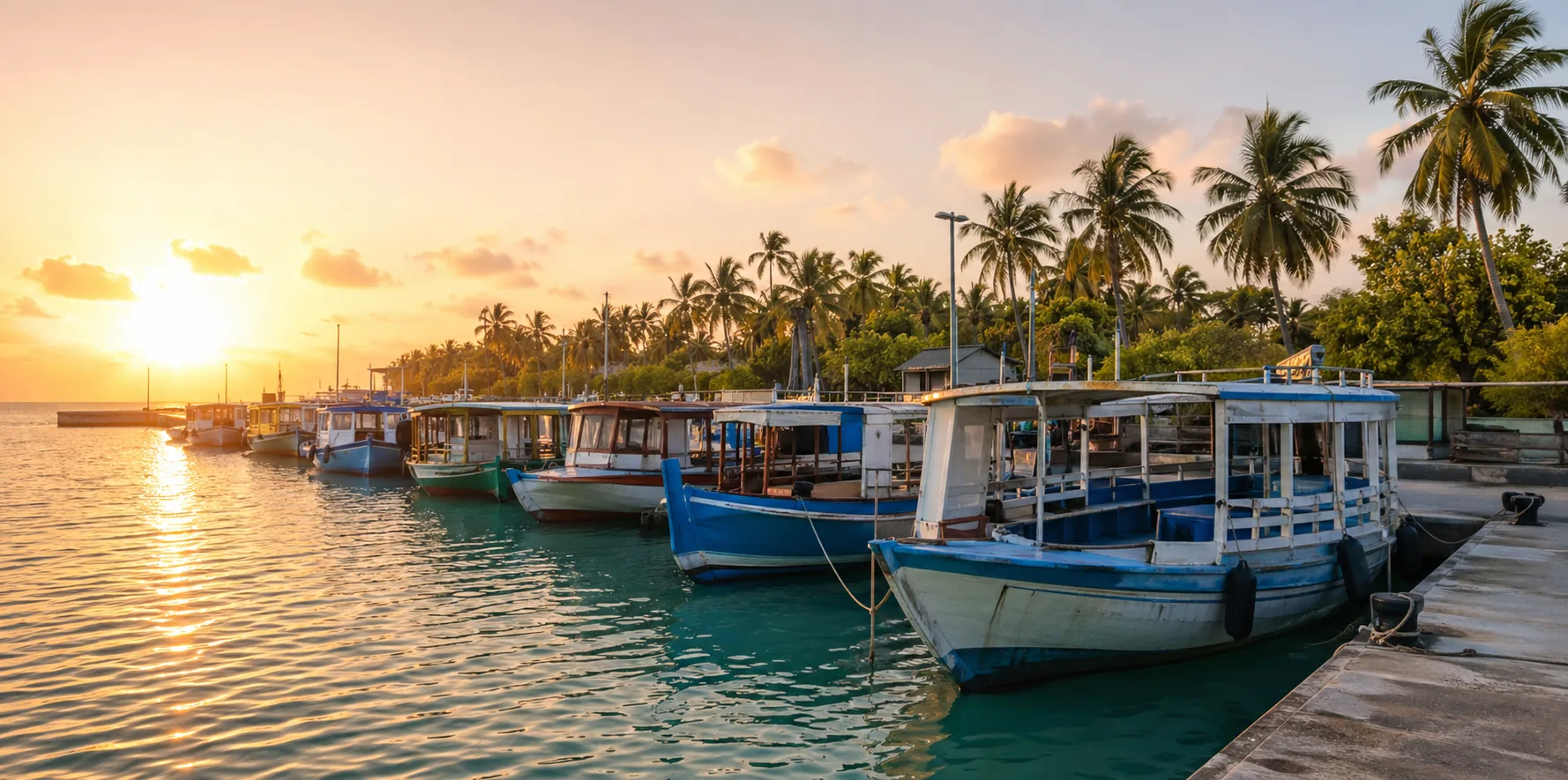
Local island excursions are one of the smartest ways to keep Maldives activity costs sensible without giving up the main trip types. The real trick is not only choosing a local island, but choosing the right local island for the excursion style you care about most.
Local island excursions in the Maldives usually give the strongest value on shared trips such as snorkeling, sandbanks, dolphin cruises, and practical full-day combinations. The reason is simple: more operator competition, more shared departures, and fewer resort-style premiums in the way.
That does not mean every local island is equally good. The smartest island depends on whether your real priority is Maafushi-style variety, South Ari marine life, easy snorkeling, or a calmer island with fewer but stronger nearby stops.
Use this parent page to compare styles, then jump into the island guides that match your priority. The live guides below are the best place to start if you already know the island. The others are planned next and are marked clearly so this page still works like a real hub.
Best South Ari base when whale sharks are the real reason for the trip. This guide is coming next.
Good quieter-value island with strong simple scenic routes and useful Vaavu context. Full guide coming soon.
Best for travelers mixing surf energy with selected boat trips. Full excursion guide coming soon.
The value advantage is not magic. Local islands are built around shared departures, public harbors, and more operator competition, so the average excursion price is often much lower than on a resort island for the same broad activity label.
That still does not make every local-island trip automatically good. The island must sit near the right routes, and the operator still needs to run the day well. Cheap only helps if the route is practical.
In short
The smartest local-island strategy is to choose the island around your main excursion priority. A slightly more expensive island can still be better value if it puts you right next to the activity you actually care about.

| Island | Strongest fit | Signature excursion angle | What to watch |
|---|---|---|---|
| Maafushi | Best all-round shared-value base | Three-stop snorkeling, sandbank day trips, sunset dolphin cruises, easy combo packages | Popular and busy in peak periods |
| Dhigurah | Best wildlife-priority base | South Ari whale shark routes and stronger marine-life focus | Not the best-value base if your main goal is only simple sandbanks or easy evening cruises |
| Rasdhoo | Great for sandbanks and reef context | Madivaru Finolhu sandbank, strong reef stops, and marine-life combinations | Smaller scope than Maafushi for broad shared variety |
| Fulidhoo | Good quieter-value option | Vaavu day routes, scenic reef trips, and simpler evening wildlife outings | Less all-round commercial density than Maafushi |
| Thulusdhoo | Good for surf-linked stays plus excursions | Surf-linked stays plus selected boat trips and nearby reef outings | Excursion strength depends on exact route expectations |
| Ukulhas | Good calmer-island alternative | Selective snorkeling, sandbank, and quieter pace excursion planning | Do not assume every calmer island is equally strong for wildlife routes |
| Bodufolhudhoo / similar smaller Ari islands | Alternative reef-sandbank balance | North Ari reef and sandbank alternatives when you want a quieter base | Operator density is lower than on Maafushi |
The strongest all-round commercial base because it combines easy shared departures, strong operator competition, and broad excursion variety. It is usually where budget-conscious travelers start when they want a little bit of everything.
Best when South Ari marine life is the point of the trip. Whale shark practicality matters more here than the broad excursion menu.
Strong for sandbanks, reef context, and calmer scenic combinations. It often feels cleaner and more focused than a high-volume all-rounder.
Useful for travelers who want local-island value without the busiest excursion-base feel. Good when simple scenic routes matter more than the biggest operator marketplace.
Useful for travelers who want a more energetic surf-island feel while still keeping selected excursions in the plan.
A good fit for travelers who care about a quieter island atmosphere and cleaner beach feel alongside selective excursions.
Stronger for travelers who want reef-and-sandbank balance without defaulting straight to the busiest all-round bases.

Many first-time local-island planners focus on the guesthouse price and forget the island transfer. That is a mistake because the airport-to-island leg is part of the real trip cost and part of the real comfort story.
| Transfer type | Typical cost feel | Best for | What to know |
|---|---|---|---|
| Public ferry | Often around $2-$5 where routes exist | Very budget-focused travelers with flexible timing | Slow, limited, and many public ferry routes reduce or stop service on Fridays |
| Shared speedboat | Often around $25-$50 each way on common routes | Most travelers choosing Maafushi, Ukulhas, and other practical local-island bases | Faster and easier, but still needs schedule planning |
| Domestic flight + short speedboat | Higher transfer cost, usually for farther atolls | Remote atolls or islands too far for an easy speedboat from Malé | Only makes sense when the island itself gives you something the closer islands cannot |
Local islands are not resorts, and that is part of the appeal. You get real island life, public harbors, local cafes, mosques, and a more grounded version of the Maldives. It also means you should arrive with the right expectations.
Local islands usually win hardest on simple shared trips. The gap narrows on private boats and polished special-occasion setups, but the shared-trip advantage is still one of the biggest reasons travelers choose this branch of the Maldives market.
| Excursion type | Typical local-island shared feel | Why the value is strong |
|---|---|---|
| Sandbank | $25-$45 pp type planning | Shorter practical routes and operator competition |
| Snorkeling | Usually one of the lowest shared local-island reef-trip bands | Easy shared departures and lots of reef-day formats |
| Dolphin cruise | $25-$45 pp type planning | Simple evening trips sell well from practical bases |
| Packages | $45-$95 pp type planning | Combining nearby stops into one shared day can be very efficient |
| Whale shark and manta | Still value-driven, but only from the right base | Marine context matters more than the local-island label by itself |
Key takeaway on value
Local islands usually save the most money on easy shared trips. On private boats and styled experiences, the value question becomes more about route logic and less about the local-island label alone.
Local island excursions suit travelers who want more control over budget and are comfortable planning the island base around their actual trip priorities. They are especially strong for independent travelers, couples, friend groups, and families who do not need resort logistics every day.
Start with the excursion you care about most, then work backward to the island. If whale sharks are the reason for the trip, choose South Ari. If broad shared-trip variety matters most, Maafushi is usually stronger. If a scenic sandbank and reef balance matters more, Rasdhoo may be the better fit.
Most planning mistakes happen when travelers start from the cheapest room they can find and only then ask what excursions the island is good at.
Most local-island trips begin the same way: you arrive at a small harbor, walk or take a buggy to the guesthouse, check in, and then ask the front desk or a nearby excursion desk what is running the next morning. On stronger islands such as Maafushi, operators often publish tomorrow’s trips the same evening. On quieter islands, you may need to ask earlier and be more flexible.
That is why the island base matters so much. A busy all-round island gives you easy same-day comparison. A quieter island gives you a calmer stay, but usually fewer operator choices and less last-minute flexibility.
Cheap is not enough if the island is weak for the excursion you actually care about.
Many public ferry routes reduce service or do not run on Fridays, so a cheap plan can fail before the excursion part even starts.
Inhabited islands are not resort islands, and alcohol rules are very different.
Some have strong broad shared-trip ecosystems, some do not.
Whale sharks and seasonal mantas still depend on atoll logic, even on a local-island trip.
Local islands are public inhabited communities, so beachwear rules are different from resort rules.
A “better value” island can still be less practical if you lose too much time or money just getting there.
There is no single best island for every excursion. Maafushi is often the best-known all-round budget base, Dhigurah is stronger for South Ari marine-life routes, and islands such as Rasdhoo, Fulidhoo, and Thulusdhoo can be better for different mixes of snorkeling, sandbanks, and general shared trips.
Usually yes. Shared local-island trips often cost much less than resort-run versions of the same broad activity, especially for sandbanks, snorkeling, dolphin cruises, and simple full-day combinations.
Maafushi is one of the strongest all-round value bases because there are many operators and lots of daily departures. It is not automatically the best island for every wildlife priority, but it is one of the easiest islands for shared excursion planning.
South Ari islands such as Dhigurah are usually better than trying to force whale shark trips from unrelated islands. The base should be chosen around the route, not only around the hotel price.
Maafushi and Rasdhoo are two of the strongest names in that conversation because they can combine easy scenic stops with practical shared departures.
Sometimes yes, especially with private boats, but the style is still different from a resort-run private experience. Local-island value is usually strongest on shared departures and practical custom boats rather than polished staged luxury.
Many are, especially on islands with easy shared routes and calm snorkeling or sandbank options. The right island still depends on whether the family cares more about easy swimming, wildlife, or very short boat rides.
Not automatically. You normally handle the transfer to the island first, then the excursion starts from that island’s harbor or pickup point.
Most travelers are better off choosing one island that matches their main priority. Island-hopping can work, but it adds more transfer logistics than many people expect.
Generally yes, but sea conditions and wildlife priorities still change with season. A good island in the wrong weather window can still feel weaker than a simpler route somewhere else.
Yes. That is one of the smartest patterns for some trips: stay on a value-focused local island, use shared excursions for activities, and add one resort day for a different style of day.
They choose the cheapest island without checking whether it is actually strong for the excursions they care about most.
Local-island planning connects directly to Maafushi, shared excursion value, resort day passes, and the main prices page.