Local Islands in the Maldives: The Authentic Experience

Beyond the luxury resorts lies the real Maldives — vibrant local communities, rich culture, traditional cuisine, and warm hospitality. Experience authentic island life without breaking the bank.

200+ Inhabited Islands
800+ Guesthouses
$30-80 Per Night

Why Stay on a Local Island?

Until 2009, tourists could only visit private resort islands. Then the Maldivian government opened local islands to visitors, and everything changed. Suddenly, travellers could experience real Maldivian life — the village streets, the fishing boats, the call to prayer, the home-cooked meals.

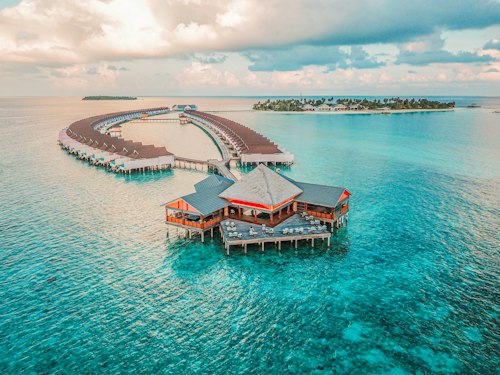
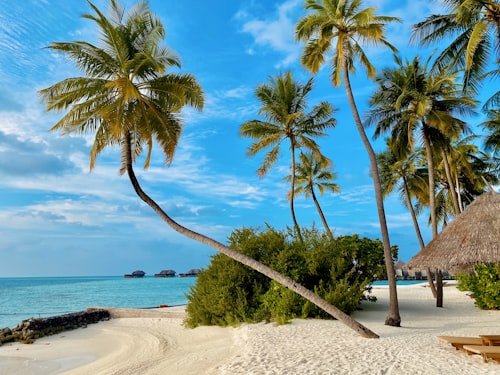
Today, over 200 inhabited islands welcome tourists with guesthouses, restaurants, and excursions. You'll find the same turquoise waters and white sand beaches as the resorts, but you'll also find something more — a connection to the people and culture that makes this country special.

Local island stays are also significantly cheaper. A clean, comfortable guesthouse room with air conditioning, breakfast, and wifi costs $30-80 per night. Compare that to $500+ at most resorts. Your money goes directly to local families, supporting real communities rather than international hotel chains.

Good to know: Local islands are Muslim communities with different rules than resorts. Swimwear is only allowed on designated bikini beaches, alcohol isn't available, and modest dress is expected in villages. These aren't restrictions — they're part of experiencing authentic Maldivian culture.


Traditional Maldivian village street with colorful houses

Best Local Islands to Visit in the Maldives

Each island has its own character. Some are bustling with tourists and tours, others are quiet and off the beaten path. Here are the top choices for different traveller types.

Maafushi Island beach Maldives Most Popular

Maafushi

South Malé Atoll

The backpacker capital of the Maldives. Most developed for tourism with dozens of guesthouses, restaurants, dive centres, and tour operators. Great for first-timers and budget travellers.

Tours & Excursions Bikini Beach Easy Access
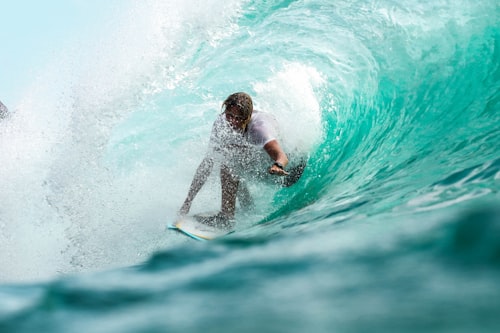
Thulusdhoo Island surfing Maldives Surfing Hub

Thulusdhoo

North Malé Atoll

Home to world-famous surf breaks like Cokes and Chickens. Also known for traditional lacquerware crafts. Laid-back vibe with local fishermen and surf camps side by side.

Surfing Traditional Crafts 25 min from Malé
Ukulhas Island eco beach Maldives Eco-Friendly

Ukulhas

North Ari Atoll

Award-winning eco-island with one of the longest bikini beaches. Excellent house reef for snorkeling with turtles. Clean, green, and community-run.

House Reef Long Beach Turtles
Dhigurah Island whale shark Maldives Whale Sharks

Dhigurah

South Ari Atoll

A 3km stretch of white sand — the longest beach among local islands. World-famous for year-round whale shark encounters. Perfect for nature lovers.

Whale Sharks Long Beach Diving
Fulidhoo Island quiet beach Maldives Off the Beaten Path

Fulidhoo

Vaavu Atoll

Quiet, authentic, and beautifully remote. Famous for nurse shark encounters at Stingray Point. Fewer tourists, more genuine village atmosphere.

Nurse Sharks Authentic Peaceful
Thoddoo Island fruit farm Maldives Farm Island

Thoddoo

North Ari Atoll

Known as the "Watermelon Island" for its fruit farms. Stunning white beaches, fewer tourists, and a glimpse into agricultural Maldivian life beyond fishing.

Fruit Farms White Beach Quiet

Maldivian Culture & Traditions

The Maldives has a rich cultural heritage shaped by centuries of trade with South Asia, Arabia, and Africa. Here's what makes island life special.

🥁

Bodu Beru

The heartbeat of Maldivian music. "Big Drum" performances feature rhythmic drumming, energetic dancing, and songs about island life, romance, and heroism. Watch for performances during festivals and special events on local islands.

Traditional Dhoni Boats

Hand-crafted wooden boats that have been used for centuries. Every island has them moored in the harbour. Some guesthouses offer sunset cruises on traditional dhonis — a magical way to experience Maldivian seafaring heritage.

🎨

Lacquer Work (Liyelaa Jehun)

Intricate designs on wooden containers and vases. Thulhaadhoo island in Baa Atoll is famous for this craft. Artisans carve wood from coconut palms, then apply layers of coloured lacquer in geometric patterns.

🧶

Mat Weaving (Thundu Kunaa)

Traditional mats woven from dried reeds in intricate patterns. Once used as currency for trade, these handcrafted mats take months to complete. A single fine mat makes a meaningful, authentic souvenir.

🕌

Islamic Traditions

The Maldives has been Muslim since the 12th century. You'll hear the call to prayer five times daily. Mosques are found on every island. During Ramadan, the islands come alive after sunset with communal meals and celebrations.

🎉

Festivals & Celebrations

Eid al-Fitr (Kuda Eid) and Eid al-Adha (Bodu Eid) are the biggest celebrations. National Day commemorates victory over Portuguese forces. Independence Day (July 26) marks freedom from British rule. Expect feasts, music, and games.

Traditional Maldivian Cuisine

Maldivian food is built on three pillars: fish (especially tuna), coconut, and rice. Simple ingredients, bold flavours, and recipes passed down through generations.

🍳

Mas Huni

The classic Maldivian breakfast — shredded smoked tuna with grated coconut, onion, chilli, and lime. Served with roshi flatbread and sweet black tea.

🍜

Garudhiya

Clear fish broth — the national dish. Tuna boiled in salted water, served with rice, lime, onion, and chilli. Deceptively simple, deeply satisfying.

🍛

Mas Riha

Spicy fish curry cooked in coconut milk with turmeric, cumin, ginger, and curry leaves. Rich, aromatic, and perfect with steamed rice.

🐟

Fihunu Mas

Grilled fish marinated with local spices. Often cooked over open coals for smoky flavour. Fresh catch of the day, barbecue style.

🥟

Hedhikaa (Short Eats)

Afternoon snacks served with tea. Gulha (fish dumplings), bajiya (samosa-like pastries), masroshi (stuffed flatbread), and keemia (fish rolls).

🫕

Rihaakuru

Thick, dark fish paste made by boiling tuna for days. Intensely savoury. Spread on roshi, mixed with rice, or used to flavour curries.

🫓

Roshi

Maldivian flatbread made from flour, water, salt, and coconut oil. Accompanies almost every meal. Soft, slightly chewy, perfect for scooping.

🍬

Bondi & Sweets

Traditional desserts like bondi bai (sweet rice cakes) and huni hakuru folhi (coconut pancakes). Simple, coconut-based, and mildly sweet.

Where to eat: The most authentic food is found at local teashops (called "hotels" in Dhivehi) where islanders gather for afternoon hedhikaa. Guesthouse meals are usually excellent too — many hosts cook family recipes. In Malé, try Jazz Café or Seagull Café House for traditional dishes.

Important Rules & Cultural Etiquette

Local islands follow Islamic traditions. Understanding and respecting these customs is essential for a positive experience.

👙

Bikini Beaches Only

Swimwear is only allowed on designated "bikini beaches" — separate areas set aside for tourists. You can't wear bikinis or swim trunks on local beaches, in villages, or in the sea near the main beach.

🚫

No Alcohol Allowed

Alcohol is strictly prohibited on all inhabited local islands by Maldivian law. It's only served at resorts and liveaboards. Some islands have "floating bars" (boats anchored offshore) as a workaround.

👗

Dress Modestly

Cover shoulders and knees when walking through villages. Light, loose clothing works perfectly — cotton pants, maxi skirts, t-shirts. It's respectful and more comfortable in the heat anyway.

🕌

Respect Prayer Times

The call to prayer sounds five times daily. Some shops may close briefly. During Ramadan, avoid eating in public during daylight hours on local islands. Restaurants still serve tourists.

📸

Ask Before Photographing

Always ask permission before taking photos of local people, especially women. Most Maldivians are friendly and will agree, but asking first shows respect.

🏠

Remove Shoes

Take off your shoes before entering homes or mosques. You'll notice locals leave footwear outside doorways. It's a simple courtesy that shows cultural awareness.

Local Island vs Resort: Budget Comparison

The same paradise, a fraction of the cost. Here's how local island stays compare to typical resort prices.

Expense Local Island Resort Savings
Accommodation (per night) $30–80 $300–1,500+ 80–95%
Meals (per day) $15–30 $100–250+ 70–90%
Snorkeling Trip $25–40 $80–150 65–75%
Sunset Fishing $30–50 $100–200 65–75%
Diving (2 dives) $80–120 $150–250 45–55%
Transfer from Malé $2–50 $100–500+ 90–98%
7-Night Trip (approx.) $500–1,200 $3,000–15,000+ 80–92%

Budget tip: Add 16% GST tax + $6/night green tax to all accommodation. Many guesthouses include breakfast and offer half-board options ($15-25/day). Book directly for the best rates — most guesthouses give 10-15% discounts for direct bookings. For comprehensive island hopping routes, check our dedicated guide.

Things to Do on Local Islands

Beyond the beach, local islands offer plenty of activities — many included with your guesthouse or available at budget-friendly prices.

🤿

House Reef Snorkeling

Many islands have excellent reefs steps from the beach. Free with borrowed gear from guesthouses.

🏖️

Sandbank Picnics

Visit pristine sandbanks for beach BBQs and swimming. Half-day trips from $40-60.

🐬

Dolphin Watching

Sunset dolphin cruises to spot spinner dolphins. Usually $30-50 per person.

🎣

Sunset Fishing

Traditional line fishing trips on a dhoni boat. Catch gets cooked for dinner!

🚶

Village Walks

Stroll through colourful streets, visit the mosque, watch fishermen unload the day's catch. Free and fascinating.

🍳

Cooking Classes

Learn to make mas huni, garudhiya, and hedhikaa snacks with local hosts. $20-40 at most guesthouses.

🏄

Water Sports

Kayaking, paddleboarding, jet skiing available on popular islands. See our water sports guide.

🌅

Sunset Watching

Simple pleasures. Local islands face west, providing spectacular sunsets. Best views from bikini beaches.

Frequently Asked Questions

The Maldives has approximately 200 inhabited local islands spread across 26 atolls. Of these, around 60-80 islands currently have tourist guesthouses, though this number is growing every year. The total archipelago includes over 1,192 islands, but most are uninhabited or used for resort development.

Maafushi typically offers the lowest prices due to high competition — guesthouses start around $30-40/night. Gulhi and Guraidhoo nearby are similarly affordable. For even lower prices, look at less-developed islands like Omadhoo or Feridhoo, though with fewer dining options. During low season (May-October), prices drop 15-25% across all islands.

Beauty is subjective, but Dhigurah consistently wins for its 3km white sand beach — the longest in the local islands. Ukulhas has stunning beaches with excellent house reef snorkeling. Fulhadhoo in Baa Atoll is considered among the most beautiful with under 300 residents and pristine, undeveloped beaches. Generally, the further from Malé, the more unspoiled the island.

No. By Maldivian law, alcohol is strictly prohibited on all inhabited local islands. It's only available at resorts and liveaboards. Some islands like Maafushi have "floating bars" — boats anchored offshore where alcohol is served legally. You cannot bring alcohol into the Maldives; it's confiscated at customs.

Ukulhas is widely considered the best for house reef snorkeling — you can swim with sea turtles, reef sharks, and eagle rays just meters from shore. Rasdhoo has excellent reef sharks and schools of batfish. Dhigurah offers whale shark encounters year-round. Fulidhoo is famous for nurse shark sightings at Stingray Point. Most islands have good reefs, but these stand out.

Typical guesthouse packages include accommodation, breakfast (sometimes half-board), airport transfers, snorkeling gear, and wifi. Some add daily excursions like sandbank trips, sunset fishing, dolphin cruises, and island hopping. Package prices range from $400-800 for 5-7 nights depending on inclusions. Booking packages directly with guesthouses usually offers best value.

Yes, the Maldives is very safe for solo travelers, including women. Local islands are small, tight-knit communities where crime is rare. Guesthouse staff are typically helpful and welcoming. The main challenges are navigating ferry schedules and following dress codes — both easily managed with planning. Solo travelers often meet others at guesthouses and join group excursions.

During peak season (December-March), definitely book 2-4 weeks ahead, especially for popular islands like Maafushi, Ukulhas, and Dhigurah. During low season, you can often find rooms on arrival. Always book at least your first and last nights. Use Booking.com or Agoda for options, but contact guesthouses directly for better rates — most offer 10-15% direct booking discounts.

Ready to Experience the Real Maldives?

Whether you need help choosing islands, finding guesthouses, or planning the perfect local island tour — we're here to help you discover authentic Maldivian culture.